World & Politics
Keir Starmer Expected to Announce Resignation as UK Prime Minister Amid Labour Revolt
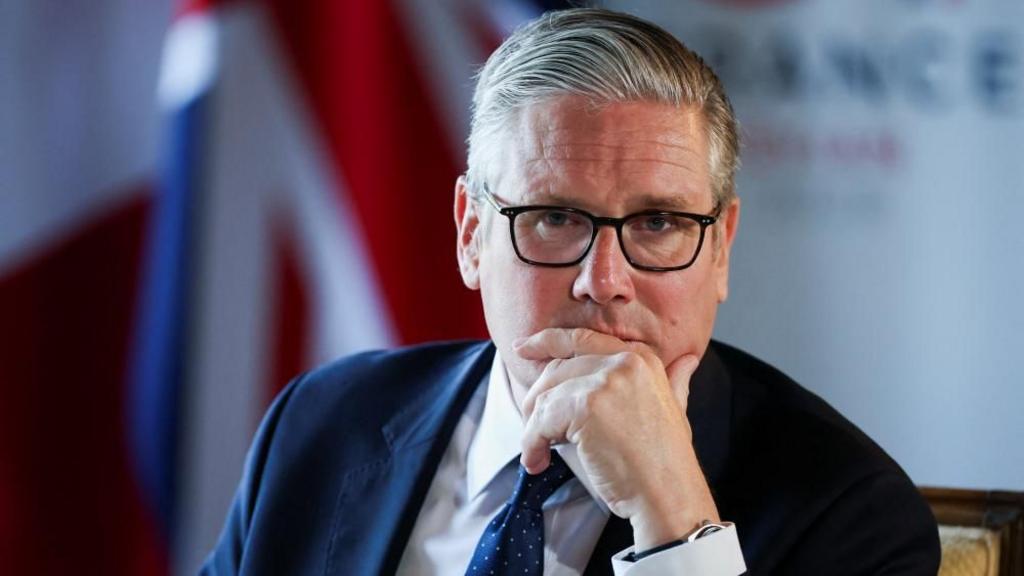
Keir Starmer's premiership appears to be approaching its end. British media reported over the weekend of June 20-22, 2026, that the Prime Minister is preparing to announce a resignation timetable, following a decisive by-election win for his Labour Party rival Andy Burnham and months of mounting pressure from within his own party. As of Monday, June 22, Downing Street had not issued a formal confirmation, but expectation among senior Labour figures was that a statement could come as early as that day.
According to The Observer, Starmer — who took office in 2024 — is preparing to set out an "orderly exit" from Downing Street, complete with a clear timeline for stepping down. Senior Labour figures cited in multiple reports said Cabinet ministers and union leaders had already been consulted, a detail political analysts describe as a strong indicator that a genuine leadership transition is being planned rather than merely speculated about.
The Breaking Point: A By-Election Defeat
The immediate trigger for this weekend's reports was a decisive by-election victory for Andy Burnham, the Greater Manchester mayor who recently returned to Parliament and has long been viewed as a potential successor to Starmer. Burnham's win in North West England has been widely interpreted within Westminster as a direct rebuke of Starmer's leadership, crystallising months of simmering discontent within the Labour Party into a single, undeniable signal: large numbers of Labour members and voters are ready to move on.
The by-election result followed an already brutal stretch for Starmer's government. Last month, more than 80 of his own Labour colleagues publicly called for him to leave the role after disastrous local election results in which Labour lost more than 1,100 council seats across England. In the same set of elections, Reform UK — the anti-immigration party led by Nigel Farage, which has consistently topped national opinion polls — won more than 1,450 council seats, a result that sent shockwaves through the British political establishment and intensified questions about Labour's electoral strategy under Starmer.
A Presidency Defined by Decline and Damage Control
Starmer has publicly insisted, as recently as the weeks leading up to this weekend's reports, that he intends to remain in office. But the political ground beneath him has been shifting for some time, shaped by a combination of economic stagnation, declining public trust, and a series of damaging political controversies.
Among the most consequential of those controversies was the appointment of a close friend of convicted sex offender Jeffrey Epstein as the United Kingdom's ambassador to the United States — an appointment that drew sustained criticism even though Starmer himself never met Epstein and has not been accused of any wrongdoing in connection with the matter. Starmer fired Peter Mandelson, the figure at the centre of that controversy, in September, but the episode left a lasting mark on perceptions of his judgment and government management.
More broadly, Starmer's tenure has unfolded against a difficult economic backdrop: persistent low growth, visibly deteriorating infrastructure, and a wider sense — increasingly voiced by political leaders across the spectrum — that Britain is struggling to compete on the world stage. That climate of perceived national decline has fed directly into Labour's collapsing approval numbers and created fertile ground for Reform UK's rise.
Trump Weighs In — Before Starmer Himself Does
In an unusual twist that added a further layer of controversy to an already fraught weekend, President Trump appeared to confirm Starmer's resignation before the Prime Minister had said anything publicly. Writing on Truth Social on Sunday, Trump stated: "Keir Starmer will resign as Prime Minister of The United Kingdom. He failed badly on two very important subjects—IMMIGRATION AND ENERGY (OPEN NORTH SEA OIL!). I wish him well!" Trump did not provide any evidence for the claim, and Downing Street told the BBC that Starmer had not spoken with Trump over the weekend.
The intervention drew sharp criticism from British media figures. Piers Morgan, posting on X, called Trump's comments "the final humiliation," arguing that the American president appeared to have announced the British Prime Minister's departure before Starmer had confirmed it himself — an extraordinary breach of diplomatic norms between heads of government, even allowing for the close personal rapport the two leaders have cultivated at various points.
Who Could Succeed Starmer
Should Starmer formally step down, attention will turn immediately to the question of succession — and to how quickly a new Labour leader could be installed as Prime Minister. Andy Burnham, fresh off his decisive by-election victory and widely regarded as the most prominent challenger within the party, is the figure most immediately associated with a potential leadership bid. At 56, Burnham brings a long political track record as Greater Manchester's mayor, along with a base of support among Labour members who have grown frustrated with the party's direction under Starmer.
The precise mechanics of any transition — whether through an internal Labour leadership contest, an interim caretaker arrangement, or some other process — will depend heavily on how Starmer structures his announced exit, assuming the reports prove accurate. British political convention generally allows for a sitting Prime Minister who resigns as party leader to remain in a caretaker capacity until a successor is formally chosen, a process that itself can stretch over several weeks depending on how the governing party organises its internal contest.
What Comes Next
As of Monday morning, the situation remained fluid: widespread reporting that a resignation announcement was imminent, but no formal statement yet from Starmer or Downing Street confirming the specifics. Major outlets including Al Jazeera and CBS News were running live coverage throughout the day, reflecting the sense among British and international media that an announcement could come at any moment.
For Starmer, the calculus appears to have shifted from whether to resign to how to manage the terms of his departure — seeking, according to reporting, an "orderly" transition rather than being forced out in a more chaotic fashion. For the Labour Party, the coming days are likely to bring intense internal manoeuvring as senior figures position themselves for whatever leadership contest follows. And for Britain more broadly, a change in Prime Minister during a period of significant economic and political strain would mark one of the most consequential moments in the country's recent political history.
This is a developing story. Digital8Hub will continue to update this article as new information becomes available from Downing Street and senior Labour officials.
Comments (0)
Please log in to comment
No comments yet. Be the first!