World & Politics
Brazil’s Lula Wins Historic Fourth Term as Flavio Bolsonaro Refuses to Concede
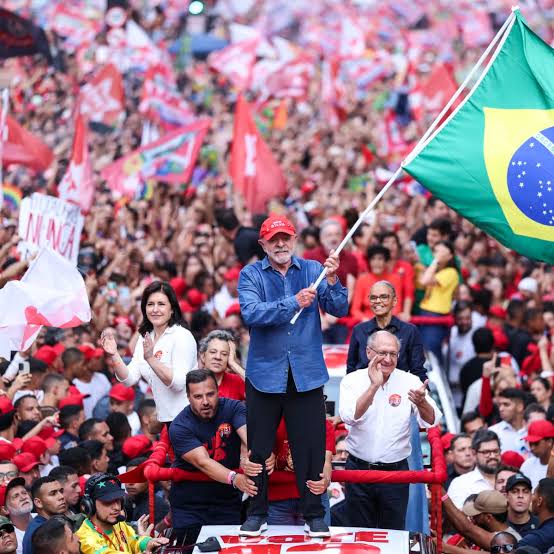
Brazilian President Luiz Inácio Lula da Silva secured a historic fourth non-consecutive term on Sunday, October 25, after a runoff victory over Senator Flavio Bolsonaro. Brazil’s Superior Electoral Court confirmed the result with all votes counted: Lula received approximately 51.79% of valid ballots to Bolsonaro’s 48.21%, a margin of more than 4 million votes.
The outcome reversed the first-round result of October 4, in which Bolsonaro led with about 47% to Lula’s 45%. No candidate since Brazil restored direct presidential elections in 1989 has previously overturned a first-round deficit to win the runoff. Lula, who turns 81 this week, will be sworn in on January 5, 2027, for a term running through 2030. He previously served from 2003 to 2010 and again from 2023.
The Comeback
Lula trailed after the first round and faced polling that showed a tight race in the final weeks. Higher turnout and a late mobilization helped close the gap. Abstention fell from roughly 21% in the first round to about 19% in the runoff, the lowest second-round rate since 2018. Blank and null votes also declined. Lula’s campaign emphasized social programs, workers’ benefits, and a defense of democratic institutions. Supporters framed the result as a vote to secure democracy.
The victory stands out against a broader regional pattern in which several Latin American countries have shifted toward the right in recent elections. Lula’s win interrupts that trend in Latin America’s largest economy and most populous country.
Flavio Bolsonaro’s Response
Senator Flavio Bolsonaro, the eldest son of former President Jair Bolsonaro, has refused to concede. In a brief speech in Brasília he called the result impossible to acknowledge and said he would seek to annul the election. His stated ground is a Supreme Court decision on election day that extended voting by two hours until 7 p.m. Brasília time. Both campaigns had requested additional time in some areas because of heavy rain and logistical issues. Bolsonaro described the extension as unacceptable and said the rules had been changed mid-contest.
Analysts note that Flavio’s own campaign also sought an extension in certain regions and that the final margin exceeds 4 million votes. Courts have previously rejected similar challenges in the absence of evidence of systemic fraud. Bolsonaro’s refusal echoes his father’s reaction after the 2022 loss to Lula; Jair Bolsonaro never accepted that result and was later sentenced to 27 years in prison for plotting a coup to remain in power.
Historical Significance
Lula is the first Brazilian politician in the democratic era to win four presidential elections. He has now contested seven times and won four (2002, 2006, 2022, and 2026). At inauguration he will be the oldest person to assume the office since the return to democracy. The result also marks the first time a candidate who finished second in the first round has gone on to win the presidency under the current two-round system.
The Workers’ Party and its allies described the outcome as a historic turning point. Lula thanked voters, particularly younger supporters who campaigned in the streets, and said the result reflected a desire to protect democratic norms. He is expected to govern with a Congress that remains heavily conservative; Bolsonaro’s Liberal Party made the largest gains in the concurrent legislative elections.
Context and Constraints
The campaign centered on the cost of living, public security, and corruption. Lula’s record includes expanded social transfers and infrastructure programs during earlier terms, alongside periods of economic growth and later controversy. Flavio Bolsonaro positioned himself as the continuation of his father’s movement and as a closer partner to the United States under President Donald Trump. Trump did not issue a direct endorsement of Flavio, though the Bolsonaro family has maintained close ties with Trump-aligned figures.
Jair Bolsonaro remains imprisoned. A Flavio victory would have raised the possibility of efforts to free or politically rehabilitate the former president; the runoff loss closes that immediate path. International reaction has been measured, with attention focused on whether Bolsonaro’s legal challenge gains traction and on how Lula will manage relations with a right-leaning Congress and a polarized electorate.
What to Watch
Whether Flavio Bolsonaro files a formal challenge and how Brazil’s electoral courts respond.
The composition of Lula’s new cabinet and any early legislative priorities.
Turnout and protest activity in the weeks before the January 5 inauguration.
Market and currency reaction once the legal process clarifies.
How the result affects regional political trends and Brazil’s foreign-policy orientation.
Luiz Inácio Lula da Silva won Brazil’s presidential runoff on October 25 with roughly 51.8% of the vote to Flavio Bolsonaro’s 48.2%, securing a historic fourth non-consecutive term. He is the first candidate since 1989 to overturn a first-round deficit. Bolsonaro has refused to concede and plans to seek annulment over the extension of voting hours. Lula will take office on January 5, 2027, at age 81, facing a conservative Congress and a closely divided country. The margin exceeds 4 million votes, and courts have not indicated any basis for overturning the certified result.
Comments (0)
Please log in to comment
No comments yet. Be the first!