World & Politics
France Imposes Partial Curfews in Parts of Paris and Other Cities After Weekend Riots
France answered a weekend of riots and looting with overnight restrictions in selected streets, not a national lockdown.
Prime Minister Sébastien Lecornu said Monday that local mayors were being given the power to impose partial and localized curfews “where they need” to protect people and shops. He did not rule out a state of emergency but called localized measures more appropriate for now, and he ruled out a blanket curfew for Paris. “My determination to restore order is absolute,” he said. By Monday evening, several cities had used the authority.
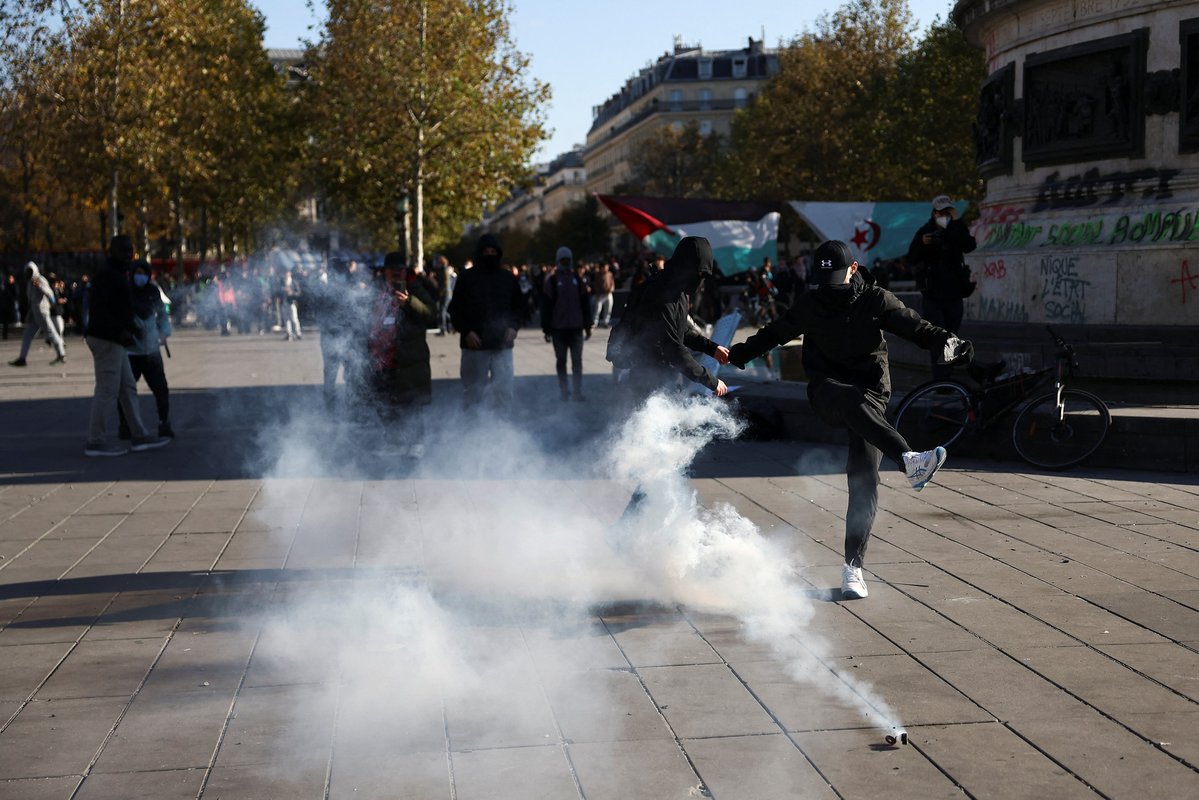
In Paris, police ordered a curfew prohibiting entry or remaining on Place de la République and in the Les Halles shopping area from 11 p.m. Monday until 6 a.m. Tuesday. Gatherings and demonstrations were also banned in certain zones from 8 p.m. The police statement said the order was to protect people and property from violence and looting, and that a deployment would enforce it. Those two sites were among the hardest hit on Saturday: République saw clashes, Les Halles saw looting.
Marseille, the country’s second-largest city, banned public gatherings and demonstrations from midday until 8 p.m. Monday. In Lyon, gatherings on public roads were prohibited for part of the evening, followed by a curfew on sections of the city overnight. Nice’s mayor signed a curfew for minors in the downtown area from 9 p.m. to 6 a.m. In the north, Lille and the nearby towns of Douai, Wattignies, and Denain imposed curfews for minors, reported as running from 8 p.m. to 6 a.m. for two days, with the agreement of local mayors. The measures are overnight or time-limited. They are not 24-hour citywide lockdowns.
What the Weekend Left Behind
Saturday’s protests over prices, fuel, and public services drew about 550,000 people. On the margins, groups smashed shops, set fires, and looted in Paris, Marseille, Lille, Lyon, Bordeaux, and other cities. About 1,800 people were arrested. More than 500 police, gendarmes, and firefighters were injured. Roughly 1,500 shops were damaged, with losses estimated in the hundreds of millions of euros. Limoges’s 143-year-old town hall was largely destroyed by fire. One death during the Paris march was described by officials as health-related. Interior Minister Laurent Nuñez offered his resignation; President Emmanuel Macron declined it. The Élysée criticized intelligence failures. Nuñez had said police “lost control” in some cities. The mayors of Paris, Marseille, and Lyon wrote in a joint Liberation op-ed that, for the first time, they felt whole sections of their cities had been left without protection.
Sunday night saw further fires and looting in several cities, which is the immediate backdrop for Monday’s curfew orders. Lecornu said the government would set aside money to help damaged areas recover, and that the cost would be recovered from those responsible. Unions have called a national strike for November 5.
Why Partial, Not National
A state of emergency would centralize powers and signal a broader crisis six months before a presidential election. Lecornu’s choice of partial, local curfews keeps the response with mayors and prefects and limits the geographic scope. A curfew on two Paris squares and a gathering ban in Marseille are enforceable with existing police deployments. A national measure would require a different political and legal step, and Lecornu left that door open without walking through it. The test is whether the overnight restrictions stop a repeat on Monday and Tuesday nights. If they do not, the state-of-emergency option he declined to rule out becomes the next question.
Macron’s rejection of Nuñez’s resignation keeps the interior minister in place while the criticism of anticipation and control stands. The joint letter from the three mayors is a public record that local executives believe the Saturday deployment was insufficient. Curfews are the corrective on offer tonight. They do not rebuild the Limoges town hall or restock the looted shops.
What Residents and Businesses Face Tonight
In the named Paris zones, the restriction is on presence after 11 p.m., not on daytime commerce. In Marseille, the midday-to-evening gathering ban is the tighter daytime measure. Minor curfews in Nice and the Nord towns apply to under-18s. Enforcement will determine whether the orders are observed or become another flashpoint. Police have already used tear gas and stun grenades in Paris in recent days. A curfew that is widely ignored, or widely enforced with force, changes the political reading of Monday’s decision.
Businesses in the affected zones get a night without customers and, the government hopes, a night without broken glass. The recovery fund Lecornu mentioned is separate from the curfew. It addresses Saturday’s damage. The curfew addresses the risk of more.
What to Watch
Whether the Paris, Marseille, Lyon, Nice, and Nord restrictions are extended beyond Tuesday morning.
Any move toward a state of emergency if violence resumes.
Arrest numbers from Monday night.
The November 5 strike call and whether it proceeds under the new local powers.
Insurance and municipal cost figures as claims from the 1,500 damaged shops are filed.
France imposed partial curfews in parts of Paris and other cities after a weekend of riots and looting. Lecornu authorized local measures and ruled out a blanket Paris curfew while leaving a state of emergency possible. Paris restricted Place de la République and Les Halles overnight. Marseille banned gatherings for part of Monday. Lille, nearby towns, Nice, and Lyon set their own limits, several of them aimed at minors. The orders are the government’s first structural response to a Saturday that left hundreds injured, thousands arrested, and a historic town hall burned.
Comments (0)
Please log in to comment
No comments yet. Be the first!