World & Politics
Italy and the Balkans Brace for Wildfires as Europe's Heat Dome Shifts East
After more than a week scorching Western Europe, the heat dome responsible for record temperatures from Portugal to the UK has shifted its center eastward — and Italy and the Balkans are now where the danger is concentrated.
A heat dome on the move
The mechanism driving this event is what meteorologists call an "Omega block" — a stalled area of high pressure shaped like the Greek letter Omega that traps hot, dry air beneath it for days at a time rather than letting weather systems pass through normally. Since late May, this pattern has pushed across the continent in stages, first setting records in Iberia and France, then in Germany and the UK, and now settling over Italy, the Balkans, and parts of Eastern Europe. The World Meteorological Organization's climate information lead, John Kennedy, has noted that Europe has warmed by around two degrees over the past fifty years, making heatwaves of this intensity and frequency closer to the expected norm than a rare anomaly. Geniee Group
Why Italy and the Balkans are especially exposed
Italy's Health Ministry has placed cities including Rome, Florence, Bologna, and Turin under red alert, the country's highest heat warning level, with heat-stressed underground cables already triggering blackouts in Turin. Civil protection authorities have separately flagged an elevated wildfire risk in Sardinia and southern Italy, where weeks of dry, hot weather have left vegetation primed to burn.
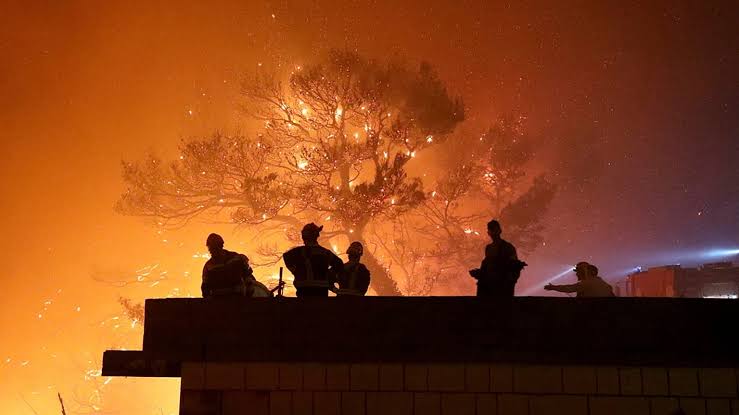
The pattern is repeating across the Balkans. Bosnia and Herzegovina issued heat warnings for much of the country as temperatures pushed toward 38°C, and the dry conditions have already complicated active firefighting: a landfill fire burning since the start of the week in Mostar spread to a nearby tire dump, damaging air quality, while a separate wildfire reignited in Blidinje Nature Park, burning over 1,300 square meters of pine forest. Slovakia and Slovenia have both logged significant soil drought, a key precondition for fast-spreading wildfires once ignition occurs.
Why it matters
This isn't an isolated hot spell — it's the third stage of a heat dome that has now crossed the entire continent in under a month, breaking national records in at least five countries along the way. For Italy and the Balkans specifically, the risk compounds two ways: tourist-season population density raises the human cost of any fire or grid failure, and a region with less heat-adapted infrastructure than Western Europe is now absorbing the same extremes that strained hospitals, rail networks, and power grids further west. The WMO's broader warning — that heat events of this frequency and duration are consistent with, not separate from, the trajectory of a warming Europe — suggests this is a preview of how future summers in the region are likely to behave, not a one-off.
What to watch
Forecast models suggest the most extreme heat will ease by early July as the block weakens, but soil and vegetation will remain dry well after temperatures drop — meaning wildfire risk in Italy and the Balkans is likely to outlast the heat itself by days or weeks. Local authorities are advising residents to avoid woodland and high-risk areas, follow regional red/amber alert systems, and treat any smoke or haze as a reason to check official channels rather than assume normal air quality.
Comments (0)
Please log in to comment
No comments yet. Be the first!