World & Politics
Pentagon Withdraws 5,000 Troops From Germany
America Just Sent NATO Its Most Alarming Signal Yet
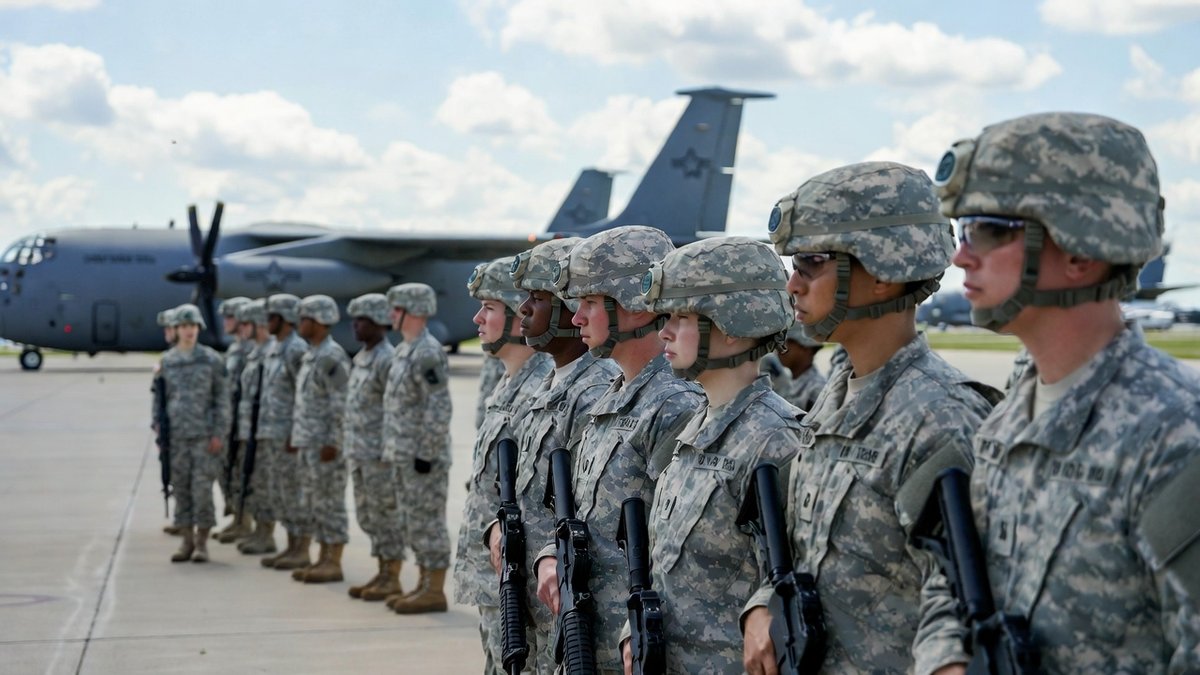
In the long and increasingly troubled story of transatlantic relations under the second Trump administration, Friday's Pentagon announcement marks a new and deeply significant chapter. The United States military will pull about 5,000 troops out of Germany amid ongoing tensions with the key European ally concerning the US war against Iran. digital8hub
Defense Secretary Pete Hegseth has ordered the withdrawal of roughly 5,000 US troops from Germany over the next year. Pentagon spokesman Sean Parnell said: "We expect the withdrawal to be completed over the next six to twelve months. This decision follows a thorough review of the Department's force posture in Europe and is in recognition of theater requirements and conditions on the ground." digital8hubdigital8hub
The official language of "theater requirements and conditions on the ground" is the Pentagon's characteristically neutral framing for what is, by every account, a politically motivated decision — a direct punishment of Germany for its Chancellor's public criticism of President Trump's Iran war strategy, and a warning to every other NATO ally watching closely that the cost of disagreeing with Washington can be measured in soldiers.
At digital8hub.com, we break down what triggered this decision, what it means for NATO, and what it signals about the future of America's commitment to European security.
What Triggered the Withdrawal: The Merz-Trump Feud
To understand the troop withdrawal announcement, you need to understand the extraordinary public confrontation that preceded it.
German Chancellor Friedrich Merz, speaking to high school students in Germany this week, said the US was being humiliated by Iran's leadership. "The Americans obviously have no strategy," the German leader said. He compared Trump's war on Iran to Afghanistan and Iraq. "This situation is, as I said, at least ill-considered and I do not see at the moment what strategic exit the Americans are choosing now." digital8hub
For a German Chancellor to publicly question American military strategy in such blunt terms — comparing the Iran war to two of the most damaging foreign policy failures in recent American history — was an extraordinary moment. It was also, for Trump, an intolerable one.
Trump wrote on social media that the US was reviewing possible troop reductions in Germany, with a "determination" to be made soon. On Thursday, he was still thinking about Merz, posting that the German leader should "spend more time on ending the war with Russia/Ukraine" and "fixing his broken Country" than concerning himself with Iran. digital8hub
By Friday, the determination had been made. Five thousand troops. Six to twelve months. Germany punished for speaking a truth that Washington did not want to hear.
The Scale of the Withdrawal: What 5,000 Troops Means
As of December 2025, there were 36,436 active-duty US military personnel permanently stationed in Germany, according to data from the US Defense Manpower Data Center. The move would still leave more than 30,000 US troops in the country. digital8hubdigital8hub
In purely numerical terms, the withdrawal of 5,000 troops from a force of 36,000-plus is significant but not catastrophic. Germany remains, after the announcement, the country in Europe with the largest US military presence by a substantial margin. The move would include one brigade combat team as well as other forces inside Germany. digital8hub
The decision does not appear to affect the US military's massive medical support bases, like Landstuhl, where thousands of troops, including those who have been injured during the war, have been taken for medical treatment. Critically, facilities such as Ramstein Air Base in Germany play a key role in extending the reach of the military worldwide. The base also has factored into military operations against Iran. Ramstein is not going anywhere. digital8hubdigital8hub
But the symbolic and strategic significance of the withdrawal goes far beyond the numbers. This is the United States — for the second time in Trump's presidency — using its military presence in Germany as a bargaining chip in a political dispute. The message to Berlin, and to every NATO capital watching, is unmistakable: American security guarantees are not unconditional. Criticise Washington's foreign policy choices, and the price may be counted in troops.
A History That Rhymes: Trump's First Term Playbook Revisited
At the end of his first term, Trump sought to remove 12,000 troops from Germany in connection with complaints about Berlin's laggard defense spending. At the time, the 2nd Cavalry Regiment was identified as a unit to be redeployed to the United States. The plan also called for moving US European Command headquarters from Stuttgart to Belgium among other moves. The plan never came to fruition and was later canceled by former President Joe Biden. digital8hub
The current withdrawal is smaller in scale than that first-term threat — but it is different in one crucial respect: this time, it is actually happening. Trump made a similar threat in his first term, saying he would pull about 9,500 of the roughly 34,500 US troops who were then stationed in Germany, but he didn't start the process and Democratic President Joe Biden formally stopped the planned withdrawal soon after taking office in 2021. digital8hub
The follow-through this time sends a signal that first-term threats were not merely rhetoric — they were previews. The allies who assumed Trump's troop withdrawal threats would again dissolve into inaction have been proven wrong.
The Iran War Context: NATO's Deepest Fracture
The troop withdrawal cannot be understood in isolation from the broader context of the US war with Iran — the conflict that has driven the most significant rupture in transatlantic relations since the Iraq War of 2003.
Friction between European leaders and the Trump administration has intensified due to the war with Iran, which the US launched without notifying most NATO allies. The manner of the war's beginning — US-Israeli strikes on Iran launched without consultation with European partners who then found themselves managing the geopolitical consequences — created a reservoir of European resentment that Merz's comments drew from publicly and bluntly. digital8hub
Trump has been threatening Germany and other NATO allies over their refusal to engage in the US war with Iran. Top policy officials in the Pentagon have long wanted to realign US forces away from Europe and the Middle East, potentially in favor of redeploying them to the Indo-Pacific. digital8hubdigital8hub
The Iran war has thus accelerated a strategic reorientation that was already underway — while simultaneously poisoning the political relationships that give that reorientation diplomatic legitimacy. Europe feels excluded from decisions that affect it profoundly. Washington feels unsupported in a war it is fighting, in its framing, on behalf of Western security interests. The gap between these positions is wide and, at the current trajectory, widening.
Germany's Response and What Comes Next
A spokesperson from the German embassy in Washington declined to comment. The silence is itself a statement — the calculated restraint of a government that understands the limits of its leverage and is choosing its battles carefully. digital8hub
Berlin's options are genuinely constrained. A formal protest risks escalating Trump's response. Public defiance invites further punitive measures. Quiet accommodation risks appearing to validate the use of military presence as political leverage — a precedent that every European NATO member has reason to resist.
The broader European response will be watched closely. If Germany — the largest economy in Europe and the host of the largest US military presence on the continent — absorbs a punitive troop withdrawal without a significant collective European response, the lesson for Washington will be that the tactic works. And tactics that work tend to be repeated.
For European security, the question that this moment raises is the one that has haunted the continent since Trump's return to office: can Europe defend itself without the United States? The answer, currently, is no — and the urgency of changing that answer has never been more apparent.
For the latest breaking news on global security, NATO, and the US-Iran war, follow digital8hub.com — your trusted source for the stories that shape our world.
Comments (0)
Please log in to comment
No comments yet. Be the first!