World & Politics
Iran Denies Fujairah Attack — Claims US Military Was Responsible in Stunning Reversal
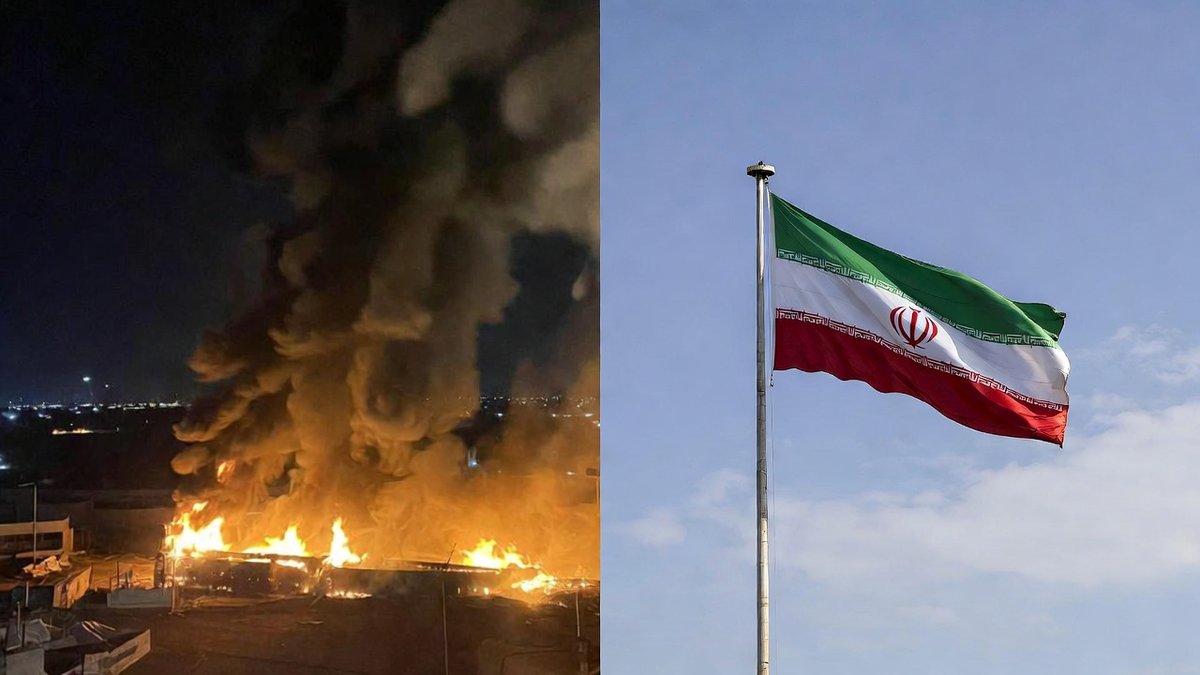
Twenty-four hours ago, the narrative seemed clear. Iran had attacked the Fujairah oil refinery in the UAE. A massive fire was burning. Oil markets were surging toward $140 per barrel. The United States and its Gulf allies were preparing their response. The Gulf crisis had crossed a threshold that could not be uncrossed.
Then Iran's military spoke — and the narrative shattered.
A senior Iranian military official has issued a formal denial of responsibility for the Fujairah attack — not merely distancing Tehran from the strike, but making the extraordinary claim that the US military itself was responsible for the attack on the UAE refinery.
The denial has injected a destabilising new element into an already volatile crisis. It raises questions that cannot yet be answered with certainty: Is Iran lying to avoid the consequences of a strike it carried out? Is the US denial of responsibility a cover for an operation that went wrong? Is this a genuine case of misattribution in a conflict zone where multiple military actors are operating simultaneously? Or — most alarming of all — is someone actively attempting to manufacture a casus belli by staging an attack designed to be blamed on a convenient enemy?
At digital8hub.com, we lay out exactly what Iran has claimed, what the US has said in response, what the evidence suggests, and what the fog of war in the Gulf means for a crisis that was already at the edge of catastrophe.
What Iran's Military Official Said
The denial came from a senior figure within Iran's military command structure — not a junior spokesperson but an official whose statements carry institutional weight and reflect deliberate policy rather than improvised communication.
The official's statement made two distinct and equally significant claims.
First, Iran categorically denied carrying out any attack on the Fujairah oil refinery. The statement described the attribution of the strike to Iranian forces as "baseless fabrications" and "a deliberate provocation designed to drag the Islamic Republic into a wider conflict that serves only the interests of Washington and Tel Aviv."
Second — and far more explosively — the official claimed that evidence in Iran's possession indicates the attack was carried out by US military assets operating in the region, framing the strike as either a deliberate false flag operation designed to justify further American military action against Iran, or a US military accident subsequently blamed on Tehran for political convenience.
The claim is extraordinary. It is also, coming from an Iranian official in the current political environment, entirely predictable as a denial strategy — Iran has strong incentives to deny responsibility for an attack on a neutral third country that has drawn universal condemnation, and blaming the US is the denial framing that serves Tehran's interests most effectively.
But extraordinary claims from interested parties cannot be dismissed without examination. The history of Middle Eastern conflicts includes genuine false flag operations, genuine misattributions, and genuine accidents blamed on convenient enemies. The Fujairah incident cannot, at this stage, be definitively categorised without independent evidence that does not yet exist in the public domain.
What the United States Has Said
The US military's response to Iran's counter-accusation has been categorical and emphatic — the attack on Fujairah was an Iranian operation, and the suggestion of American responsibility is "disinformation of the most dangerous kind."
US Central Command released a statement confirming that no American military assets were involved in the Fujairah strike and that American forces operating in the region at the time of the attack were engaged in documented and verifiable activities that preclude involvement in a strike on UAE infrastructure.
The Pentagon has indicated that it is making available to key allies and partners intelligence assessments that it says demonstrate Iranian responsibility for the Fujairah attack — assessments derived from satellite imagery, signals intelligence, and other sources that the US says conclusively identify the attack as Iranian in origin.
Whether that intelligence will be made fully public — and whether, if it is, it will be sufficient to resolve the attribution dispute — remains to be seen. The history of intelligence-based attribution claims in Middle Eastern conflicts includes cases where the intelligence turned out to be correct, cases where it turned out to be wrong, and cases where the truth remained genuinely contested for years.
The UAE's Position: Caught Between Two Superpowers
For the United Arab Emirates — the country whose oil infrastructure is burning regardless of who lit the match — Iran's denial creates a diplomatic situation of extraordinary complexity.
The UAE has a defence relationship with the United States and has consistently, if cautiously, aligned with the US-led pressure campaign against Iran. Its initial response to the Fujairah attack pointed to Iranian responsibility in terms consistent with the American position.
Iran's denial now places the UAE in a position where accepting the American attribution means deepening the confrontation with Iran — a country with which the UAE shares a maritime border and complex economic ties — while entertaining any possibility of non-Iranian responsibility means publicly questioning its most important security partner.
UAE officials have, in the immediate aftermath of Iran's denial, adopted a posture of studied caution — calling for a full international investigation into the attack rather than reiterating the initial attribution, and declining to respond directly to Iran's counter-claims.
This caution is strategically rational. The UAE does not want to be the trigger that starts a regional war. It wants justice for the attack on its infrastructure and assurance of its future security — but it wants those things achieved through a process that does not require it to be the front line of an American military campaign against Iran.
The Fog of War: Why Attribution Is Genuinely Difficult
In any conflict involving multiple military actors operating in close geographic proximity, attribution of specific attacks is technically and politically challenging in ways that outside observers frequently underestimate.
The Technical Challenge
Modern military strikes — whether conducted by ballistic missiles, cruise missiles, or armed drones — do not come with identifying labels. Determining who fired a specific weapon requires analysis of its flight trajectory, the characteristics of the weapon system used, the likely launch locations, and any signals intelligence associated with the attack. This analysis takes time and is subject to genuine uncertainty, particularly in the early hours after an attack when data is incomplete.
The Incentive Problem
Every party in the current Gulf crisis has strong incentives to control the attribution narrative. Iran has every incentive to deny responsibility for an attack on a neutral country. The US has every incentive to maintain the attribution that justifies its current military posture. The UAE has every incentive to pursue a narrative that maximises its security without maximising its exposure. These incentives do not mean that any particular party is lying — but they do mean that official statements from all sides must be evaluated with appropriate scepticism.
Historical Precedents
The history of Gulf conflicts includes multiple incidents in which initial attribution proved incorrect, politically motivated, or genuinely ambiguous. The 1988 USS Vincennes incident — in which a US Navy vessel shot down an Iranian civilian airliner — demonstrated the catastrophic consequences of misidentification in high-tension naval environments. The 2019 tanker attacks in the Gulf of Oman were attributed to Iran by the US and its allies, denied by Tehran, and never definitively resolved to the satisfaction of all parties.
The Fujairah incident is occurring in a crisis environment where the stakes of misattribution are even higher than in those previous cases.
What Comes Next: The Investigation Iran Is Demanding
Iran's denial has been accompanied by a call for an independent international investigation into the Fujairah attack — a demand that is simultaneously a reasonable request and a strategic move designed to delay the military response that a confirmed Iranian attribution would trigger.
The call for investigation has received a cautious hearing from several European nations and from Russia and China — both of which have their own reasons for preferring that the Gulf crisis not escalate into a direct US-Iran military confrontation. UN Secretary-General António Guterres has endorsed the principle of independent investigation, calling for "maximum restraint" from all parties while facts are established.
The United States and UAE have indicated they are open to international verification mechanisms — but have made clear that they regard the existing intelligence case against Iran as sufficient for the response decisions they are weighing, and that an investigation process will not indefinitely delay those decisions.
The next 48 to 72 hours will be critical. If the US moves forward with a military response before an independent investigation can be convened, the risk of a conflict spiral becomes acute. If the call for investigation succeeds in creating a pause — even a brief one — the possibility of a diplomatic off-ramp, however narrow, remains open.
The Gulf is in the most dangerous moment of this crisis. Every decision made in the next three days will shape what comes next.
This is a developing story. We will continue to update as verified information becomes available. For the latest breaking news and in-depth analysis of the Gulf crisis, follow digital8hub.com — your trusted source for the stories that shape our world.
Comments (0)
Please log in to comment
No comments yet. Be the first!