World & Politics
Iran's Supreme Leader Warns US Ships Belong in the "Depths of the Water"
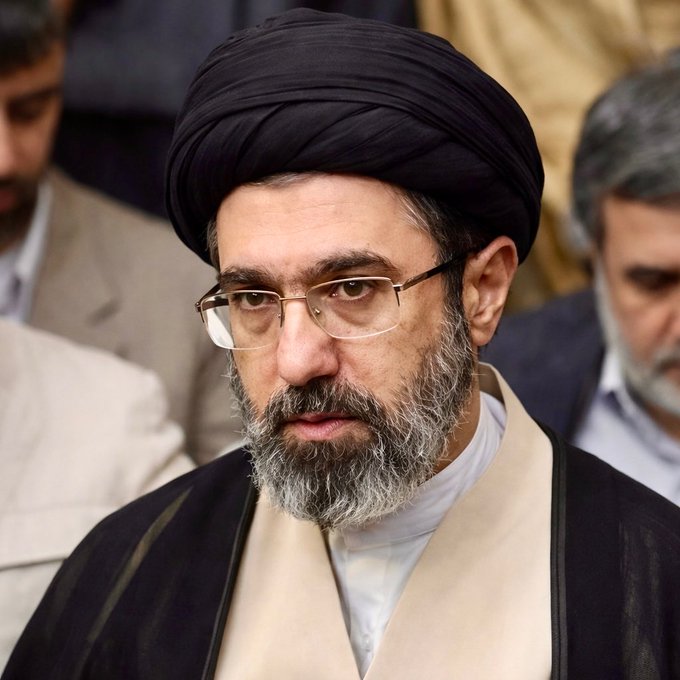
There is a spectrum of diplomatic language — from measured disagreement through formal protest to outright threat — and the statement issued by Iranian Supreme Leader Mojtaba Khamenei has landed firmly at the far end of that spectrum.
In remarks that have reverberated through diplomatic channels, military command structures, and financial markets with equal speed, Khamenei declared that American ships belong in the "depths of the water" — language that, whatever its intended rhetorical register, constitutes the most explicitly threatening public statement from Tehran's highest authority in the current crisis, and one that demands serious analysis rather than dismissal.
The statement arrives at a moment of maximum tension in US-Iran relations — with oil prices already above $125 per barrel, the Trump administration reportedly considering extending its Iran blockade, and the Strait of Hormuz — through which 20% of the world's daily oil supply passes — already the subject of intense international anxiety.
At digital8hub.com, we break down exactly what Khamenei said, what it signals about Tehran's strategic calculations, and what the escalating confrontation between Washington and Tehran means for global security, energy markets, and the millions of people whose lives hang in the balance of decisions being made in two capitals thousands of miles apart.
Who Is Mojtaba Khamenei — and Why His Words Carry Weight
To understand the significance of the "depths of the water" statement, it is essential to understand who Mojtaba Khamenei is within the Iranian power structure — because this is not a junior official issuing rhetorical bluster for domestic consumption.
Mojtaba Khamenei is the son of the late Supreme Leader Ali Khamenei and has emerged as one of the most powerful figures within Iran's clerical establishment in the years since his father's death. His elevation within the Islamic Revolutionary Guard Corps' ideological networks and his proximity to the inner circle of Iran's supreme decision-making authority give his public statements a weight that goes beyond personal opinion.
When Mojtaba Khamenei speaks about US ships belonging in the depths of the water, he is not speaking as a private citizen or a minor official testing boundaries. He is articulating a position that reflects the thinking of the hardline faction within Iran's power structure that has the most direct influence over the Islamic Revolutionary Guard Corps Navy — the force that controls Iran's ability to threaten shipping in the Persian Gulf and the Strait of Hormuz.
The Statement in Context: A Response to the Blockade
Khamenei's statement did not emerge in a vacuum. It is a direct response to the Trump administration's Iran blockade — the policy of physically restricting Iranian oil exports through naval interdiction and pressure on international shipping — and to reports that the administration is considering extending and deepening that blockade.
From Tehran's perspective, the blockade represents an act of economic warfare that is strangling the Iranian economy, reducing government revenues, and creating genuine hardship for ordinary Iranian citizens. The hardline faction within Iran's power structure — of which Khamenei is a prominent representative — has consistently argued that economic pressure of this magnitude demands a forceful response rather than diplomatic accommodation.
The "depths of the water" statement is, in this context, a signalling exercise as much as a threat. It is Tehran communicating to Washington — through the language of maximum confrontation — that the continuation and extension of the blockade carries military risks that the United States should not discount.
The Strait of Hormuz: The World's Most Dangerous Chokepoint
No analysis of Iranian threats against US naval forces can be complete without examining the strategic geography that gives those threats their particular menace.
The Strait of Hormuz — the narrow waterway between Iran and Oman at the mouth of the Persian Gulf — is the most consequential maritime chokepoint on earth. Approximately 20 to 21 million barrels of oil pass through it every day — roughly 20% of global oil consumption and a far higher proportion of the oil consumed by the energy-dependent economies of Asia. Additionally, enormous quantities of liquefied natural gas from Qatar and the UAE transit the Strait on their way to European and Asian markets.
Iran's ability to threaten — or actually disrupt — shipping through the Strait of Hormuz is the country's most powerful strategic leverage point in its confrontation with the United States and the international community. The Islamic Revolutionary Guard Corps Navy maintains a significant asymmetric capability in the confined waters of the Gulf — fast attack craft, anti-ship missiles, naval mines, and submarine capabilities that are designed specifically to threaten the large surface vessels of the US Fifth Fleet that patrols the region.
A full closure of the Strait of Hormuz — even a temporary one lasting days rather than weeks — would trigger an oil price spike of historic proportions, send shockwaves through every major economy on earth, and create a humanitarian energy crisis across Asia that would dwarf any previous supply disruption.
This is the implicit threat behind Khamenei's "depths of the water" statement — and it is a threat that no serious analyst dismisses, regardless of their assessment of Iran's ultimate intentions.
Washington's Response: Firm but Calibrated
The Trump administration's initial response to Khamenei's statement has been characteristically firm in its rhetoric while carefully avoiding language that would constitute an explicit counter-threat that could further escalate the situation.
Senior US officials have reiterated that the United States Navy will continue to operate freely in international waters and will defend itself and its allies against any hostile action. The Fifth Fleet — headquartered in Bahrain and responsible for naval operations across the Persian Gulf, Red Sea, and Arabian Sea — remains at an elevated state of readiness that has been maintained since the escalation of tensions earlier in 2026.
The Pentagon has declined to comment on specific contingency planning in response to Iranian threats, which is standard operational security practice but also reflects the genuine complexity of the military calculus in a confrontation where the geography strongly favours the defender — Iran — over the attacker.
The Oil Market Dimension: $125 Just Got Worse
The geopolitical escalation represented by Khamenei's statement has immediate financial market implications that extend far beyond the Persian Gulf.
Oil prices — already above $125 per barrel following the Trump blockade extension reports — have received a further upward impulse from the explicit threat to US naval vessels. Markets are pricing in an increasing probability of some form of Iranian action against shipping or US naval assets, and that probability is reflected in the risk premium now embedded in crude oil prices.
Each ratchet of escalation in US-Iran rhetoric adds to the geopolitical risk premium in oil — and Khamenei's statement represents a significant ratchet. If the confrontation moves from rhetoric to action — even minor action, such as an incident involving Iranian fast boats and a US Navy vessel — the oil price response could be dramatic and immediate.
The Diplomatic Off-Ramp: Does One Exist?
Perhaps the most important question in the current US-Iran confrontation is whether a diplomatic pathway exists that allows both sides to de-escalate without either appearing to have capitulated.
For the United States, any de-escalation would need to be framed as a strategic choice rather than a response to Iranian threats — because being seen to back down in response to "depths of the water" rhetoric would be domestically and internationally damaging.
For Iran, any accommodation would need to offer tangible relief from the economic pressure of the blockade — because the hardline faction represented by Khamenei has staked its domestic credibility on the position that Iran will not be coerced.
The gap between these two positions is wide. The consequences of failing to bridge it — for energy markets, for regional security, and for the possibility of a conflict that neither side may be able to control once started — are severe enough to make the search for that diplomatic off-ramp one of the most urgent priorities in international affairs right now.
This is a developing story. We will continue to cover it as events unfold. For the latest breaking news and in-depth geopolitical analysis, follow digital8hub.com — your trusted source for the stories that shape our world.
Comments (0)
Please log in to comment
No comments yet. Be the first!