World & Politics
Iran Sets July Funeral for Slain Supreme Leader Khamenei as War Ceasefire Nears — A Nation Mourns Four Months Later
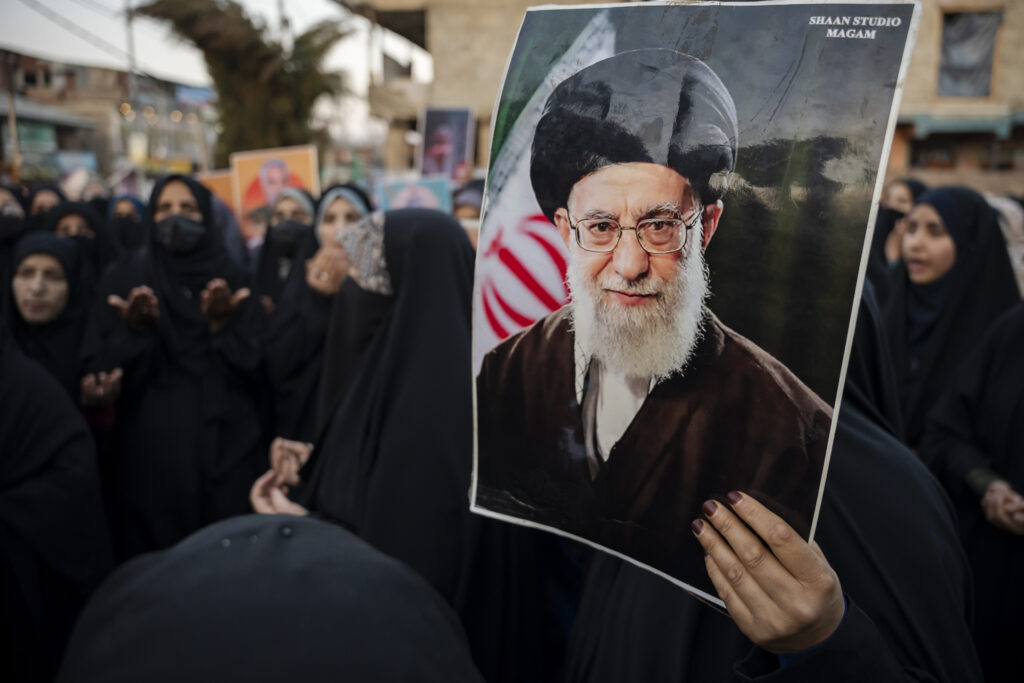
Four months after one of the most seismic events in modern Middle Eastern history, Iran is finally preparing to bury its slain Supreme Leader. Iranian state media announced on June 13, 2026, that funeral ceremonies for Ayatollah Ali Khamenei — assassinated on February 28 in a wave of US-Israeli airstrikes that triggered a regional war — will begin in Tehran on July 4, with his burial scheduled for July 9 at the Imam Reza Shrine in the northeastern city of Mashhad, his birthplace and the holiest site in Shia Islam.
The extraordinary delay between Khamenei's death and his state funeral tells the story of a country at war with itself and with the world — a nation so consumed by conflict, political upheaval, and the scramble for survival that the rituals of mourning for its most powerful leader in nearly four decades had to wait.
The Assassination That Changed Everything
Ayatollah Ali Khamenei, 86, was killed on February 28, 2026, at 08:10 local time at his residence in Tehran. The Islamic Republic of Iran Broadcasting confirmed his death the following morning. He died in the opening hours of the 2026 Iran war — a coordinated campaign of US and Israeli strikes targeting Iran's nuclear programme, ballistic missile infrastructure, and senior leadership. Among those killed in the same strike were Khamenei's daughter and son-in-law, whose funerals are now scheduled to take place alongside his own in July.
The loss was not just personal for Iran. Khamenei had led the Islamic Republic since 1989, succeeding Ayatollah Ruhollah Khomeini — the founding father of the revolution. Where Khomeini was the fiery ideological architect of the Islamic Republic, Khamenei was its long, steady hand: consolidating power through the Revolutionary Guard, expanding Iran's regional influence through a network of proxies, and navigating decades of sanctions, domestic unrest, and external pressure. He ruled for 36 years — far longer than Khomeini himself — and his death left a vacuum that the Islamic Republic had never had to fill under such violent and chaotic circumstances.
A Funeral Twice Postponed
The state funeral was originally scheduled for a three-day ceremony beginning March 4-6, 2026 — just days after the assassination. But as hundreds of thousands gathered in Tehran to mourn, Iranian authorities announced an abrupt postponement, citing "unprecedented turnout" and the inability to manage the security and logistics of such a massive gathering in wartime conditions. State television announced: "The farewell ceremony for the martyred Imam has been postponed. The new date will be announced later."
That new date never came — not for months. The war consumed everything. Iran was launching counter-strikes against Israel, US military bases across the region, and military and civilian targets in neighbouring Arab states. Iran closed the Strait of Hormuz, one of the world's most critical maritime chokepoints for oil and gas shipments. A ceasefire was arranged by Pakistan on April 8 and has since been extended multiple times, but negotiations toward a durable end to the conflict have repeatedly faltered. Peace talks in Pakistan broke down after Iranian negotiators failed to appear; a second round collapsed; Trump administration officials oscillated between optimism and ultimatums.
In that environment, organising the funeral of a head of state — one that would require the movement of millions of mourners from Tehran to Qom to Mashhad — was simply impossible. The body of the Islamic Republic's second Supreme Leader lay in state while the Republic itself fought for survival.
The July Ceremony: What to Expect
Now, with a fragile ceasefire holding and diplomatic talks reportedly making progress, Iran has announced the final schedule. Ceremonies will begin in Tehran on July 4, marking the start of the formal mourning period. From Tehran, the procession will move to Qom — the stronghold of senior Shia clerics and the spiritual heart of Iran's religious establishment — before continuing northeast to Mashhad.
Mashhad is Khamenei's birthplace and home to the Imam Reza Shrine, the burial place of Imam Ali ibn Musa al-Ridha, the eighth Imam of Shia Islam and the most revered site in the Shia world. The shrine already carries enormous religious weight; it draws tens of millions of pilgrims each year. Khamenei's burial there on July 9 will transform it into a site of political pilgrimage as well — likely for generations.
The funerals of Khamenei's daughter and son-in-law, killed in the same February strike, will be held on the same day as the Supreme Leader's burial, according to Iranian state media.
A New Supreme Leader No One Has Seen
The political backdrop to the funeral is extraordinary. Within days of Khamenei's assassination, the Assembly of Experts — the clerical body responsible for selecting Iran's Supreme Leader — convened and chose Mojtaba Khamenei, the late leader's 56-year-old son, as the third Supreme Leader of Iran on March 8, 2026.
The appointment was immediately controversial. President Trump had explicitly stated that choosing Khamenei's son would be unacceptable. Israel's military had threatened to target anyone participating in the selection process. But the Assembly proceeded regardless, and Mojtaba Khamenei was formally installed.
There is just one problem: almost no one has seen him since. Mojtaba was injured in the same airstrike that killed his father, suffering a fractured foot, bruised eye, and facial lacerations. He has not appeared in public since the strike. Statements attributed to him have been read on state television or posted on social media. The regime has even released AI-generated videos purporting to show him delivering messages — fuelling intense speculation about whether the new Supreme Leader is incapacitated, in hiding, or operating from outside Iran entirely.
US intelligence has assessed that Mojtaba Khamenei is still shaping Iranian strategy behind the scenes, but has been unable to visually confirm his whereabouts. The practical result is that power in Tehran is no longer concentrated in a single leader. Analysts at Time magazine and the Atlantic Council have described Iran's current leadership as distributed across a narrow circle of military, security, and political figures — with overlapping and contested portfolios. It is governance by committee in a time of existential crisis.
What the Funeral Signals for the War
The announcement of the July funeral is itself a geopolitical signal. It suggests Iran believes the ceasefire is stable enough — and the immediate security situation manageable enough — to bring millions of people into the streets of its major cities without catastrophic risk. It is also a moment of domestic politics: the regime needs to demonstrate that it is still functioning, still capable of honouring its dead, still in control of its own narrative.
For the international community, the ceremony will be watched closely. The July 4 start date — deliberately or not — falls on American Independence Day, a symbolism that will not be lost on either side. Whether senior political figures from other nations attend, and which nations send delegations, will reveal a great deal about how Iran's regional standing has shifted since February.
The broader context is a country that has absorbed enormous damage — militarily, economically, and politically — and is now navigating the most uncertain period in its post-revolutionary history. The man who defined that history for nearly four decades will finally be buried in the city of his birth, at the holiest shrine in his faith, in a ceremony that was delayed for months by a war his death helped ignite.
For Iran, the burial of Ali Khamenei is not just the end of a mourning period. It is the formal close of one era — and the fraught, uncertain beginning of the next.
Comments (0)
Please log in to comment
No comments yet. Be the first!