Finance & Business
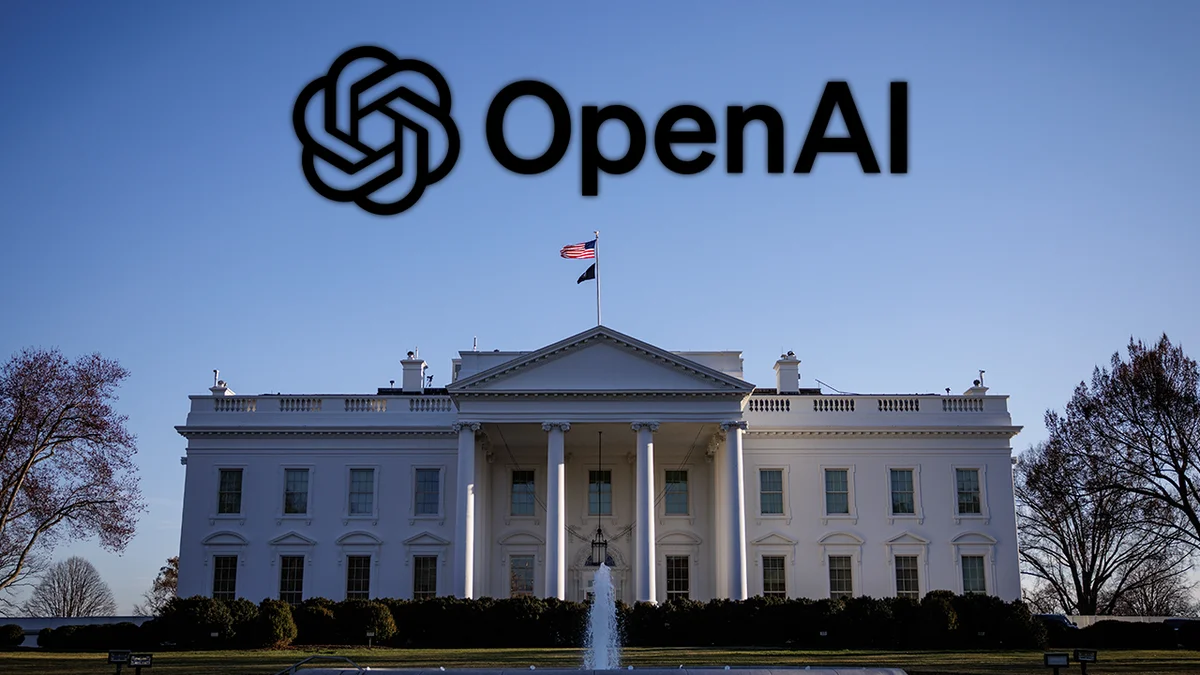
White House Asks OpenAI to Slow Rollout of New AI Model Over Security Concerns
In an unprecedented move, the Trump administration has asked OpenAI to limit the initial release of its newest AI model, GPT-5.6, to a small group of government-approved partners rather than rolling it out broadly to the public, according to multiple reports citing sources familiar with the matter. The request marks the first known instance of the U.S. government preemptively asking an American AI company to restrict a model's launch before it ever reaches the public.
OpenAI CEO Sam Altman confirmed the plan internally this week, telling staff in a memo that the government would be "approving access customer by customer" during an initial preview period. If that limited rollout goes smoothly, Altman said, OpenAI hopes to follow with a broader public release "a couple of weeks later."
Why the Government Got Involved
According to Axios, which cited a source familiar with the discussions, officials view GPT-5.6 as having "Mythos-like" capability — a reference to Claude Mythos, the frontier model built by OpenAI rival Anthropic. The comparison is significant: Anthropic's Mythos and Fable models were pulled from circulation earlier this year after the Commerce Department issued a rare export control directive citing concerns over their advanced cybersecurity capabilities, including the ability to identify and exploit software vulnerabilities at speeds no human analyst could match.
"The source said the government intervened because GPT-5.6 has 'Mythos-like' capability, not because the administration is suddenly taking a heavier hand," Axios reported. "This is what's happening with models of that caliber," the source added.
The request came directly from two White House offices: the Office of the National Cyber Director and the Office of Science and Technology Policy. It follows an executive order President Trump signed on June 2 that established a voluntary framework giving government cybersecurity teams up to 30 days to evaluate advanced AI models before they reach partners or the public. An earlier, more stringent draft of that order had been shelved in May after pushback from the AI industry.
Behind the Scenes
Axios reported that Altman discussed GPT-5.6 directly with Commerce Secretary Howard Lutnick on Wednesday, with Lutnick reportedly wanting assurance that all relevant parts of the government had tested and signed off on the model before any release. A source told Axios that OpenAI had been proactively coordinating with the administration on the rollout even before Anthropic's models were pulled, and that the company's staff "worked closely" with government reviewers in the lead-up to this week's announcement.
Notably, OpenAI doesn't appear thrilled with the arrangement as a long-term solution. "We've made clear to the U.S. government that this is not our preferred long term model, and will work with them and others in industry to achieve a more sustainable approach for future releases," the company said, according to Axios's reporting.
A Regulatory Landscape Still Taking Shape
CNN's reporting highlights a wrinkle in how this is playing out: the request to OpenAI came from the White House, while the export restriction that hit Anthropic's models came from the Commerce Department — two different parts of the government acting through two different mechanisms, with no single, consistent framework tying the two together.
That patchwork approach has drawn criticism from policy experts. Brad Carson, head of the bipartisan AI safety group Public First, told CNN that the current system amounts to "an ad hoc, personalized, opaque, possibly lawless approach" to regulating frontier AI. "It is certainly appropriate for the government to recall dangerous products, including AI models, but it has to be done in a way consistent with transparency and basic fairness," Carson said.
The geopolitical backdrop adds another layer to the administration's thinking. Officials have pointed to intensifying U.S.-China competition in AI development as a reason for wanting tighter vetting of the most capable models before they're broadly accessible — the concern being that sufficiently advanced systems could be misused by adversarial states or non-state actors if released without adequate safeguards.
What Happens Next
For now, GPT-5.6's limited release means access will be doled out on a partner-by-partner basis, with the government directly involved in approving who gets in during the preview window. OpenAI has signaled it hopes for a broader public launch within a couple of weeks if the controlled rollout proceeds without incident, though no firm date has been confirmed.
The episode adds OpenAI to a short but growing list of companies navigating a regulatory environment that, by multiple accounts, is still being built in real time — case by case, model by model — rather than through a settled, transparent rulebook. Whether this approach becomes the template for how the most capable AI systems reach the market going forward, or gives way to a more formal framework, remains an open question that the coming weeks of GPT-5.6's staged rollout may help answer.
Comments (0)
Please log in to comment
No comments yet. Be the first!