Finance & Business
OpenAI Launches GPT-5.6 Sol, Terra, and Luna – A New Era of Multimodal AI Begins
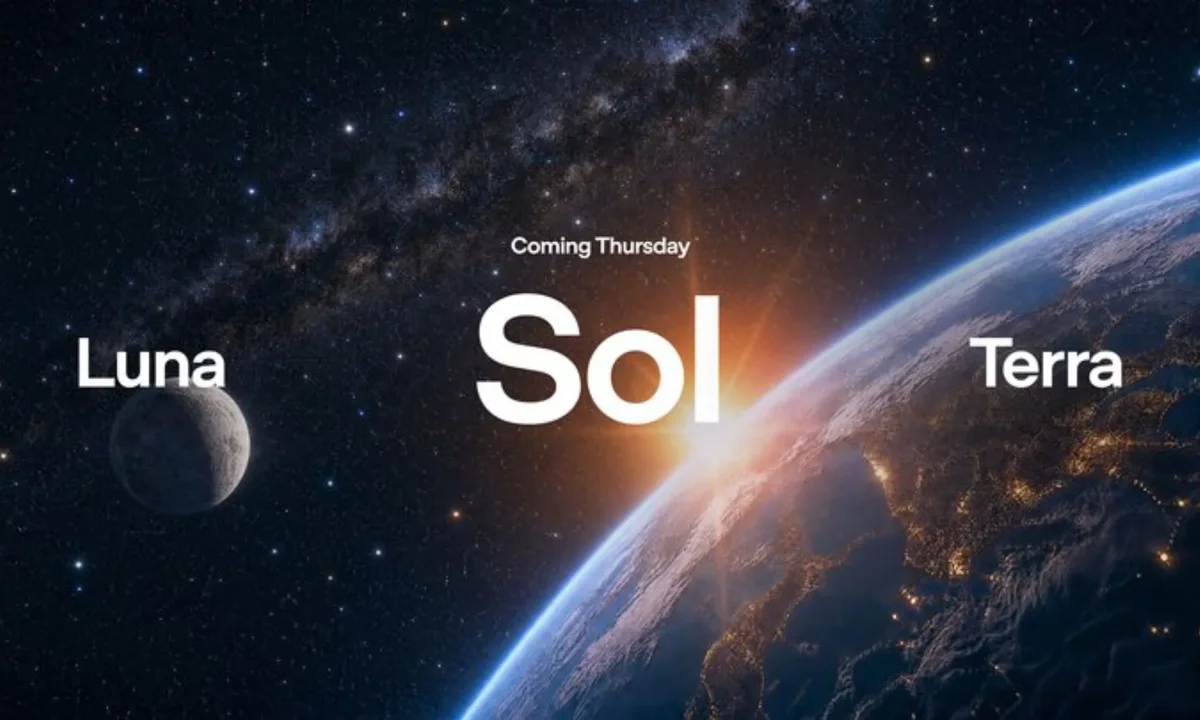
OpenAI has officially launched three major new AI models under the GPT-5.6 family: Sol, Terra, and Luna. This significant release represents a major leap forward in multimodal intelligence, reasoning capabilities, and specialized performance across different domains.The announcement has generated enormous excitement across the tech industry, with early users and developers already praising the models’ impressive abilities.Meet the New ModelsGPT-5.6 Sol
Focused on scientific reasoning and complex problem-solving. Sol excels at:Advanced mathematical and physics computations
Scientific literature analysis and synthesis
Hypothesis generation and experimental design assistance
Technical documentation and research support
GPT-5.6 Terra
Optimized for real-world, grounded tasks and environmental understanding. Terra shines in:Spatial reasoning and navigation
Physical world simulation
Practical problem-solving
Multimodal understanding of environments
GPT-5.6 Luna
Designed for creative and linguistic excellence. Luna stands out in:Advanced creative writing and storytelling
Nuanced language translation and cultural adaptation
Artistic concept generation
Emotional intelligence in conversations
Key Advancements Across the FamilyAll three models benefit from significant improvements over previous GPT versions, including:Enhanced long-context understanding
Better multimodal integration (text, image, audio, video)
Improved reasoning chains and reduced hallucinations
Faster inference speeds
Stronger safety and alignment features
How They Compare to CompetitorsThese new models position OpenAI strongly against rivals like Anthropic’s Claude series, Google’s Gemini models, and emerging Chinese AI systems. Early benchmarks suggest GPT-5.6 variants lead in several key areas, particularly in specialized scientific and creative tasks.Availability and PricingThe new models are being rolled out gradually:Initial access through ChatGPT Plus and Pro tiers
API access for developers with usage-based pricing
Enterprise solutions for large organizations
Pricing details are competitive, with OpenAI emphasizing value through superior performance per token.Real-World ApplicationsThe practical applications for these models are vast:Scientific research acceleration
Creative industry tools
Advanced educational assistants
Enterprise automation and analysis
Personal productivity enhancement
Concerns and CriticismsAs with any major AI release, there are important considerations:Energy consumption and environmental impact
Potential job displacement in certain sectors
Risks of misuse or over-reliance
Questions about transparency and safety testing
OpenAI has stated that extensive safety evaluations were conducted prior to release.The Bigger PictureThis launch reinforces OpenAI’s position at the forefront of AI development while highlighting the rapid pace of progress in the field. The specialization of models (Sol, Terra, Luna) may represent a shift toward more targeted, efficient AI systems rather than one giant generalist model.What’s Next?OpenAI has hinted at even more ambitious releases later in 2026, including potential multimodal agents and deeper integration across platforms.The competitive landscape continues to heat up, with significant implications for technology, business, and society.
Comments (0)
Please log in to comment
No comments yet. Be the first!