Finance & Business
Getty Images Stock Triples After Stunning Reversal: From Suing AI Companies to Partnering With OpenAI
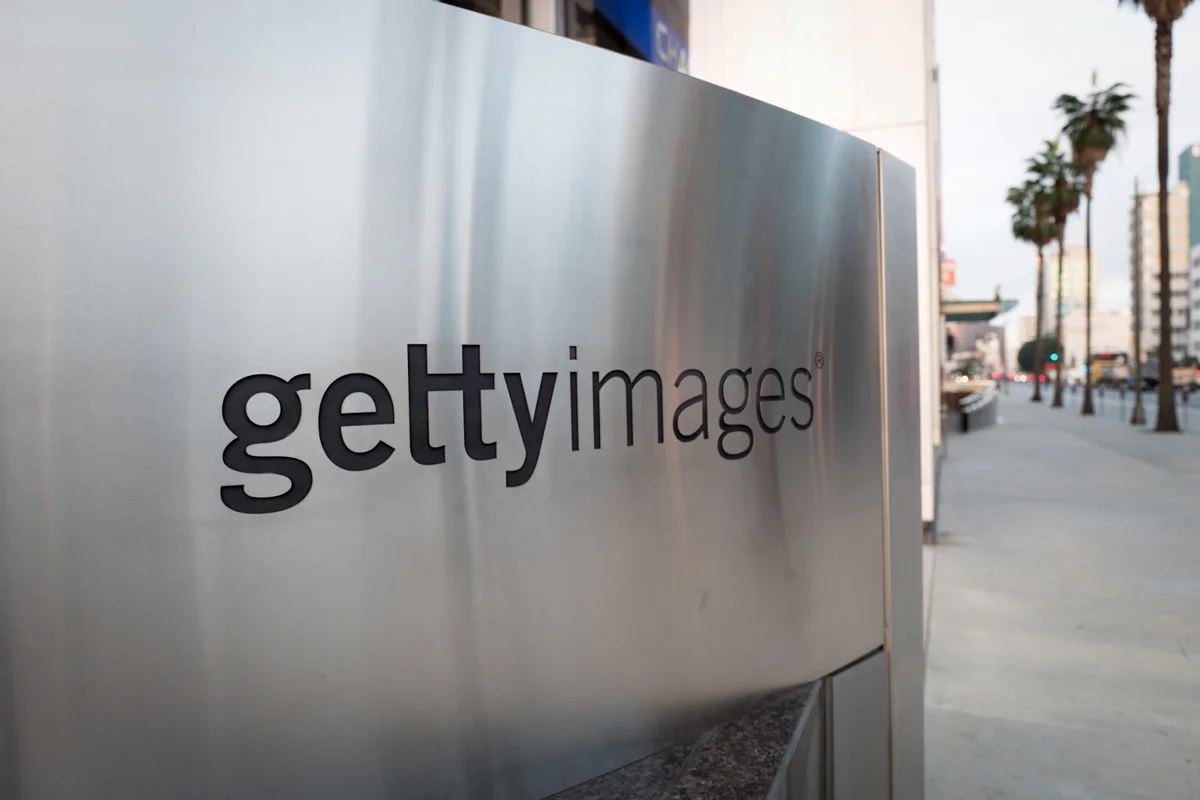
For a company that spent years suing AI firms over copyright infringement, Getty Images just made one of the most consequential strategic pivots in its history. On June 21, 2026, Getty Images announced a multi-year display partnership with OpenAI that will bring its licensed photo and video libraries directly into ChatGPT's search and discovery experiences — and the market's reaction was nothing short of explosive. Shares of Getty Images Holdings (NYSE: GETY) surged as much as 200% in the hours following the announcement, a staggering reversal for a stock that had spent most of 2026 trading in penny-stock territory.
"High-quality, licensed visual content makes AI-powered search and discovery more useful and more trustworthy," Getty CEO Craig Peters said in the company's announcement. "This partnership with OpenAI reflects a shared recognition of that, and together we will deliver richer visual experiences to ChatGPT users."
What the Deal Actually Does
Under the agreement, when ChatGPT users ask questions that would benefit from visual context, the chatbot's responses may now surface licensed, Getty-sourced photographs and imagery — sourced across Getty's portfolio of brands, which includes Getty Images itself, iStock, and Unsplash. The deal covers display and discovery use cases specifically: Getty's content will appear inside ChatGPT's search results and "discovery experiences," with attribution attached to the images shown.
It is important to understand what this deal is not. It is not a training data agreement. Getty has not disclosed that its images will be used to train OpenAI's underlying models — and notably, a similar prior deal Getty struck with the AI search engine Perplexity explicitly did not allow for that kind of training use either. Instead, this is fundamentally a distribution and discovery partnership: Getty gains a new, high-profile channel through which its archive can be seen and licensed, while OpenAI gains a source of legally clean, properly licensed images to enrich its search and chat responses — sidestepping the copyright uncertainty that has dogged AI-generated and AI-sourced imagery for years.
Financial terms of the agreement were not disclosed by either company.
From Lawsuits to Licensing: Getty's Remarkable Reversal
To appreciate how significant this pivot is, it helps to remember where Getty Images stood on AI just a few years ago. In September 2022, the company banned all AI-generated art from its library outright. A few months later, Getty sued Stability AI, the company behind the Stable Diffusion image generator, alleging large-scale copyright infringement. That UK lawsuit has now run for more than three years without final resolution; a related US case has similarly stalled in the courts.
The legal battles reflected a real and unresolved tension at the heart of the AI industry: does training a generative model on copyrighted images require a license from the rights holder? Courts have moved slowly on that question, and AI companies have had every incentive to delay a definitive answer, since each additional month allows them to keep building user bases, product moats, and revenue streams while the legal question remains open.
OpenAI's approach with this deal sidesteps that fight entirely. Rather than waiting for a courtroom verdict — or risking one — OpenAI negotiated commercial terms directly with Getty, closing off litigation risk with respect to Getty's specific library before it could ever become a legal liability. It's a strategy increasingly common across the AI industry: deals are faster, cheaper, and more certain than verdicts.
Crucially, this OpenAI deal is not Getty's first foray into this kind of arrangement. In October 2025, Getty signed a similar multi-year partnership with Perplexity AI, allowing that company's AI search and discovery tools to access Getty's licensed library, complete with image credit and source links designed to educate users on legal image use. Getty has also renewed partnerships with Canva and engaged with image-recognition company Clarifai, suggesting a deliberate, broader strategy: rather than pursuing one industry-wide framework or settlement, Getty appears to be negotiating individual licensing relationships with AI platforms one at a time.
Why the Stock Reacted So Dramatically
The scale of Monday's stock surge deserves some context, because percentage moves of this size are usually a signal about where a stock started, not just where the news took it. Getty shares had been trading near a 52-week low of $0.58 for much of 2026, and the company had received formal written notice from the New York Stock Exchange in March 2026 indicating non-compliance with the exchange's minimum average closing price requirement — a serious warning sign, though one that came with a six-month cure period rather than immediate delisting risk.
Against that depressed baseline, even a moderately positive catalyst could produce an outsized percentage move — and the OpenAI deal was considerably more than moderate news. Multiple outlets reported the stock rising between 140% and 200% in the hours following the announcement, with high short interest in the stock likely amplifying the volatility further as short sellers were forced to cover their positions.
It's worth tempering the headline number with the underlying fundamentals, however. Getty's first-quarter 2026 revenue came in at $226.6 million, below analyst estimates of approximately $240.7 million, with creative revenue specifically falling 4.5% year-over-year. The company left its full-year 2026 guidance unchanged at $948 million to $988 million following the announcement — meaning the OpenAI partnership, however significant strategically, has not yet been reflected in any revised financial outlook. As one financial analysis bluntly put it, the deal "has not suddenly repaired the income statement."
The Bigger Picture: Stock Photography's AI Reckoning
Getty's pivot reflects a broader, painful reality that has confronted the entire stock photography industry over the past several years: traditional licensing models have been under sustained pressure as generative AI made it possible for businesses and individuals to create custom images on demand rather than searching for and licensing pre-existing photographs. Getty's core business proposition — you need a licensed image, we have an enormous archive of them, pay us a fee — was being directly disrupted by some of the very same AI companies it was simultaneously suing.
This deal represents Getty's clearest articulation yet of an alternative path forward: rather than competing with AI-generated imagery, position the company's vast, professionally produced, and most importantly properly rights-cleared archive as a trusted, legally safe input that AI products need in order to operate responsibly and avoid their own copyright exposure. Getty works with close to 600,000 individual content creators and covers more than 160,000 news, sports, and entertainment events annually — a depth and breadth of professionally produced, verifiable imagery that AI-generated content cannot easily replicate, particularly for real-world events, breaking news, and recognisable public figures.
What's Left Unanswered
Several important questions remain open even after Monday's announcement. Chief among them: how much of the licensing revenue Getty receives from OpenAI will ultimately flow through to the photographers and videographers whose work populates its library. Getty's royalty structure and revenue split with contributors has long been a source of friction and complaint within the photography community, and the company has not detailed how proceeds from this specific deal will be distributed.
The fundamental legal question hanging over the entire AI industry — whether training a generative model on copyrighted material requires a license — also remains entirely unresolved by this agreement. This deal addresses display and discovery, not training data, and no commercial agreement of this kind can substitute for an eventual court ruling or new legislation on that underlying question.
What Happens Next
For ChatGPT users, the practical effect of the deal should begin appearing as OpenAI integrates Getty's licensed libraries into its search and discovery features in the coming weeks, with visible attribution accompanying the images that are surfaced. For Getty, the immediate task will be translating Monday's dramatic stock reaction and strategic validation into measurable, recurring revenue — something investors will be watching closely in the company's coming quarterly results.
For the AI industry more broadly, the Getty-OpenAI partnership adds further momentum to an emerging pattern: major AI platforms increasingly prefer negotiated licensing deals with established content owners over prolonged legal uncertainty, even as the deepest legal questions about AI training data remain stuck exactly where they were before this announcement — unresolved, and likely to stay that way for some time yet.
Comments (0)
Please log in to comment
No comments yet. Be the first!