World & Politics
US-Iran Nuclear Talks in Switzerland Postponed Days After Historic Peace Deal Signing
US-Iran Nuclear Talks in Switzerland Postponed Days After Historic Peace Deal Signing
SUBHEADLINE: Vice President JD Vance scrapped his trip to the Swiss resort of Burgenstock as Iran's delegation hesitated, casting fresh doubt on a ceasefire that ended a war that has killed at least 7,000 people.
ESTIMATED READ TIME: 6 min read
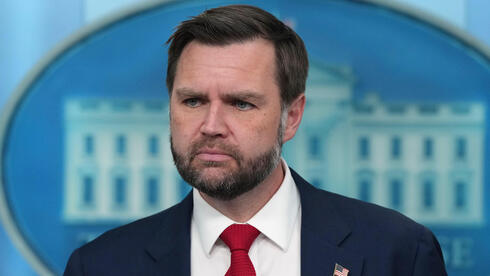
Just two days after Presidents Trump and Pezeshkian signed a historic agreement ending months of war between the United States and Iran, the next critical phase of diplomacy has hit an immediate snag. Switzerland's Foreign Ministry confirmed on Friday, June 19, 2026, that planned talks between US and Iranian negotiators — meant to begin the difficult work of resolving Iran's nuclear programme — will not take place as scheduled, after Vice President JD Vance abruptly called off his trip to the country.
The postponement, confirmed in near-identical statements from both Washington and Bern, has injected fresh uncertainty into a peace process that, until this week, had appeared to be moving with unusual speed. "The logistics of these negotiations have never been simple or predictable," a White House spokesperson said in a statement issued Thursday night.
From Signing Ceremony to Stalled Talks: A Whiplash Week
To understand Friday's setback, it helps to trace just how fast events have moved. On Wednesday, June 17, 2026, President Trump and his Iranian counterpart, President Masoud Pezeshkian, signed a 14-point memorandum of understanding formally ending the active phase of the war that began on February 28 with coordinated US and Israeli air strikes on Iran. That conflict has killed at least 7,000 people, sent global energy prices soaring, and rattled markets worldwide.
The memorandum extended a fragile ceasefire by at least 60 days and set out an ambitious path forward: an immediate reopening of the Strait of Hormuz, relief from economic sanctions, the unfreezing of billions of dollars in Iranian assets, and — critically — the launch of broader direct negotiations between Washington and Tehran on the most contentious issue of all, Iran's nuclear programme.
That nuclear negotiation track was supposed to begin almost immediately, with talks scheduled to start as soon as this weekend at Burgenstock, a mountaintop Swiss resort that has hosted high-level diplomatic gatherings in the past. Vice President Vance was set to lead the American delegation. Iran, according to Iranian state media outlet Tasnim, had said it was ready to begin technical talks — but with a condition: Tehran's negotiators first wanted to see concrete signs that Washington was actually implementing the interim deal it had just signed.
That condition appears to have gone unmet, at least for now.
Why the Talks Fell Apart — For Now
According to the White House, Vance's delegation had been fully prepared to depart for Switzerland as soon as final arrangements were confirmed. Instead, the trip was called off, with American officials citing the inherent difficulty of coordinating this kind of high-stakes, multi-party negotiation on short notice.
A separate and more pointed explanation emerged from regional media. Al-Mayadeen, a pan-Arab satellite channel aligned with the Iran-backed Lebanese militant group Hezbollah, reported that Iran was delaying the departure of its own delegation — specifically citing Israel's continued military campaign against Hezbollah in Lebanon as the reason. Israel was not a party to the US-Iran agreement and has visibly distanced itself from it, continuing strikes against Hezbollah even as the broader US-Iran ceasefire took hold. For Tehran, sending its negotiators to the table while an allied group is actively under Israeli fire raises obvious domestic and diplomatic complications.
Switzerland's Foreign Ministry, for its part, offered no detailed explanation, stating simply that the talks would not proceed on Friday as planned, while affirming that "Switzerland remains ready to facilitate these talks and the relevant preparatory work at Burgenstock is continuing." That careful, neutral framing — postponed, not cancelled — leaves the door open for talks to resume, but on a timeline that is now genuinely unclear.
A Notable Shift Inside Iran
One of the more significant developments to emerge alongside the postponement was the first public reaction from Iran's new Supreme Leader, Ayatollah Mojtaba Khamenei, who assumed the role in March after his father's assassination in the February strikes that triggered the war.
In a statement read by state media, Khamenei addressed the prospect of direct talks with the United States directly: "It is obvious that the face-to-face negotiations that will be held in the future will not mean accepting the enemy's opinion." The framing was notable less for what it rejected than for what it implicitly accepted — the legitimacy of direct negotiations themselves. Hardline factions within Iran's political establishment, including, at times, the previous Supreme Leader, have historically opposed direct talks with Washington. Analysts interpreted Khamenei's statement as a meaningful, if cautious, shift in Iran's posture.
Separately, a senior Trump administration envoy told US lawmakers in a private briefing that Iran has agreed to invite the International Atomic Energy Agency, the UN's nuclear watchdog, to inspect its nuclear sites — a concrete and potentially significant confidence-building step, if it materializes, regardless of the diplomatic hiccup in Switzerland.
What Diplomacy Is Actually Trying to Resolve
The stakes of the nuclear negotiation track that was meant to begin in Burgenstock are immense. US officials have said the talks could still produce an agreement on Iran's nuclear programme that improves upon the 2015 nuclear deal originally negotiated between Iran, the United States, and other world powers — an agreement the first Trump administration withdrew from in 2018.
The interim memorandum signed this week already addresses some of the most urgent practical consequences of the war. Chief among them: the status of the Strait of Hormuz, the critical maritime chokepoint through which a significant share of the world's oil and gas trade passes. The strait had been closed by Iran during the conflict, and the new agreement calls for its immediate reopening.
On-the-ground reporting suggests that reopening is already, cautiously, underway. According to maritime industry sources, the strait's main central shipping route remains closed, with an estimated 80 mines still requiring clearance. However, two alternative routes — a smaller northern route through Iranian waters and a southern route through Omani waters — are reported to be fully open, and commercial vessel traffic has picked up noticeably. Industry analysts at Lloyd's List estimate that approximately 550 merchant ships, including 160 oil tankers, will need to transit out of the Gulf in the coming period as shipping normalizes.
Domestic Political Pressure on Both Sides
The postponement also lands amid significant political turbulence in Washington. Some of President Trump's own Republican allies in Congress have publicly questioned whether he conceded too much to secure the agreement with Iran, given that Trump had previously vowed to end the war only with Iran's "unconditional surrender." Instead, the signed memorandum provides Iran with sanctions relief and the unfreezing of billions of dollars in assets — concessions that some hardliners view as a retreat from the administration's earlier maximalist position.
That criticism carries real political weight heading into the November midterm elections, particularly given that the war itself has been broadly unpopular with the American public. Any perception that the administration is moving too quickly, or giving up too much, to maintain a fragile peace could become a significant talking point in the coming months.
On the Iranian side, the dynamics are similarly delicate. Iran's leadership must balance the practical benefits of sanctions relief and reduced conflict against the political risk of appearing to negotiate from a position of weakness — all while navigating the complicated reality that its regional ally, Hezbollah, remains under active Israeli military pressure in Lebanon, a conflict the new US-Iran agreement did nothing to resolve.
What Comes Next
For now, the diplomatic process exists in a state of suspended momentum: a peace agreement has been signed and is being implemented in some respects — the Strait of Hormuz reopening is real and visible — but the follow-on negotiations meant to resolve the conflict's most dangerous underlying issue, Iran's nuclear programme, remain stalled at the starting line.
Switzerland's continued openness to host the talks, combined with Iran's reported openness to "technical talks" once it sees further signs of US implementation, suggests this is more likely a delay than a collapse. But in a peace process that has already been defined by abrupt reversals, cancelled meetings, and shifting deadlines since the war began in February, predicting exactly when — or whether — the Burgenstock talks will actually convene remains, as the White House itself acknowledged, anything but simple or predictable.
Comments (0)
Please log in to comment
No comments yet. Be the first!