Finance & Business
Snap Makes Another Pitch for Its $2,195 Specs AR Glasses
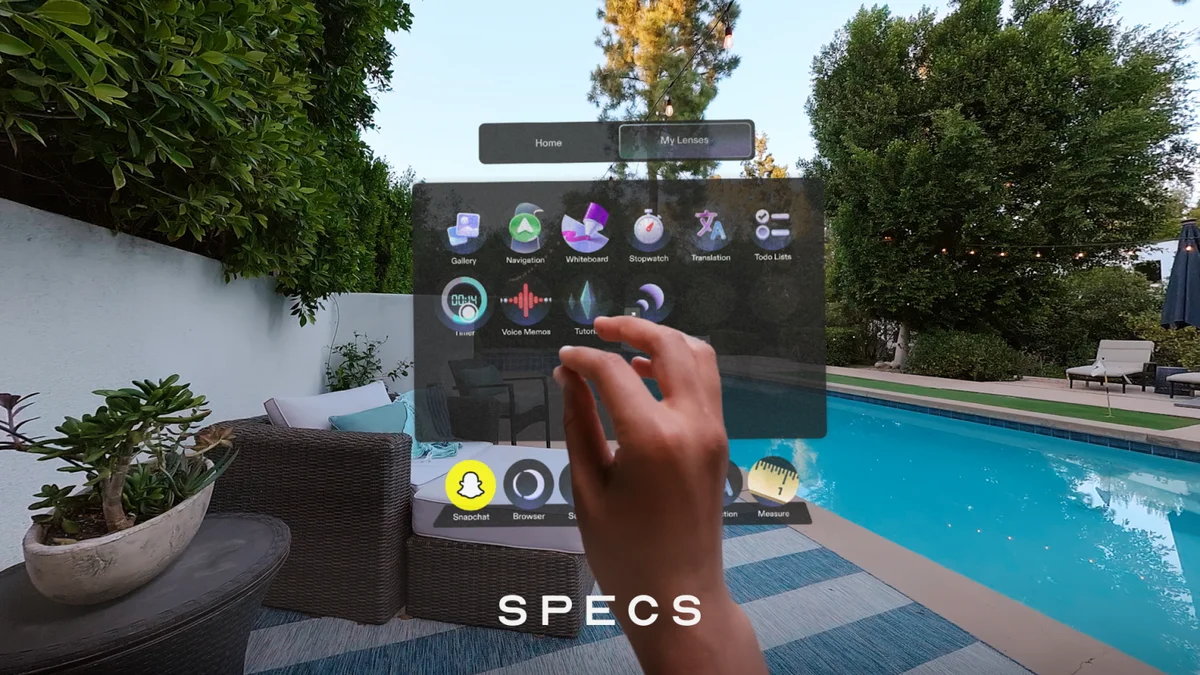
Snap spent June getting roasted for the frames. On Wednesday it tried to sell the computer inside them.At an event in Los Angeles, Evan Spiegel walked through what Specs will actually do before they ship later this fall in the United States, the United Kingdom, and France. The glasses still cost $2,195, or $2,395 with a connected charging case that adds cellular. A $200 deposit remains refundable. The first look in June produced scuba-gear jokes and calls for Spiegel to quit the hardware bet. This week’s show was the rebuttal: software, carriers, Hollywood apps, and a pitch that Specs are not Meta’s camera Ray-Bans with a nicer logo.Spiegel’s line has not changed. Success is proving you can wear a different kind of computer and have it feel “more human.” Activists have wanted the AR unit spun off or killed. He calls the glasses years of his life’s work. The company has poured more than $3 billion into the category. Memory-chip inflation helped push the price into Vision Pro-adjacent territory without the strap.What Changed This WeekSpecs Intelligence. Snap’s new “anticipatory AI” is meant to live on the glasses and on iPhone and Mac. The company describes an AI-native OS that ties Lenses — Snap’s AR effects — to projects so the system can surface a gate change, a calendar brief, or a next step without a hunt through six apps. An iOS Specs app is available now in the U.S. for adults. The fuller Mac experience is invitation-only early access.Entertainment. HBO Max and Spotify are on the list. Snap is talking up a virtual ~115-inch screen about ten feet out, plus a Harry Potter tie-in timed to HBO’s series. YouTube streaming sits in the same browser bucket. Smart glasses have usually been cameras with audio. Snap is trying to make them a living-room that follows you.Verizon. Select stores will let people try Specs. Custom data plans are coming. The connected case is the untethered version: four extra charges and cellular so the glasses are not a Wi-Fi toy. Other carriers, including EE in the U.K., are in the mix. Monthly fees for that freedom are not fully public.Enterprise. Nvidia, Amazon Web Services, and Salesforce are named partners. Spiegel wants businesses to treat Specs as a computer for field techs — overlay instructions, talk to agentic tools — not as a Snapchat peripheral. That is how you justify $2,200 when consumers compare the price to a phone.Los Angeles also gets a pop-up in October so people can try before they wire the rest of the money.The Hardware Still Has to Be WornSpecs are standalone. Dual Qualcomm Snapdragon chips. Waveguide displays Snap says cover a 51-degree field of view with millions of colors. Two frame sizes: 47 mm at about 132 grams, 52 mm at about 136. About four hours of mixed use, more with the case. No puck. That is the point versus older mixed-reality kits and versus Meta’s cheaper display glasses that still lean on a phone.Hands-on notes from this week are consistent: the AR layer is the interesting part; the look is the argument. They are thick, black, obvious. You will not be mistaken for someone in ordinary frames. Reviewers who like the interface still doubt a first-generation $2,200 face computer is ready for anyone but enthusiasts. Battery under full AR load is the other caveat.Meta owns the “glasses you might actually wear to the store” lane at a few hundred dollars. Apple owns the “spatial computer you take off after an hour” lane at $3,500. Snap is aiming between them and hoping the display-in-both-eyes, no-puck design is the missing product.Why Snap Cannot Drop ThisSnapchat is still the cash machine. Hardware is the attempt to own a platform instead of renting a slot in someone else’s app store. If Specs flop, Spiegel owns a very expensive hobby. If they find a niche — creators, field service, people who want a private screen on a train — Snap gets a second business that is not an ad auction.The June backlash was about aesthetics and price. Wednesday’s stack is about purpose: AI that jumps devices, TV apps, a carrier who will demo them next to phones, and three enterprise logos that make a CFO less embarrassed. That is a coherent second pitch. It is not proof anyone will walk around downtown in 136-gram black slabs.Preorders are open. Shipping is “later this fall,” which in hardware language means the software will still be moving when the box arrives. Specs Intelligence on a phone is how Snap starts training people before the glasses land.
Comments (0)
Please log in to comment
No comments yet. Be the first!