Finance & Business
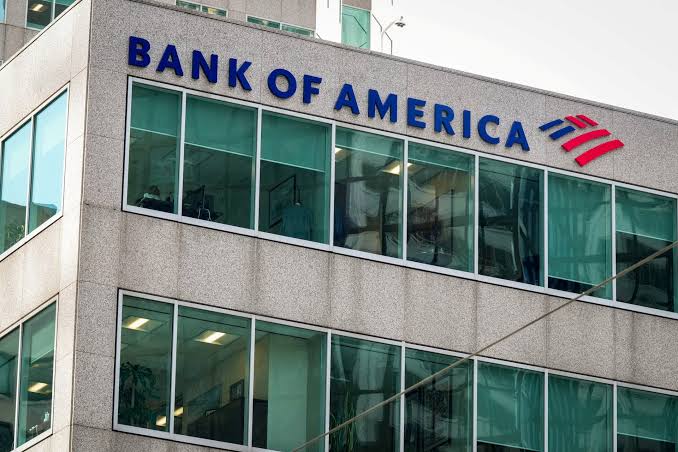
Bank of America Fined More Than $1.2 Billion Over Anti-Money-Laundering and Sanctions Failures
The Treasury Department called the actions the third-largest penalty in its history and the largest the Office of the Comptroller of the Currency has ever imposed.
On Monday the department announced more than $1.21 billion in penalties against Bank of America, the second-largest U.S. bank, for violations of anti-money-laundering and sanctions laws. The pieces are separate and partly overlapping. FinCEN assessed a $1.2 billion penalty for failing to mitigate and report priority national-security risks, including Chinese money-laundering networks and illicit finance along the southwest border. The OCC assessed a $750 million civil money penalty for a deficient Bank Secrecy Act and anti-money-laundering program; that $750 million is credited against the FinCEN figure, so the bank is not paying both in full on top of each other. OFAC announced an $11.6 million settlement over apparent violations of sanctions programs covering Iran, Russia, narcotics, and global terrorism.
As part of the FinCEN resolution, Bank of America admits that it willfully violated the Bank Secrecy Act. It failed to keep an AML program that met the minimum requirements, failed to do due diligence on correspondent accounts for foreign financial institutions, and failed to file suspicious activity reports. The result, in the government’s account, was that the bank did not timely report more than $5 billion in suspicious transactions. More than $1 billion of that activity implicated national-security and other priority illicit-finance risks, including transactions indicative of Chinese money-laundering networks, fraud, and potential trade-based money laundering with a substantial nexus to the southwest border.
What the OCC Said Was Still Broken
The OCC’s $750 million is the largest civil money penalty in that agency’s history. It sits on top of a December 2024 cease-and-desist order that already required the bank to fix its BSA/AML program. The OCC said the program remained deficient and ineffective. A weak transaction-monitoring system meant the bank failed to properly monitor trillions of dollars in transactions and filed large numbers of late suspicious-activity reports involving billions of dollars. Management, the agency said, failed to ensure an effective program and continued to minimize significant deficiencies.
The bank processes hundreds of trillions of dollars a year. The OCC’s point is that a firm of that size, with a rising risk profile for money laundering and terrorist financing, signed an order in 2024 and did not close the gaps the order named. The new penalty is the price of that gap remaining open.
The Earnings Line
Bank of America said the penalty will hit third-quarter results. A spokesperson told Reuters the results due Wednesday will include a non-tax-deductible charge of $1.2 billion, reducing quarterly net income by about 17 cents a share. Analysts’ mean adjusted earnings estimate was $1.10, according to LSEG, but that figure excludes one-offs like this fine. The charge is large enough to move the print. It is not large enough, on its own, to change the bank’s capital position in a way the market has treated as existential. The stock reaction will depend on whether investors read the fine as a closed item or as evidence that the 2024 order’s work is still unfinished.
What the Admissions Cover
The willful BSA admission is the part that lasts beyond the check. A bank that admits it did not maintain a minimally compliant AML program, did not diligence foreign correspondent accounts, and did not file SARs on more than $5 billion of suspicious activity has given the government a record it can use in any later case. The Chinese money-laundering networks and the southwest-border nexus are the national-security half of that record. The OFAC settlement, at $11.6 million, is small next to the FinCEN number and covers apparent violations across several sanctions programs. Small does not mean unrelated. Sanctions screening and AML monitoring fail in the same control environment.
The government did not allege that Bank of America itself ran a laundering operation. It alleged that the bank’s systems did not catch and report activity that others did. For a bank that size, that is the charge the Bank Secrecy Act is written to cover.
What to Watch
Wednesday’s third-quarter release and the 17-cent charge.
Any further remedial requirements beyond the 2024 order and this resolution.
Whether other large banks face similar FinCEN actions on Chinese money-laundering networks or border-related flows.
The stock’s reaction once the charge is in the numbers.
How long the credited OCC penalty and the FinCEN assessment take to clear the payment mechanics.
Bank of America is paying more than $1.2 billion, admitting willful Bank Secrecy Act violations, and taking a non-deductible charge that cuts about 17 cents a share from the third quarter. The failures the government described left more than $5 billion in suspicious activity unreported on time, including more than $1 billion tied to priority national-security risks. The 2024 order was supposed to fix the program. The 2026 penalties say it did not.
Digital8Hub will update after Wednesday’s earnings if the charge or the outlook differs from the bank’s statement.
Comments (0)
Please log in to comment
No comments yet. Be the first!