Technology
Tesla Locks In $30 Billion of Unused Credit as Cybercab and Optimus Capex Climbs
Tesla did not take $30 billion. It reserved the right to.
A Tuesday filing shows three new senior unsecured bank facilities: a $20 billion three-year delayed-draw term loan with Citibank as administrative agent, an $8 billion five-year revolving credit line with Wells Fargo, and a $2 billion revolver with a 364-day term, also Wells. Nothing was outstanding at signing. The company said it does not currently plan to draw in 2026. An older $5 billion revolver from 2023, also undrawn, was terminated.
That is a backup generator, not a rescue check. The interesting part is why Tesla wanted a generator this large while sitting on more than $40 billion of cash and investments and about $9 billion of existing debt.
The Spend the Lines Are Built For
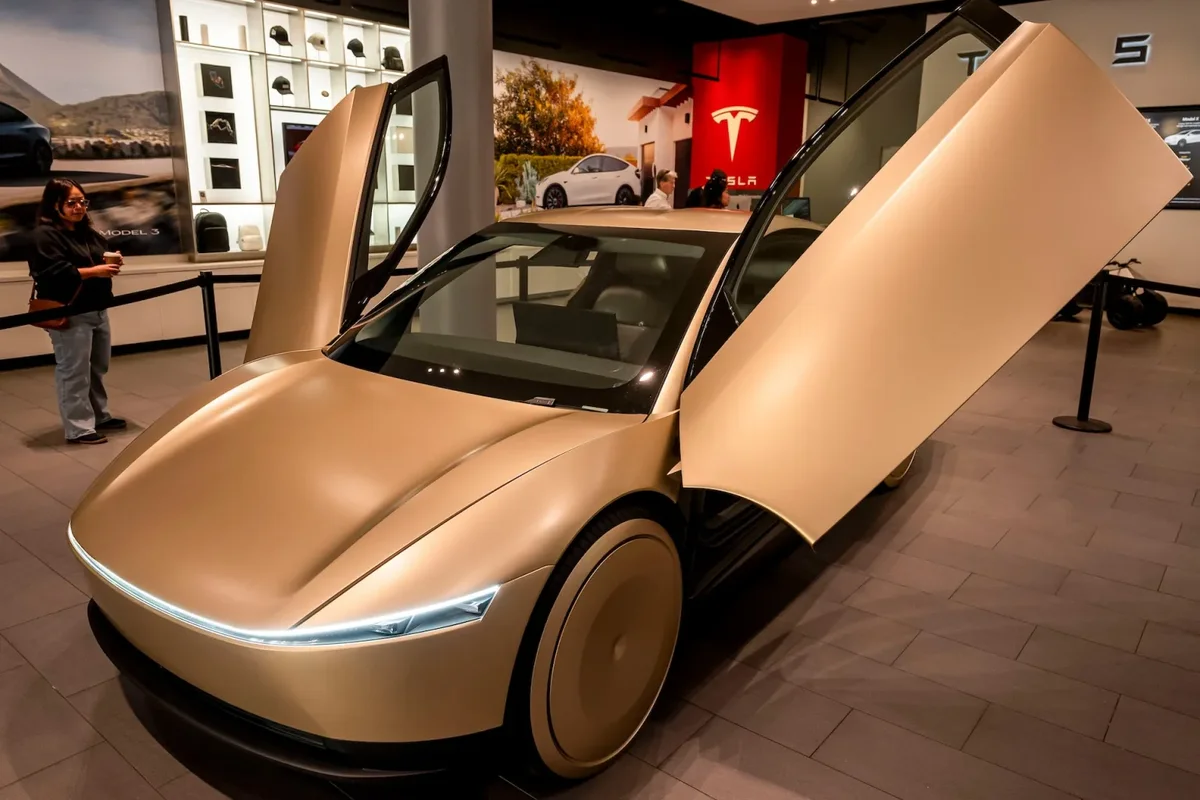
2026 capital expenditure is guided above $25 billion, up from about $8.5 billion in 2025. Management has said the rate can keep rising into 2027 and 2028. The destinations named around the raise are the expensive ones: Cybercab robotaxi lines at Gigafactory Texas, Optimus humanoid capacity (Fremont and dedicated space), Tesla Semi, AI compute and data-center kit, and a solar-and-chip conversation that now includes SpaceX. Elon Musk this week talked about aiming, with SpaceX, at 200 gigawatts a year of solar production. Whether that number is a joint factory plan or a horizon statement, it is not a cheap horizon.
Cybercab, Optimus, and Semi all need new process, not a paint-shop tweak. Musk has called Optimus the hardest manufacturing scale-up Tesla has tried — no inherited supply chain, every part new. That is how you get a capex year that looks like a wartime chart and a credit package that looks like a utility’s.
CFO Vaibhav Taneja previewed the borrowing capacity on the July call: use cash first, keep optional debt so the roadmap does not depend on a friendly equity window. Tuesday is that sentence in an 8-K.
How the $20 Billion Tranche Actually Works
The term loan is not a pile of cash in a vault. Tesla can draw it no more than ten times in the 18 months after close. Unused commitment steps down: to $10 billion after a year, $5 billion after 15 months, then off. Money that is drawn comes due in September 2029. Miss the window and the cheap option shrinks.
The five-year revolver runs to 2031 with two possible one-year extensions, can be pulled in dollars, pounds, or euros, and includes letter-of-credit room. The short revolver is a one-year-class facility that can stretch. Together they replace a $5 billion line that was going to sit until 2028 doing nothing.
Banks do not sign $30 billion of unused paper for charity. They are underwriting Tesla’s name and a fee for standing by. Tesla is paying for optionality into a stretch when free cash flow has already printed negative — the first such quarter since early 2024, after capex jumped and auto margins thinned.
Cushion Versus Signal
Read it as distress and you have to ignore the cash pile and the “no 2026 draw” line. Read it as infinite runway and you have to ignore step-downs, rising capex, and a robotaxi that still has to become a fleet. The honest middle is insurance. If Cybercab ramps slower than the slide, if Optimus actuators slip, if the auto business does not fund the AI campus, the banks are already in the room.
A delayed-draw term loan plus revolvers is how you avoid selling stock into a week when the multiple is ugly. It is also how you tell suppliers and municipal partners the build will not stop for a quarter of weak deliveries.
What Would Make This Matter
A draw in 2027 is the tell, not the signature page. If the $20 billion starts coming down in chunks earmarked for Optimus tooling or Texas robotaxi cells, the credit story becomes a funding story. If the lines stay virgin through 2028, Tesla paid for a headline and a rating conversation.
Watch Q3 cash flow and the next capex guide. Watch whether Cybercab units leave Texas as a product or a prototype. Watch whether Optimus leaves the demo floor as a bill of materials with a cost curve.
Thirty billion of undrawn credit does not build a robot. It means the robots, if they come, will not wait on a hurried bond tour. That is the whole filing.
Digital8Hub will track any 2027 draw notices and how capex splits among Cybercab, Optimus, and compute.
Comments (0)
Please log in to comment
No comments yet. Be the first!