Technology
OpenAI Engineer Arrested After a Recording Device Was Found in an Executive Conference Room
OpenAI used its own models to help identify the employee it says planted a bug in its office.
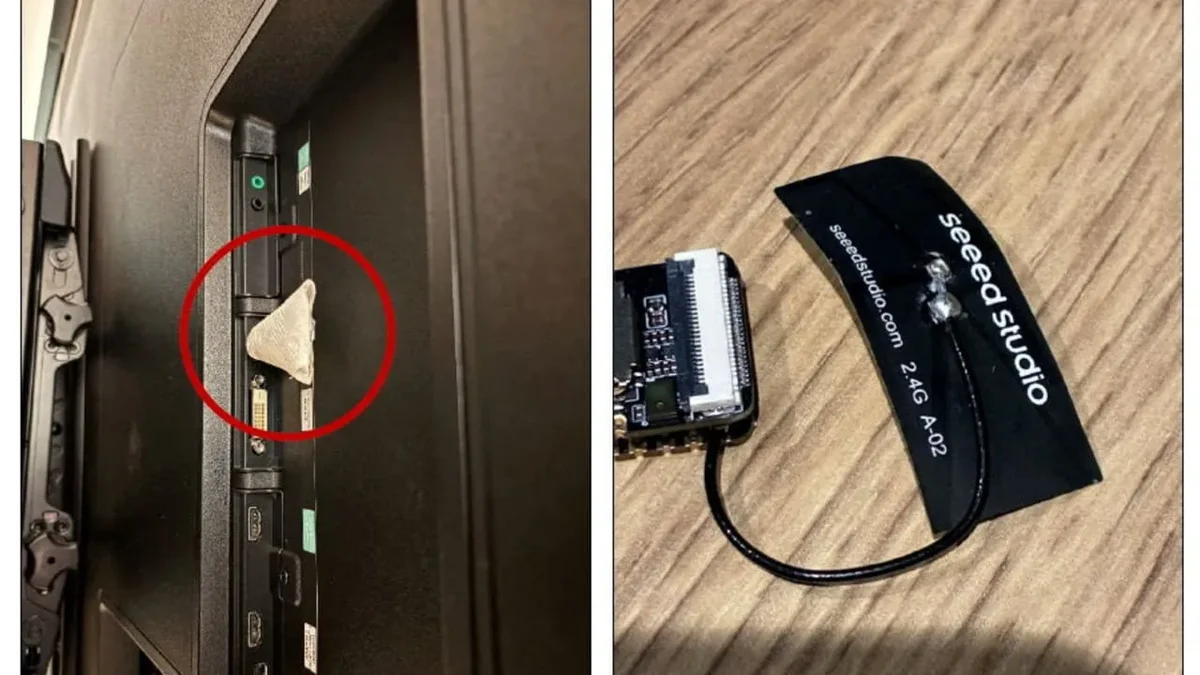
A criminal complaint unsealed Tuesday charges Abdulrahman Alfozan, described by prosecutors as a 35-year-old Saudi Arabian national and U.S. permanent resident, with using or endeavoring to use a device to intercept oral communications. The Justice Department and OpenAI say he concealed an audio recorder in toilet paper, inserted it into a USB port on the back of a television in an executive conference room at a San Francisco office, and left it there on or around September 28. A countersurveillance sweep on September 30 found it. He was fired and arrested on October 9.
OpenAI’s public statement said it discovered a “sophisticated recording device,” used its models to understand the device and where it had come from, identified that a specific employee had planted it a few days earlier, and referred the matter to the FBI. The company added: “At this time, we have no indications of this individual inappropriately accessing or exfiltrating model weights, source code, or customer data.” The FBI’s investigation is ongoing. OpenAI said it would continue to support it.
What the Complaint Describes
The room, prosecutors said, is one where highly confidential technical, commercial, and strategic discussions take place. The device’s contents were encrypted. OpenAI told TechCrunch it had advanced encryption, audio-monitoring capabilities, and a mechanism for transferring data designed to evade monitoring. How distinct that is from other covert recorders is not established in the public filings.
Prosecutors say Alfozan spent weeks querying a “productivity agent” and an AI chatbot while planning the operation. He used an internal OpenAI tool to ask about meetings scheduled in the targeted room. A chatbot account associated with his spouse was used, according to the complaint, for technical questions about building, customizing, installing, testing, obfuscating, and remotely accessing a recording device, including prompts about a continuous audio recorder, Wi-Fi connectivity, live listening, and encrypting an SD card. Those are allegations in a charging document. They are not a conviction.
Surveillance footage, the complaint says, showed him near the conference room on multiple occasions last month despite lacking authority to access the space. A photo released by the Justice Department allegedly shows him looking behind the television. The room did not have a camera at the moment of installation; the footage is from elsewhere in the office. Security later found a bag he had left in another room containing his wallet, ID, and a second recording device.
He previously worked at a cargo logistics startup and at Meta, according to a LinkedIn profile cited in coverage. That history is background, not part of the charge.
What OpenAI Is and Is Not Claiming
The company’s line is narrow and deliberate. It says the device was planted by an employee, that its models helped identify him, that he was terminated, and that it has no indication he took weights, source code, or customer data. It does not say what, if anything, the recorder captured. It does not say whether any audio left the building. It does not describe a foreign-government link. The charge is interception of oral communications, a federal offense that does not require proof that the recording reached an outside party.
The use of the company’s own models to analyze the device is the detail OpenAI chose to highlight. A lab that sells tools for understanding complex systems used those tools on a piece of hardware found in its own conference room. That is a capability demonstration and a security admission at the same time: the sweep found the device, and the models shortened the path from hardware to a named employee.
Why the Room Matters
An executive conference room at OpenAI is where product, partnership, and research decisions are discussed. A recorder in that room, even for two days, is a different problem from a leaked document. The government’s case, as charged, is that he tried to capture those conversations. OpenAI’s statement is that the more valuable digital assets — weights, code, customer data — do not appear to have moved. Both can be true. A failed or partial audio collection is still a breach of the room. The absence of an exfiltration finding is what keeps this from being a model-theft case.
The chatbot prompts attributed to a spouse’s account are the other open question. If the complaint’s description holds, planning for a covert recorder was done in part through consumer AI tools. That is evidence for prosecutors. It is also a reminder that the same systems OpenAI builds will answer technical questions from anyone with an account.
What to Watch
The next court date and whether Alfozan is detained or released.
Any superseding charge that adds espionage, theft, or a foreign-agent count — none of which is in the current complaint.
Whether OpenAI says the device recorded anything, or that it did not.
The second device found in the bag, and what forensic work shows about it.
How other labs change physical countersurveillance after a peer found a bug with its own models.
An OpenAI engineer has been arrested and charged after a recording device was found hidden in toilet paper and plugged into a television in an executive conference room. The company says its models helped identify him, that he was fired, and that there is no sign he took model weights or customer data. The charge is intercepting oral communications. The investigation is open.
Digital8Hub will update if the complaint is amended or if OpenAI says what the device captured.
Comments (0)
Please log in to comment
No comments yet. Be the first!