Technology
Nvidia Unveils RTX Spark: A Revolutionary Chip Designed for Personal AI Computers
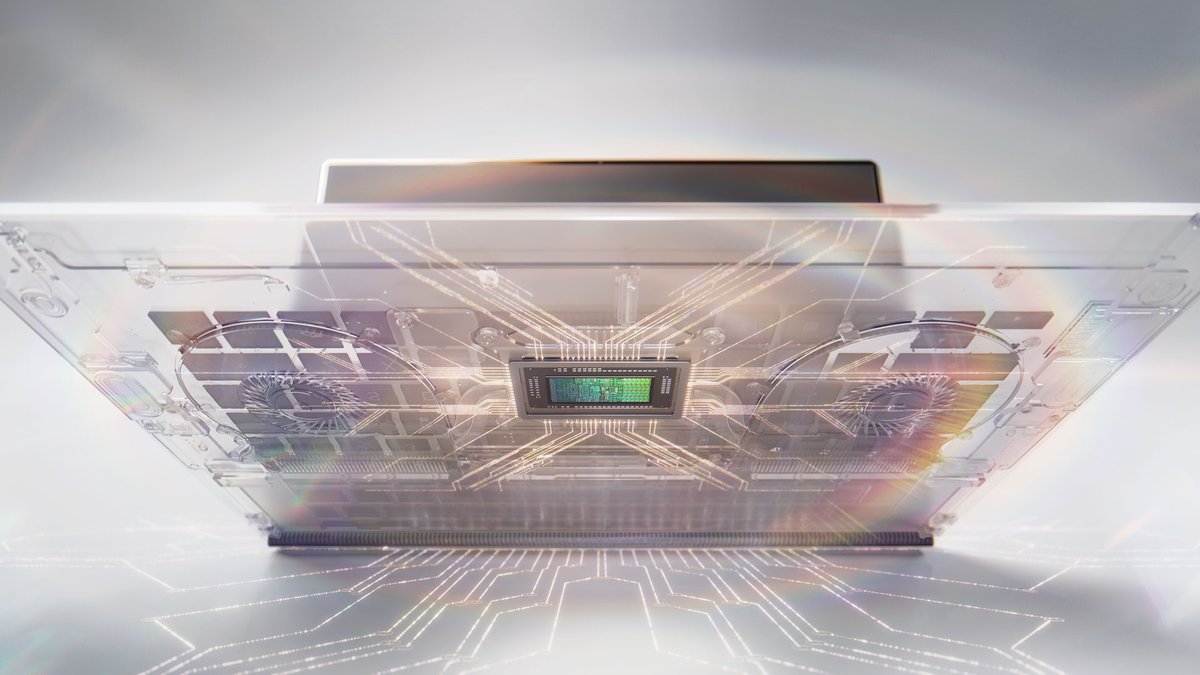
Nvidia Unveils RTX Spark: A Revolutionary Chip Designed for Personal AI ComputersNvidia has taken a major step toward bringing advanced artificial intelligence directly to consumers with the official unveiling of the RTX Spark chip family — a new line of processors engineered specifically for personal AI computers.Announced during a special event on May 29, 2026, the RTX Spark represents Nvidia’s most ambitious push yet into the consumer PC segment, aiming to make powerful on-device AI accessible to millions of everyday users rather than just data centers and high-end workstations.What is RTX Spark?The RTX Spark is a new architecture that combines Nvidia’s latest GPU technology with dedicated AI acceleration cores, high-speed memory, and efficient power management. Unlike traditional GPUs focused primarily on graphics, the Spark series is optimized for running large language models, image generation, video processing, and intelligent assistants locally on personal devices.Key highlights include:Up to 1,200 TOPS (Trillion Operations Per Second) of AI performance
Next-generation Tensor Cores with enhanced Transformer Engine technology
Support for models up to 70 billion parameters running locally
Advanced ray tracing and neural rendering capabilities
Significantly improved power efficiency compared to previous generations
The first RTX Spark-powered laptops and desktops are expected to launch in Q3 2026 from partners including Dell, ASUS, HP, and Lenovo.Why Personal AI Computers MatterNvidia’s move addresses a growing demand for AI that runs locally on personal devices. While cloud-based AI (like ChatGPT or Gemini) offers convenience, many users and enterprises prefer on-device processing for reasons of privacy, speed, security, and reduced latency.Local AI enables powerful features such as:Real-time video editing and generation
Intelligent personal assistants that understand context deeply
Advanced coding copilots that work offline
Privacy-focused image and voice processing
Personalized learning and productivity tools
Technical AdvantagesThe RTX Spark builds upon the success of the RTX 50-series but shifts the focus heavily toward AI. Key improvements include:Much larger on-chip memory caches
New low-precision computing formats optimized for AI inference
Better integration with system RAM and storage
Enhanced support for multimodal AI models (text + image + audio)
Nvidia claims the RTX Spark delivers up to 40x better AI performance compared to integrated graphics solutions in current laptops, while consuming significantly less power than discrete GPUs from the previous generation.Market Positioning and CompetitionWith this launch, Nvidia is directly challenging:Apple’s M-series chips with their Neural Engines
Qualcomm’s Snapdragon X Elite and upcoming AI-focused chips
Intel’s Lunar Lake and future AI PC processors
AMD’s Ryzen AI series
However, Nvidia’s massive software ecosystem (CUDA, TensorRT, and extensive developer tools) gives it a significant advantage that competitors will find difficult to match in the short term.Pricing and AvailabilityEntry-level RTX Spark configurations in laptops are expected to start around $1,299, while high-end creator and gaming machines with more powerful variants could exceed $3,000. Desktop versions will also be available through custom PC builders.Initial supply is expected to be limited, with broader availability ramping up through the holiday season of 2026.Impact on the PC IndustryThis announcement could accelerate the “AI PC” trend that has been building throughout 2025–2026. Major PC manufacturers are already preparing marketing campaigns around “Spark-Powered AI PCs,” and Microsoft is expected to deepen integration with Windows features powered by local AI.Analysts predict that AI-capable PCs could represent over 60% of the premium laptop market by the end of 2027, driven largely by chips like the RTX Spark.Challenges and CriticismsNot everyone is convinced. Some industry observers worry about:High power consumption during intensive AI tasks
Premium pricing that may limit mass adoption
Potential fragmentation if different vendors implement AI features differently
Concerns about data privacy even with local processing
Nvidia has addressed some of these points by emphasizing power efficiency improvements and strong privacy controls in its software stack.CEO Jensen Huang’s VisionDuring the launch event, Nvidia CEO Jensen Huang declared:“The future of computing is personal AI. Every computer should understand you, help you create, and make you more productive. RTX Spark is the engine that will power that future.”
Final ThoughtsThe RTX Spark represents more than just a new graphics chip — it’s Nvidia’s declaration that the age of personal AI has truly begun. By bringing massive AI compute power to laptops and desktops, Nvidia is attempting to redefine what a personal computer can do.Whether this leads to a new golden era for the PC industry or becomes another hyped feature that fails to excite mainstream users remains to be seen. However, with major software partners, strong hardware capabilities, and Nvidia’s undeniable brand power in AI, the RTX Spark enters the market with significant momentum.The next 12–18 months will be critical as consumers and businesses decide whether personal AI is worth the premium price tag.One thing is certain: the RTX Spark has set a new benchmark for what we can expect from our personal computers in the AI era.
Comments (0)
Please log in to comment
No comments yet. Be the first!