Technology
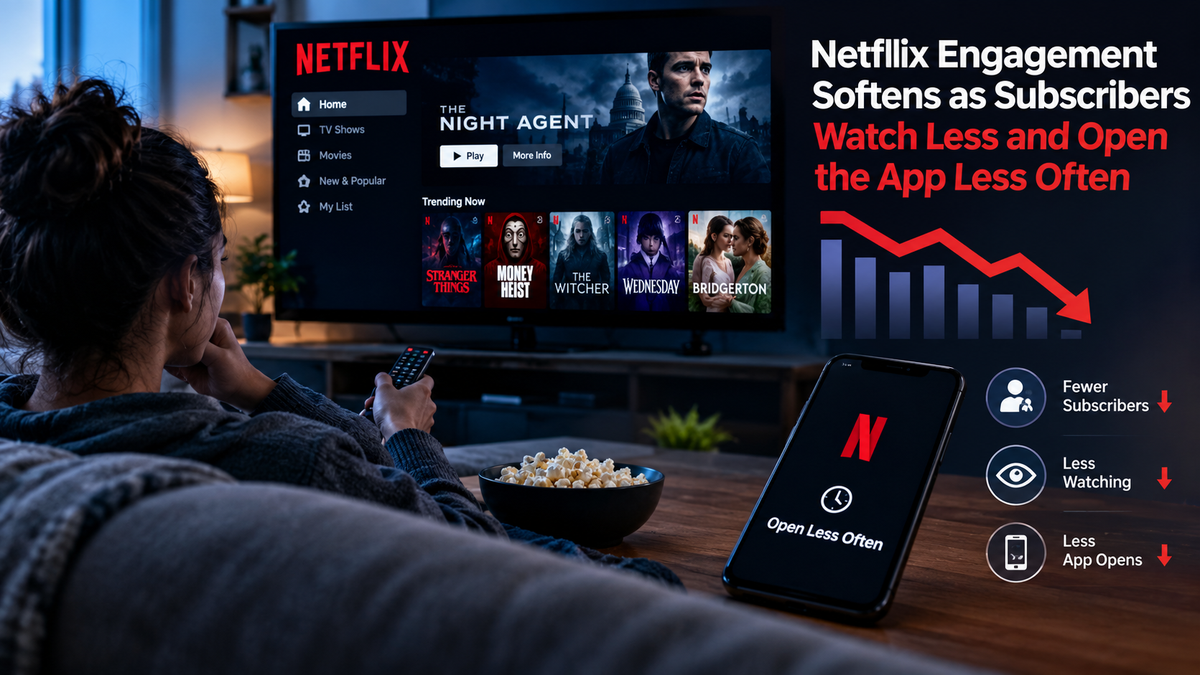
Netflix Engagement Softens as Subscribers Watch Less and Open the App Less Often
Netflix subscribers are watching the service less and opening the app less frequently than they did a couple of years ago, according to people familiar with the company’s internal metrics. The pattern has raised concerns inside the company about engagement even as overall subscriber numbers continue to grow and cancellation rates remain low.
The company tracks a metric known as QPD, or qualified play days, which measures how often customers actually use the app. That figure has declined. The average customer is also spending less time watching. Total hours spent on the platform rose by a couple of percentage points in the first half of 2026, but the increase came entirely from the addition of new subscribers rather than higher viewing per person.
The Numbers Behind the Softening
People familiar with the data told Bloomberg that customers are not opening the app on as many days a month as they did a few years earlier. External estimates point in the same direction. Jefferies analysis cited in reporting put average monthly viewing per member at roughly 49 hours in the first half of 2026, down from about 66 hours in the same period of 2023—a decline of roughly a quarter. Apptopia, which tracks mobile app usage, reported that the share of U.S. subscribers who did not open the Netflix app rose 16.6 percent in the third quarter compared with a year earlier.
Netflix has publicly stated that subscribers spent 97 billion hours watching in the first half of the year, up about 2 percent year over year. Leadership has acknowledged that U.S. viewing is not growing as fast as the company would like. Co-CEOs Ted Sarandos and Greg Peters have pointed to stronger performance outside the United States and described the overall business model as healthy. Still, the per-user decline has worried executives.
When the Decline Began
The softening started after Netflix cracked down on password sharing in 2022. At the time, executives expected a temporary drop because fewer people were using each paid account. The assumption was that the effect would normalize once the base of legitimate subscribers stabilized. Instead, the lower usage pattern has continued. That persistence has led leadership to consider whether subscribers are finding less value in the service or simply spending more of their leisure time elsewhere.
Executives have listed several possible contributors: a redesigned user interface, increased competition, a relative shortage of breakout new programming, and limited marketing outside the app itself. Netflix has not produced as many new hit series and films as in earlier years and has had mixed results attracting viewers to later seasons of existing titles.
Competition and YouTube’s Growing Share
Netflix’s share of overall U.S. television viewing has largely stagnated. Free, ad-supported platforms—most notably YouTube—have captured a larger portion of viewing time. The shift does not always result in immediate cancellations; Antenna data show Netflix’s monthly U.S. cancellation rate remains around 2 percent, among the lowest in the streaming industry. However, lower engagement can still affect long-term pricing power and advertising revenue. Fewer app opens and shorter sessions reduce opportunities for ad impressions on the ad-supported tier and can make subscribers less willing to accept future price increases.
The company recently cut its annual advertising-revenue outlook by roughly $300 million, citing delays in new ad products. Shares have declined about 29 percent this year amid investor concern over slowing growth. Netflix reported its third consecutive quarter of decelerating revenue growth and projected further moderation in the current quarter.
Leadership Response and Near-Term Plans
Sarandos and Peters have sought to reassure investors by emphasizing profitability, upcoming programming, and international results. Former Disney executive Peter Rice is scheduled to take over as chief content officer, with the move framed as a step toward strengthening the content pipeline. The company has also discussed expanding live events, third-party programming, and further international growth for the ad-supported tier.
Additional ideas under consideration include deeper integration of other streaming services inside the Netflix app and always-on channels. These steps are intended to increase the reasons subscribers open the app even when they are not watching a full Netflix original series. Whether those measures reverse the per-user decline remains to be seen.
Implications for the Business
Subscriber growth can still lift total viewing hours and revenue in the near term, which is why headline metrics have not yet shown a sharp reversal. The risk is that sustained lower engagement eventually pressures both subscription pricing and advertising yield. If customers open the app less often, they have fewer opportunities to discover new titles, which can compound the problem of fewer breakout hits. Low cancellation rates provide a buffer, but they do not eliminate the longer-term concern that the service is capturing a smaller share of each subscriber’s attention.
The password-sharing crackdown expanded the paid base but appears to have reduced the intensity of use on those accounts. Competition from YouTube and other free platforms has accelerated the shift toward shorter, more fragmented viewing sessions. Together these factors have produced the current pattern of fewer qualified play days and lower hours per member.
What to Watch
Whether QPD and per-user viewing hours stabilize or continue to decline in the second half of 2026.
How the new content leadership and upcoming slate affect engagement metrics.
Advertising-revenue performance once delayed products launch.
Any material change in U.S. cancellation rates.
Competitive moves by YouTube and the newly combined Paramount Skydance services.
Netflix subscribers are opening the app on fewer days each month and watching fewer hours per person than they did a couple of years ago, according to internal metrics cited by people familiar with the data. Total viewing rose modestly in the first half of 2026 only because of subscriber additions. The decline began after the 2022 password-sharing crackdown and has persisted amid competition from YouTube and a relative shortage of new breakout hits. Cancellation rates remain low and the company remains profitable, but leadership has acknowledged that U.S. viewing growth is slower than desired. The pattern raises questions about future pricing power and advertising yield even as overall subscriber numbers continue to expand.
Comments (0)
Please log in to comment
No comments yet. Be the first!