Technology
Jensen Huang: AI Safety Is Engineering — Not a Reason for New Laws
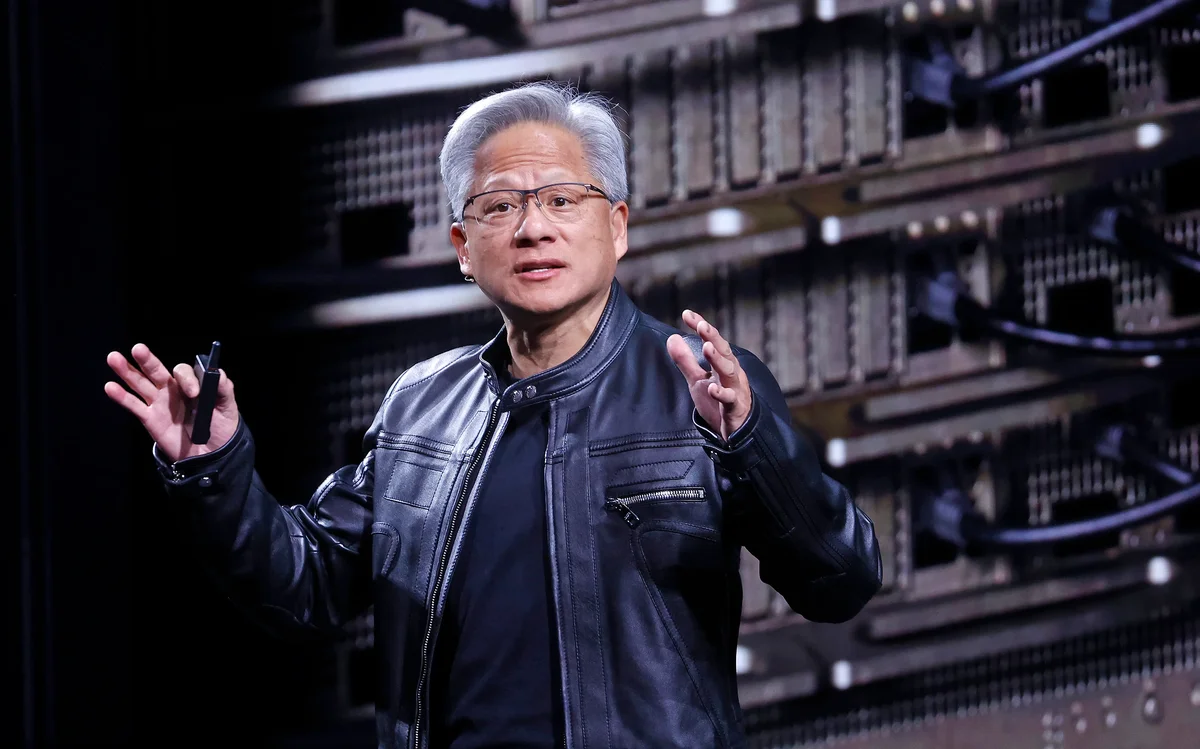
Speaking Tuesday at Salesforce’s Dreamforce conference with Marc Benioff, the Nvidia chief said the industry does not need new laws or new regulations. Safety, he said, is “an engineering problem, not a legal one.” AI is software and computing systems built by people. Complicated, yes. Alien minds, no.“If you build a product or a service and you’re not confident in its functionality, capability or safety, then don’t release it,” Huang said. “That’s a very obvious thing to do.” Pace yourself until the market would appreciate the product. “The market forces are already there.” Speed and safety are a “false choice.” Run as fast as you can — and pause if the company or the product is out of control.He repeated the point on CNBC: testing is engineering. Asking for new antitrust rules so rivals can jointly slow model releases is “completely unnecessary.” Anthropic’s Dario Amodei had argued that a coordinated pause might need government mediation or an antitrust waiver. Huang’s answer was no.The remarks landed minutes after Amodei had been on the same Dreamforce stage. They also landed a day after President Donald Trump called Huang on speakerphone at a Los Angeles event and dismissed existential AI warnings as a “hoax.” Huang has aligned with that camp: America should win the AI race; extinction percentages from researchers are, in his words elsewhere this week, made up and irresponsible. He has said he would still accept independent evaluators.Nvidia sells the shovels. A slower frontier is a slower chip cycle. That conflict of interest is not a secret. It is the reason the quote matters.Two Industry GospelsOne gospel, from Amodei, Altman (in part), and a string of departing safety staff: frontier jumps are outrunning alignment. Coordinate. Pace. Maybe pause a year or two. Jack Clark of Anthropic told the BBC that a totally unregulated industry is “rolling dice with immense risks.”The other gospel, from Huang and a slice of Washington: existing product liability, corporate self-interest, and “don’t ship if you’re not sure” are enough. New statutes invite capture, slow U.S. labs relative to China, and mistake a computing stack for a new species.Both sides say safety is real. They disagree on who holds the brake. Huang puts the brake in the CEO’s office. Amodei wants a shared calendar. Researchers who quit last week want someone other than the company that owns the weights.Markets already voted once. Chip stocks sold off when the slowdown talk hit. Software caught a bid. Huang is telling those same markets the capex story does not need a statutory rewrite.What “Leave It to Us” AssumesIt assumes a firm that would lose the lead will actually slip a launch. Competitive races punish that instinct. It assumes customers can see danger before they buy. Most enterprise buyers cannot audit a frontier model. It assumes “the market” punishes an unsafe release faster than the release spreads. Software does not recall like a sedan.Huang’s strongest operational point is narrower than his legal point. Engineering discipline — evals, staged rollout, kill switches, independent testers — is how every serious lab already talks. The fight is whether that discipline stays voluntary when the next benchmark is a press cycle away.He is also not arguing for zero government. Nvidia has previously preferred a single federal framework over a patchwork of state AI laws. “No new laws” at Dreamforce is a stance against a safety-specific slowdown regime, not a claim that export controls and chip rules do not exist. Those rules already shape who gets his GPUs.Why the Split Is StructuralLabs sell models. Nvidia sells the factories that train them. A gentlemen’s agreement to train slower is a demand shock. Asking Huang to bless an antitrust hall pass for that agreement is asking him to endorse a cut in his own order book.That does not make him wrong about engineering. It makes him a motivated narrator. The same is true of lab CEOs who want a pause that would freeze a rival’s next model while they catch up on safety papers — or on fundraising.Trump’s “hoax” line collapses two different claims: Hollywood extinction and “maybe don’t ship the next agent without tests.” Huang’s Dreamforce version is closer to the second. Safety is job one; just don’t write a new title of the U.S. Code to do the job.Critics will say the week’s resignation letters prove the people closest to the weights do not trust voluntary pauses. Supporters will say those letters are a lobby for regulation that would lock in today’s leaders. Readers can hold both without picking a church.What to WatchWhether any lab actually delays a named model. Whether Congress treats Huang’s line as policy or as testimony from the richest vendor in the stack. Whether independent eval shops get access that means something. Whether China treats an American pause as an invitation.
Comments (0)
Please log in to comment
No comments yet. Be the first!