Technology
Honor Launches Its Long-Awaited Robot Phone — And Yes, It Can Wiggle at You
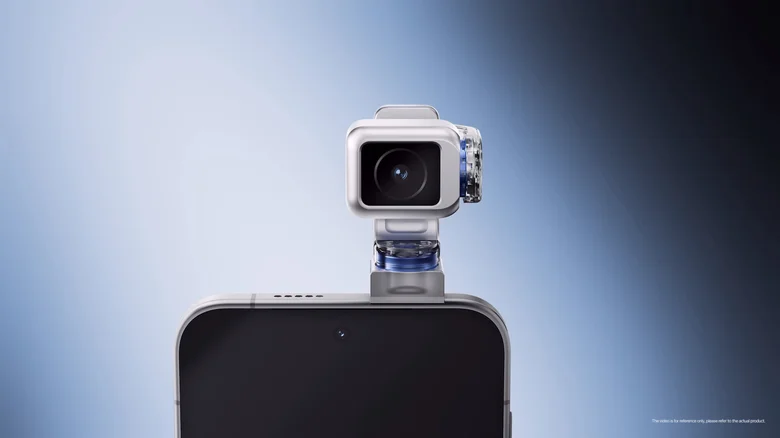
After months of teasers, prototypes, and hands-on demos, Honor has officially launched the Robot Phone in China. The device lives up to its unusual name with a standout feature: a motorized titanium gimbal camera that pops out from the rear of the phone, delivers smooth cinematic video, and can even “wiggle,” nod, or dance in response to users.Priced starting at 9,999 yuan (approximately $1,480) for the base model, the Robot Phone is currently available only in China, with sales beginning shortly after the August 12 unveil.The Star Feature: A Built-In Gimbal CameraThe defining element of the Robot Phone is its 4-degree-of-freedom (4DoF) titanium gimbal system. Honor claims it is the industry’s smallest such mechanism, 65% smaller than traditional gimbals found in dedicated devices like the DJI Osmo Pocket series. The ultralight titanium motor weighs just 2.6 grams and is only 6 mm thick, allowing the entire assembly to fit within the phone’s 9.59 mm profile.When activated—via the camera app, a gesture, or voice command—the main camera module slides out and unfolds on a robotic arm. It can rotate nearly 360 degrees, track subjects automatically, perform smooth pans and spins, and deliver highly stabilized footage even during vigorous movement.The primary sensor is a 200-megapixel unit with an f/1.6 aperture sitting on the gimbal. It is joined by a 200-megapixel periscope telephoto lens and a 50-megapixel ultrawide camera fixed on the body. Honor partnered with cinema camera specialist ARRI on imaging features, including Log-C color profiles and professional tools aimed at content creators.Beyond pure photography and videography, the gimbal has been given personality. Through Honor’s YOYO AI assistant (also referred to as YOYO Pro or Robot Mode), the camera can nod in agreement, shake its “head” in disagreement, peek curiously, or dance in time with music. These expressive movements turn the phone into a playful interactive companion in addition to a serious imaging tool.Full Specs and PerformanceThe rest of the hardware is firmly flagship-level. The Robot Phone features a 6.31-inch OLED display with adaptive refresh rates and peak brightness reaching 6,800 nits. Under the hood is Qualcomm’s Snapdragon 8 Elite Gen 5 processor, paired with up to 16 GB of RAM and 1 TB of storage.A large 7,060 mAh silicon-carbon battery supports 120 W wired charging and 50 W wireless charging. The phone runs MagicOS 10 based on Android 16. Despite the mechanical complexity, the device measures about 9.59 mm thick and weighs 248 grams—noticeably heavier than a typical flagship but manageable given the integrated gimbal hardware.Two configurations are offered: 12 GB RAM + 512 GB storage starting at 9,999 yuan, and 16 GB RAM + 1 TB storage at 12,999 yuan (around $1,927). Color options include Star Trail Silver and Moon Shadow Gray.Designed for Creators and AI InteractionHonor positions the Robot Phone as a “new species of smartphone” aimed at mobile content creators and users who want more from their device’s camera. Features such as subject tracking, SpinShot cinematic transitions, Super Steady mode, and voice-controlled camera movements are designed to reduce the need for separate gimbal or action-camera hardware.The AI layer goes further with multimodal capabilities. YOYO Pro can handle complex multi-step tasks and, through the physical gimbal, adds an embodied, interactive dimension that most phones lack. Honor has also indicated it will open parts of the platform to third-party developers.Availability and Market ContextFor now, the Robot Phone is China-exclusive. Honor has not announced global availability plans. The company, once part of Huawei and now independent, continues to expand its presence in various international markets, but this particular model remains limited to the Chinese market at launch.The decision to focus first on China allows Honor to refine the hardware and software experience with a receptive audience before any broader rollout. Given the mechanical complexity and cost, a premium positioning makes sense.Early Impressions and SignificanceHands-on reports from the launch event and previous demos describe the gimbal as surprisingly refined. Stabilization is strong, deployment is quick, and the expressive movements, while playful, demonstrate the potential of combining physical hardware with AI.Whether the concept will appeal beyond enthusiasts and creators remains to be seen. The added thickness, weight, and price represent clear trade-offs. Yet the Robot Phone stands out in a market where most flagships look and feel increasingly similar. It is one of the more inventive smartphone designs in recent years.Final ThoughtsHonor’s Robot Phone finally delivers on the long-teased promise of a smartphone with a true mechanical gimbal camera—and a personality that can wiggle, nod, and dance. By packing advanced stabilization, high-resolution imaging, ARRI collaboration, and embodied AI into a single device, Honor has created something genuinely different.Available now for pre-order and set to ship in China, the Robot Phone will test whether consumers are ready for a more interactive, mechanically ambitious smartphone. For content creators and those who simply enjoy novel technology, it offers an intriguing alternative to conventional flagships.We’ll be watching closely for real-world reviews, software updates, and any signs of international availability.
Comments (0)
Please log in to comment
No comments yet. Be the first!