Technology
Amazon Releases TorchNeuron to Run PyTorch Code on Trainium With a One-Line Change
Amazon is attacking the reason most AI code still runs on Nvidia: the software, not only the chip.
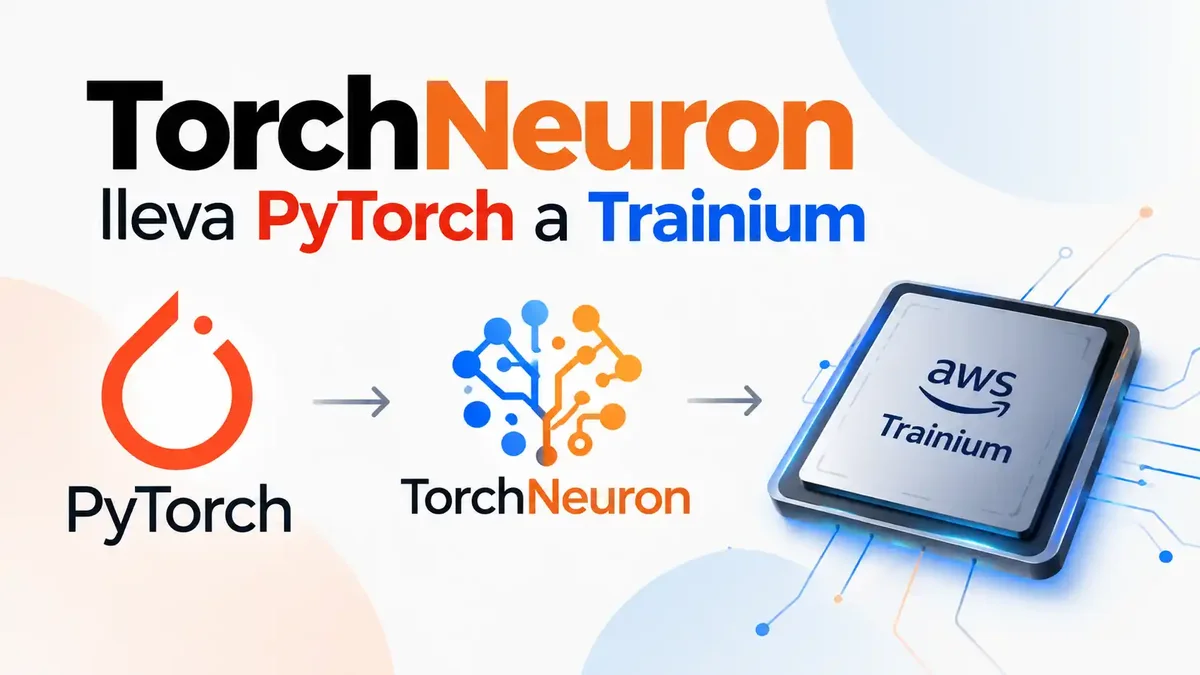
On Monday, Amazon Web Services released TorchNeuron, a tool that lets applications written in PyTorch run on the company’s Trainium chips by changing a single configuration line. No code rewrite, Amazon says. The tool is open source under the Apache 2.0 license and enters public beta on October 20 at the PyTorch Conference in San Jose. It supports Trainium2 and Trainium3. Annapurna Labs, Amazon’s chip unit, built it. The company says about 85 percent of AI applications are written with PyTorch, the open-source framework originally developed at Facebook and now stewarded under the Linux Foundation. Nvidia has spent years making CUDA the path of least resistance for that same framework. TorchNeuron is Amazon’s attempt to make Trainium an equally short path.
The claim is narrow and testable. A developer with a PyTorch training or inference script changes the device setting from the default to Trainium. The script runs. In a side-by-side demo, Amazon engineers ran the same training script on a conventional chip and on Trainium and said the model learned at the same rate. The difference was the device line. Hugging Face has added native Trainium support in its tools so developers can work without Amazon-specific code. More than 30 early customers — in robotics, world models, voice AI, drug discovery, and other fields — are already using the software. Amazon cited Deepgram as an example that moved to Trainium with native PyTorch support and is processing 70 percent more audio per dollar at production-grade accuracy. Those are company figures.
What the Software Actually Changes
Until now, moving a serious AI workload off Nvidia usually meant months of porting, kernel rewrites, and revalidation. CUDA is not just a driver. It is the accumulated libraries, the optimized kernels, and the assumption in most tutorials that the device is a GPU. A one-line switch does not erase that ecosystem. It removes the first and largest excuse for not trying the alternative. If the one-line claim holds for the models developers actually run, the cost comparison becomes a procurement decision rather than an engineering project. If it holds only for a subset, the porting tax remains and the announcement is a beta.
Amazon is also contributing changes upstream to PyTorch to remove code that ties the framework to specific chips. That is a longer game. A framework that is less Nvidia-shaped by default makes every alternative backend, including TorchNeuron, easier to maintain. Google has pursued similar PyTorch improvements for its own chips. The competitive field is no longer only silicon. It is who can make the default framework treat their silicon as native.
Gaps in the First Release
The PyTorch blog post from Amazon engineers notes limits. The first release does not yet support some features, including dynamic input shapes, and about 22,000 PyTorch tests are skipped. That is a material caveat. A tool that runs the common path and fails on the less common one will move some workloads and strand others. Amazon says it tests against hundreds of thousands of models on every build. Customers will test against their own. The public beta is the period in which the skipped tests and the missing features either get closed or become the reason teams stay on CUDA.
Trainium’s pitch, from AWS, is price-performance and a single platform for training and inference. Andy Jassy has said the custom-chip business could be worth on the order of $50 billion; Amazon has said it has passed a $25 billion annual revenue run rate. Those numbers include Graviton and other silicon, not only Trainium. TorchNeuron is the adoption lever for the AI piece. Uber has signed on to use the chips in an AWS expansion. The software is what makes that expansion usable by teams that already have PyTorch codebases.
Why This Is Aimed at Nvidia’s Moat
Nvidia’s hardware lead is real. Its software lead is what keeps a developer from switching even when a rival chip is cheaper per token. CUDA is the moat. Every cloud provider with custom silicon — Google with TPUs, Amazon with Trainium, Microsoft with Maia — has to cross it or accept that its chips serve only the workloads it rewrites itself. TorchNeuron is Amazon crossing it for the framework that covers most new AI code. It does not make Trainium faster than a Blackwell on every benchmark. It makes Trainium reachable without a rewrite. Reachable is the prerequisite for the price comparison Amazon wants customers to run.
Startups are the explicit audience. A team that can point its existing repo at a Trainium instance and see a lower bill has a reason to leave a Nvidia-backed neocloud. Amazon’s argument is that the same cloud then offers the rest of the stack — storage, networking, the other AWS services — which a pure GPU neocloud does not. That is a platform argument, not a chip argument. It lands only if the one-line switch works.
What to Watch
Whether the public beta’s one-line claim survives contact with production models that use dynamic shapes or the skipped test paths.
Independent cost-per-token comparisons against Nvidia instances for the same PyTorch script.
How many of the 30-plus early customers publish their own results.
Upstream PyTorch changes and whether they reduce Nvidia-specific assumptions.
Trainium3 availability and whether TorchNeuron support keeps pace.
Amazon released TorchNeuron so PyTorch code can run on Trainium with a configuration change and no rewrite. The tool is open source, enters public beta on October 20, and supports Trainium2 and Trainium3. More than 30 early customers are on it. The first release has gaps. The strategic target is the software advantage that has kept AI workloads on Nvidia even when alternative chips existed. If the one line works, the comparison becomes price. If it does not, the moat holds.
Digital8Hub will update if independent benchmarks contradict the one-line claim or if major PyTorch features remain unsupported.
Comments (0)
Please log in to comment
No comments yet. Be the first!