World & Politics
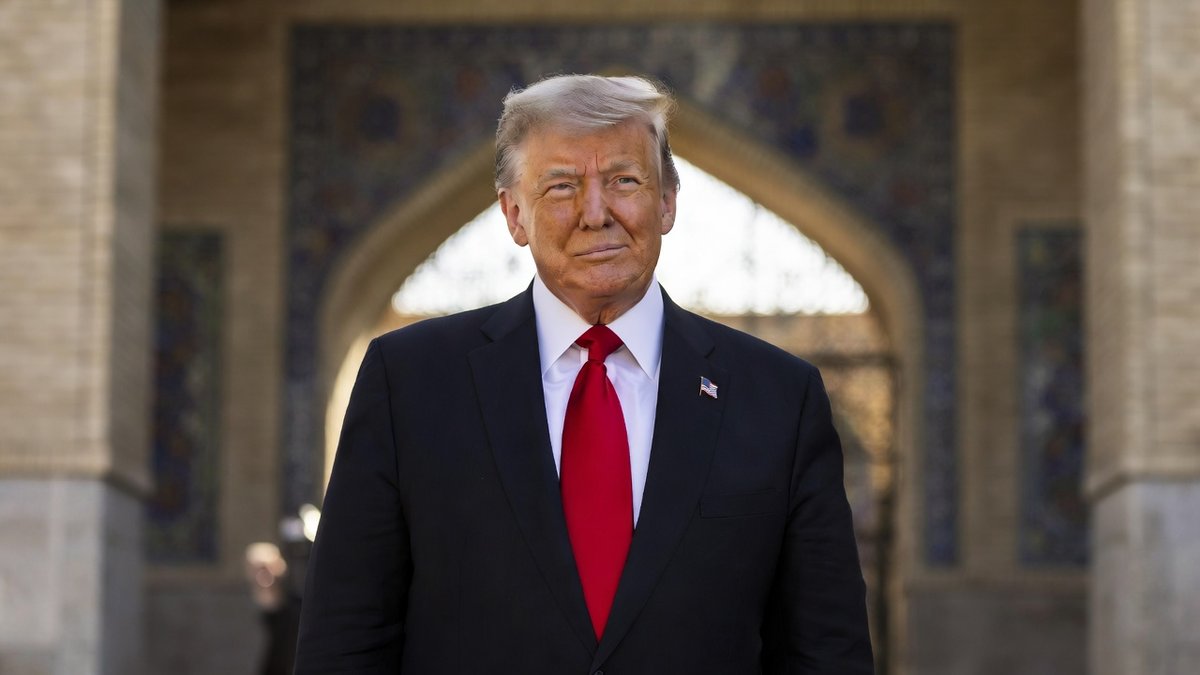
Trump Extends Iran Ceasefire — But Orders Military to Continue the Blockade
In a dramatic reversal from his earlier position on Tuesday morning, President Donald Trump announced he is extending the United States–Iran ceasefire — which had been set to expire on Wednesday — while simultaneously directing the US military to maintain its naval blockade of Iranian ports. The announcement came after Tehran refused to send a delegation to a second round of peace talks in Pakistan, citing what it described as unacceptable US pressure and ceasefire violations.
This is a developing story. Details may change as the situation evolves.
What Trump Said
Posting on Truth Social on Tuesday afternoon, Trump wrote: 'Based on the fact that the Government of Iran is seriously fractured, not unexpectedly so and, upon the request of Field Marshal Asim Munir, and Prime Minister Shehbaz Sharif, of Pakistan, we have been asked to hold our Attack on the Country of Iran until such time as their leaders and representatives can come up with a unified proposal.'
'I have therefore directed our Military to continue the Blockade and, in all other respects, remain ready and able, and will therefore extend the Ceasefire until such time as their proposal is submitted, and discussions are concluded, one way or the other,' Trump added.
The announcement was a reversal from Trump's stated position earlier in the same day. On Tuesday morning, speaking to CNBC's Squawk Box, he said he did not want to extend the ceasefire and that the US military was 'raring to go.' 'I expect to be bombing because I think that's a better attitude to go in with,' he said. Pakistan's request — from both the country's army chief Field Marshal Asim Munir and Prime Minister Shehbaz Sharif — appears to have been the decisive factor in the extension.
Why Iran Is Not at the Table
Iran has so far refused to confirm participation in the planned second round of talks in Islamabad. Iranian state television reported on Tuesday that 'no delegation from Iran has visited Islamabad so far.' Iran's Foreign Ministry spokesperson Esmaeil Baqaei said the hesitation was not indecision but rather a response to 'contradictory messages, inconsistent behavior, and unacceptable actions by the American side.'
Iranian parliament speaker Mohammad-Bagher Ghalibaf — who served as Tehran's lead negotiator at the first round of talks in Islamabad — stated bluntly on X: 'We do not accept negotiations under the shadow of threats.' He warned that Iran had 'prepared to reveal new cards on the battlefield,' and accused Trump of seeking to 'turn this negotiating table — in his own imagination — into a table of surrender or to justify renewed warmongering.'
A senior Iranian official told Reuters that Iran could attend talks if Washington abandoned its policy of pressure and threats, and if the US agreed to lift its naval blockade and release the Iranian-flagged cargo ship Touska — which was seized by US Marines over the weekend after it attempted to bypass the blockade in the Gulf of Oman.
The Seizure of the Touska
The seizure of the Iranian-flagged container ship Touska on Sunday represents a significant escalation point in the current standoff. US military footage showed a guided-missile destroyer firing on the vessel and Marines rappelling from helicopters onto its deck in the Gulf of Oman. Iran's Foreign Ministry condemned the seizure as 'extremely dangerous' and 'criminal,' and demanded the immediate release of the ship, its sailors, and their families.
Trump has framed the seizure as enforcement of the blockade. Iran argues it constitutes a violation of the ceasefire. As of Tuesday, US Central Command stated that American forces had directed 28 vessels to turn around or return to Iranian ports since the blockade began.
Vance's Trip on Hold — For Now
Vice President JD Vance, who led the US delegation at the first round of talks in Islamabad on April 11–12, had been expected to travel to Pakistan again on Tuesday to lead a second negotiating session. His trip has been called off and put on hold, according to US officials, amid Iran's refusal to confirm attendance. Trump's special envoy Steve Witkoff and son-in-law Jared Kushner returned to Washington on Tuesday afternoon for consultations about how to proceed.
Pakistan has maintained its role as mediator throughout the process, and both Munir and Sharif are credited with persuading Trump to extend the ceasefire rather than allow it to lapse. Pakistan has increased security in Islamabad ahead of any potential talks resumption.
The State of the Ceasefire
The original two-week ceasefire was announced on April 8, following the first Islamabad talks. That ceasefire was immediately tested. Trump conditioned it on the complete and immediate reopening of the Strait of Hormuz — which Iran had effectively closed since the US-Israeli strikes began on February 28. Iran made a brief announcement that the Strait was open, but within 24 hours reimposed restrictions after disagreements over Israel's continued military operations in Lebanon. Trump then ordered the naval blockade of Iranian ports, which Iran characterised as a ceasefire violation.
The Strait of Hormuz remains at dramatically reduced capacity. Only 16 ships traversed it on Monday, compared to approximately 138 per day before the conflict began. Iran declared the Strait 'completely open' on April 17, but the US blockade of Iranian ports remains in force — creating the conflicting claims that have deadlocked negotiations.
What Comes Next
With the ceasefire now extended without a fixed deadline — Trump's statement frames it as open-ended, pending a 'unified proposal' from Tehran — the immediate risk of a return to active US-Israeli airstrikes on Iran has receded slightly. But the conditions for a genuine settlement remain deeply unresolved. Iran wants the blockade lifted and the Touska released before talks can proceed. The US is maintaining the blockade as leverage. Neither side has moved.
The international dimension continues to grow. France's Emmanuel Macron has been preparing a multinational maritime mission to restore freedom of navigation. The IMF has already cut its 2026 global growth forecast to 3.1%, citing energy supply disruptions. Oil prices remain elevated above $90 per barrel. And the Houthis in Yemen continue to hold their own threat over the Bab al-Mandeb Strait as a contingency card.
For the latest developments on the US-Iran conflict, the Strait of Hormuz crisis, and global geopolitical developments shaping 2026, follow Digital8Hub at digital8hub.com.
Sources — Breaking Coverage, April 21, 2026
CNBC: Trump extends ceasefire in Iran, citing 'seriously fractured' Iranian government
CBS News Live Updates: Trump extends ceasefire as uncertainty over US-Iran peace talks remains
Al Jazeera: Iran war live — Trump extends ceasefire as Pakistan peace talks in disarray
Comments (0)
Please log in to comment
No comments yet. Be the first!