World & Politics
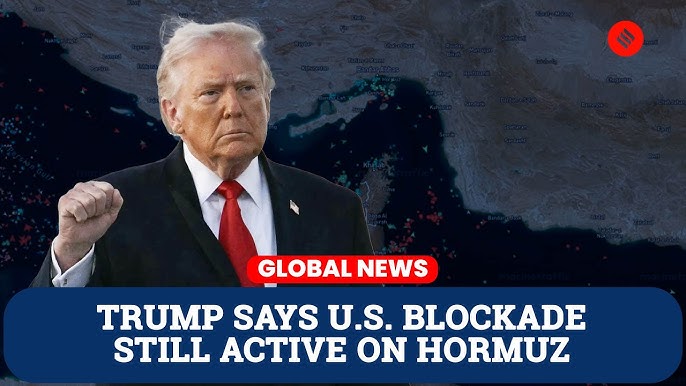
Iran Says Strait of Hormuz Is Open — Trump Says the U.S. Blockade Is Still On
Iran Says Strait of Hormuz Is Open — Trump Says the U.S. Blockade Is Still On
In a dramatic development that sent oil prices plunging on Friday, Iran announced that the Strait of Hormuz is now "completely open" for commercial traffic. Hours later, the United States made clear its naval blockade of Iranian ports and coastal areas remains fully in effect — leaving global shipping markets caught between two conflicting claims over one of the most important waterways on Earth.
This is what is happening, why it matters, and what it means for the global economy.
How We Got Here
The Strait of Hormuz — a narrow maritime corridor between Iran and Oman at its widest point just 39 kilometres across — has been effectively closed to most commercial traffic since late February 2026, when the United States and Israel launched strikes against Iran and the country retaliated by blocking the waterway. Before the conflict, roughly 20% of the world's oil and natural gas, along with significant volumes of fertilisers, aluminium, and other essential goods, passed through it daily.
Iran's closure sent Brent crude spiking above $100 per barrel at times, disrupted global food supply chains, and forced major shipping companies including Maersk, CMA CGM, and Hapag-Lloyd to suspend transits entirely. The IMF has already cut its 2026 global growth forecast to 3.1%, citing the Strait disruption as a key driver.
A fragile two-week ceasefire was brokered in early April, but collapsed on April 12 when U.S.-Iran peace talks in Islamabad ended without an agreement after 21 hours of negotiations led by Vice President JD Vance. Following the breakdown, President Trump announced a U.S. naval blockade of Iranian ports, effective April 13. The Pentagon confirmed the blockade was fully implemented within 36 hours, turning back at least 13 vessels attempting to call on Iranian ports.
Iran's Announcement — and What It Actually Means
On April 17, Iran declared the Strait of Hormuz "completely open" for commercial shipping, a statement that immediately moved markets. Oil prices fell sharply on the news, with traders interpreting it as a potential off-ramp from the crisis.
But the ground reality is more complicated. Iran's declaration refers to its own willingness to allow commercial vessels through the strait — it does not address the U.S. naval blockade, which remains in force and targets all ships heading to or from Iranian ports and coastal areas, regardless of nationality.
The two positions are not mutually exclusive. The U.S. blockade, as clarified by U.S. Central Command, does not prevent vessels from transiting the Strait to reach non-Iranian destinations. What it does do is cut off Iran's own maritime trade — an economic stranglehold that U.S. officials say has already "completely halted" economic trade going in and out of Iran by sea.
Analysts and shipping intelligence firms tracking the waterway have noted that actual vessel traffic remains far below pre-war levels, and that transit is still concentrated among sanctioned, high-risk, or falsely flagged vessels willing to take on the risk.
The U.S. Position
Joint Chiefs of Staff Chairman General Dan Caine, speaking at a Pentagon briefing on April 16, was explicit: "The U.S. action is a blockade of Iran's ports and coastline, not a blockade of the Strait of Hormuz." The enforcement applies to all ships heading into or from Iranian ports, regardless of nationality. U.S. forces are also actively pursuing Iranian-flagged vessels and ships providing material support to Iran across the broader region.
Trump, for his part, has described Iran's conduct in the strait as "WORLD EXTORTION" — a reference to the up to $2 million per vessel transit tolls Iran was charging ships during the conflict. He stated the blockade will remain until Iran allows all traffic through freely and without conditions.
The Global Stakes
The Strait of Hormuz is not just an energy issue — it is a linchpin of the global economy. Before the conflict, the waterway carried approximately one-fifth of the world's seaborne oil trade and about 30–35% of globally traded fertilisers. Its disruption has hit agricultural input costs, LNG supply chains into Europe, and oil markets simultaneously.
China, which receives roughly a third of its oil imports through the strait, has called the U.S. blockade "dangerous and irresponsible" — though Trump has claimed that President Xi Jinping has agreed not to send weapons to Iran and expressed support for the strait's eventual reopening. India, another major buyer of Gulf oil, faces similar exposure.
French President Emmanuel Macron has announced preparations for a "peaceful multinational mission" to restore freedom of navigation, signalling that European powers are positioning themselves as diplomatic brokers if direct U.S.-Iran talks remain stalled.
What Comes Next
The conflict over the strait is now entering its most diplomatically complex phase. Iran's declaration that the waterway is open is likely a strategic signal aimed at international opinion and markets — demonstrating willingness to de-escalate while the U.S. blockade remains the operative constraint on its own economy.
Analysts at Chatham House and elsewhere have noted that Iran will not easily relinquish the leverage the strait provides, given how central it has been to its negotiating position throughout the conflict. At the same time, Iran's own economy is structurally dependent on oil exports that transit the same waterway — making a prolonged closure costly for Tehran as well.
For businesses, supply chains, and everyday consumers, the situation remains volatile. Energy prices, fertiliser costs, and shipping insurance premiums will continue to react to each diplomatic development. Digital8Hub (digital8hub.com) is tracking this crisis in real time, alongside its broader coverage of geopolitics, energy markets, and global trade disruptions that affect both businesses and households.
For the latest developments on the Strait of Hormuz crisis, oil price movements, and the global economic fallout, follow Digital8Hub at digital8hub.com — your source for clear, timely analysis of world events that shape business and daily life.
Sources & Further Reading:
- Bloomberg: Iran Says Hormuz Strait Now Completely Open For Commercial Ships (April 17, 2026)
- CNBC: Iran declares Strait of Hormuz open to shipping (April 17, 2026)
- CNBC: U.S. says Hormuz blockade fully implemented (April 15, 2026)
- NBC News: Iran threatens shipping; Trump blockade continues (April 16, 2026)
- NPR: Trump vows to sink Iranian ships approaching the blockade (April 13, 2026)
- The Hill: Anthropic's Mythos model and Washington's AI response
- Chatham House: The Strait of Hormuz, shipping, and law (April 2026)
- UN News: Iran ceasefire raises hopes for reopening Strait of Hormuz
- Digital8Hub World & Geopolitics Coverage: digital8hub.com
Comments (0)
Please log in to comment
No comments yet. Be the first!