World & Politics
Iran Is 'Unlikely to Open the Strait of Hormuz Any Time Soon'
Iran Is 'Unlikely to Open the Strait of Hormuz Any Time Soon' — What It Means for the World
One of the world's most consequential geopolitical crises is showing no signs of resolution — and fresh intelligence from Washington confirms the worst-case scenario for global energy markets may be far from over.
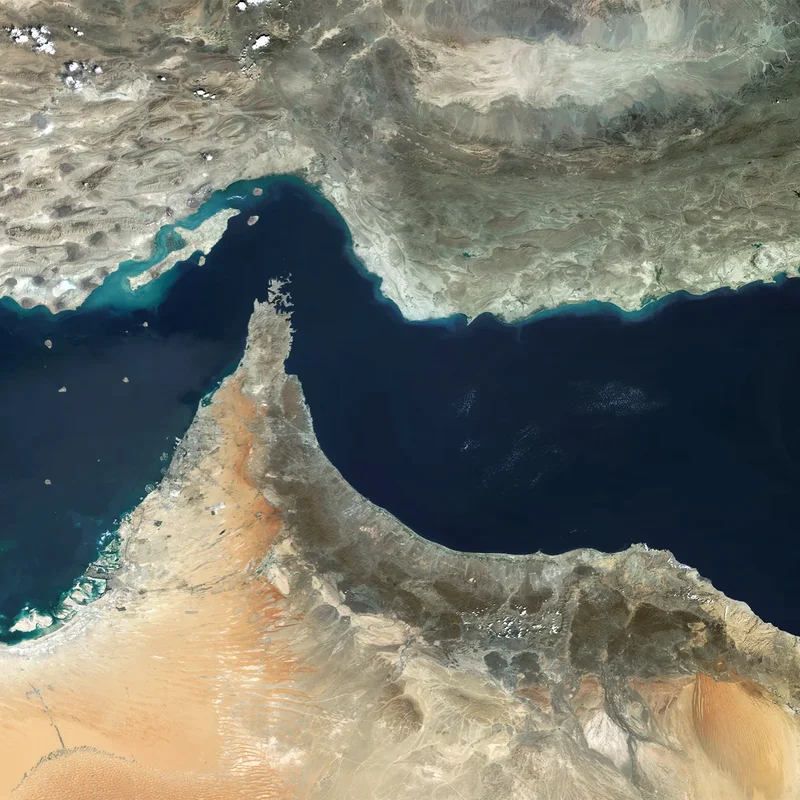
Recent U.S. intelligence reports warn that Iran is unlikely to open the Strait of Hormuz any time soon because its grip on the world's most vital oil artery provides the only real leverage it has over the United States, according to three sources familiar with the matter. AL-Monitor
The finding suggests that Tehran could continue to throttle the strait to keep energy prices high as a means of pressuring U.S. President Donald Trump to find a quick off-ramp to the nearly five-week-long war that remains unpopular with U.S. voters. AL-Monitor
How Did We Get Here?
The Strait of Hormuz has been effectively blocked by Iran's Islamic Revolutionary Guard Corps (IRGC) since February 28, when Trump and Israeli Prime Minister Benjamin Netanyahu launched military operations against Iran. Kurdistan24
Iran launched retaliatory missile and drone attacks on U.S. military bases, Israeli territory, and Gulf states, while its IRGC issued warnings prohibiting vessel passage through the strait, leading to an effective halt in shipping traffic. Tanker traffic dropped first by approximately 70%, with over 150 ships anchoring outside the strait to avoid risks — and soon afterwards traffic dropped to about zero. Wikipedia
On 2 March 2026, a senior IRGC official confirmed that the strait was closed, threatening any ship that passed through it. On 19 March 2026, the United States Armed Forces began a military campaign to open the strait. Wikipedia Despite that campaign, the waterway remains effectively shut — and intelligence now suggests it will stay that way.
Why Iran Won't Let Go
The answer, according to analysts and intelligence sources, is strategic leverage — and Iran knows it.
"It is certainly the case that now that Iran has tasted its power and leverage over the strait, it won't soon give it up," said one source familiar with the intelligence reports, speaking on condition of anonymity. AL-Monitor
Ali Vaez, director of the Iran Project at the International Crisis Group, put it bluntly: "In the attempt to try to prevent Iran from developing a weapon of mass destruction, the U.S. handed Iran a weapon of mass disruption." Tehran, Vaez said, understands its ability to drive world energy markets through its chokehold on the strait is more potent than even a nuclear weapon. AL-Monitor
Former CIA Director Bill Burns added that even after the war, Iran will look to use its ability to throttle the waterway to win "long-term deterrence and security guarantees" in any peace deal with the U.S. and to gain "some direct material benefits" like charging passage fees to fund its post-war recovery — setting up, in his words, "a really difficult negotiation right now." MarketScreener
The Economic Fallout: A Crisis Unlike Any Other
The human and economic consequences of the closure are already severe — and worsening by the week.
Oil prices surged faster than during any other conflict in recent history. Brent crude surpassed $100 per barrel on 8 March 2026 for the first time in four years, rising to $126 per barrel at its peak. The closure has been described as the largest disruption to the energy supply since the 1970s energy crisis, as well as the largest in the history of the global oil market. Wikipedia
The pain extends far beyond oil. Up to 30% of internationally traded fertilizers normally transit the Strait of Hormuz. Unlike oil, the fertilizer sector does not have internationally coordinated strategic reserves, making supply disruptions more difficult to manage. Global fertilizer prices could average 15–20% higher during the first half of 2026 if the crisis continues. Wikipedia
Rising energy costs risk fueling inflation in the U.S., posing a growing political liability for Trump as he faces dismal poll numbers and his Republican Party prepares for mid-term congressional elections in November. MarketScreener
Trump's Shifting Position
President Trump's public stance on the strait has been characterised by bravado — but his actual policy positions have shifted considerably.
On Friday, he posted on Truth Social: "With a little more time, we can easily OPEN THE HORMUZ STRAIT, TAKE THE OIL, & MAKE A FORTUNE." Yet a White House official told Reuters that Trump has also said other countries "have far more at stake in preventing this outcome" than the United States — calling on Gulf oil-dependent nations and NATO allies to take the lead in reopening it. Kurdistan24
The contradiction underscores the difficulty of the situation. The waterway narrows to just 21 miles (33 km) at its narrowest point, with a two-mile shipping lane in each direction — making vessels and troops vulnerable. Even if U.S. forces seized the southern Iranian coast and islands, the IRGC could maintain control using drones and missiles launched from within Iran. Naija247news
What Comes After the War?
Perhaps most troublingly, intelligence sources and experts warn the problem won't simply vanish when the fighting stops.
Some experts said that even after the war, Iran is unlikely to give up its ability to regulate traffic through the strait, as charging commercial shipping passage fees would serve as a key source of reconstruction funds. MarketScreener
British Prime Minister Keir Starmer said that if the war stops, a negotiated agreement with Iran will still be needed to reopen the waterway. Wikipedia Meanwhile, Saudi Arabia is considering building new pipelines to Oman and Yemen, and Iraq might revive a disused pipeline to transport crude oil to the Mediterranean Wikipedia — underscoring that the world is already planning around the possibility that the Strait of Hormuz may never return to its pre-war status.
Why This Matters Beyond the Middle East
For Africa, Asia, and the developing world — heavily dependent on Gulf energy imports — this crisis is not a distant geopolitical story. It is a direct threat to food security, fuel affordability, and economic stability.
For business leaders, investors, and policymakers tracking the evolving global energy landscape, the Strait of Hormuz crisis is the single most consequential story in the world right now.
For more in-depth analysis on world politics, energy markets, and global affairs, visit digital8hub.com — your trusted source for breaking news and clear-eyed commentary on the stories shaping 2026.
Comments (0)
Please log in to comment
No comments yet. Be the first!