World & Politics
Drone Strike Causes Fire at Barakah Nuclear Power Plant in Abu Dhabi
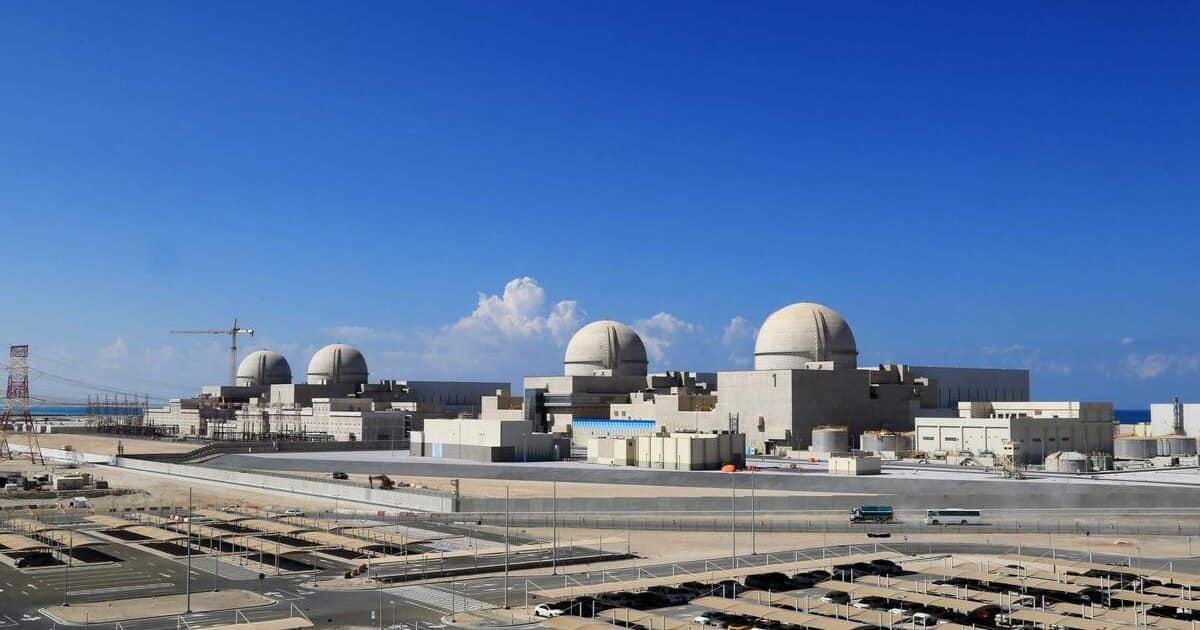
Drone Strike Causes Fire at Barakah Nuclear Power Plant in Abu DhabiA drone strike on Sunday, May 17, 2026, triggered a fire at an electrical generator on the outer perimeter of the Barakah Nuclear Power Plant in Abu Dhabi’s Al Dhafra region, escalating concerns amid ongoing regional conflicts.The Abu Dhabi Media Office confirmed the incident in an official statement, emphasizing that the strike occurred outside the inner perimeter of the facility. Importantly, authorities reported no injuries and no impact on radiological safety levels. All four reactors at Barakah continue to operate normally.Incident DetailsThe fire broke out at an external electrical generator facility. Emergency teams responded quickly and contained the blaze. The Barakah plant, the UAE’s first and only nuclear power station, is located approximately 250 kilometers west of Abu Dhabi city and provides about 25% of the country’s electricity.The Emirates Nuclear Energy Corporation (ENEC), which operates the plant, stated that comprehensive safety systems performed as designed and that radiation monitoring showed no abnormalities. The Federal Authority for Nuclear Regulation (FANR) is conducting a full investigation.No group has yet claimed responsibility for the drone strike, though the incident occurs against the backdrop of heightened tensions in the Middle East, including recent exchanges involving Iran and its proxies.Background on Barakah Nuclear Power PlantThe Barakah Nuclear Power Plant is a landmark project for the UAE, built by a South Korean consortium (KEPCO) at a cost of over $24 billion. It consists of four APR-1400 pressurized water reactors with a combined capacity of 5,600 MW. Unit 1 began commercial operations in 2020, and all four units are now online.The plant has been praised internationally for its safety standards and transparent operations. It undergoes regular inspections by the International Atomic Energy Agency (IAEA) and adheres to the highest global nuclear safety protocols.Regional Security ContextThis is not the first time critical infrastructure in the UAE has come under attack. Previous incidents have included:Drone and missile strikes on oil facilities
Attacks on ADNOC-related sites
Threats against energy infrastructure by Iran-aligned groups
The UAE has significantly strengthened its air defense systems in recent years, successfully intercepting many incoming threats. However, the ability of a drone to reach the vicinity of a nuclear facility — even if outside the main perimeter — raises serious questions about current defense capabilities and potential vulnerabilities.Official Response and International ReactionsThe UAE government has condemned the attack as a “serious threat to regional stability and civilian nuclear infrastructure.” Diplomats are urging restraint and calling for de-escalation.The United States, a key security partner for the UAE, has expressed concern. The White House stated it is monitoring the situation closely and reaffirmed its commitment to defending its Gulf allies.Iran has not commented officially on this specific incident. However, regional analysts note that such strikes fit into a pattern of retaliatory actions amid broader conflicts involving Israel, the United States, and Iran.Safety and Environmental ConcernsNuclear safety experts have emphasized that the fire was limited to an external generator and did not affect the reactor buildings or spent fuel storage. The design of modern nuclear plants like Barakah includes multiple layers of protection precisely for scenarios involving external threats.Still, any incident near a nuclear facility naturally raises public anxiety. The UAE has assured residents and neighboring countries that there is zero risk of radiation release. Independent monitoring stations in the region have confirmed normal background radiation levels.Broader ImplicationsThis attack highlights the increasing vulnerability of critical energy infrastructure in the Gulf. As tensions persist, both conventional power plants and nuclear facilities could become targets, raising the stakes for regional security.The incident also underscores the strategic importance of the Barakah plant. Any prolonged disruption could affect the UAE’s energy security and its ambitions to become a major exporter of clean electricity.For the global nuclear industry, the event serves as a reminder of the need for robust physical protection systems against drone and missile threats. Many countries are now reviewing their nuclear security protocols in light of evolving asymmetric warfare tactics.What Happens Next?A full forensic investigation is underway to determine the drone’s origin and launch point.
Enhanced security measures around Barakah and other critical sites are expected.
Diplomatic efforts to de-escalate regional tensions are likely to intensify.
The UAE has a strong track record of transparency regarding the Barakah plant. Regular updates from ENEC and FANR are expected in the coming days.This drone strike, though limited in impact, serves as a stark warning: in today’s geopolitical climate, even the most advanced and heavily protected energy infrastructure is not entirely immune to risk.
Comments (0)
Please log in to comment
No comments yet. Be the first!