World & Politics
Commercial Vessel Struck by Drone in Qatar's Territorial Waters
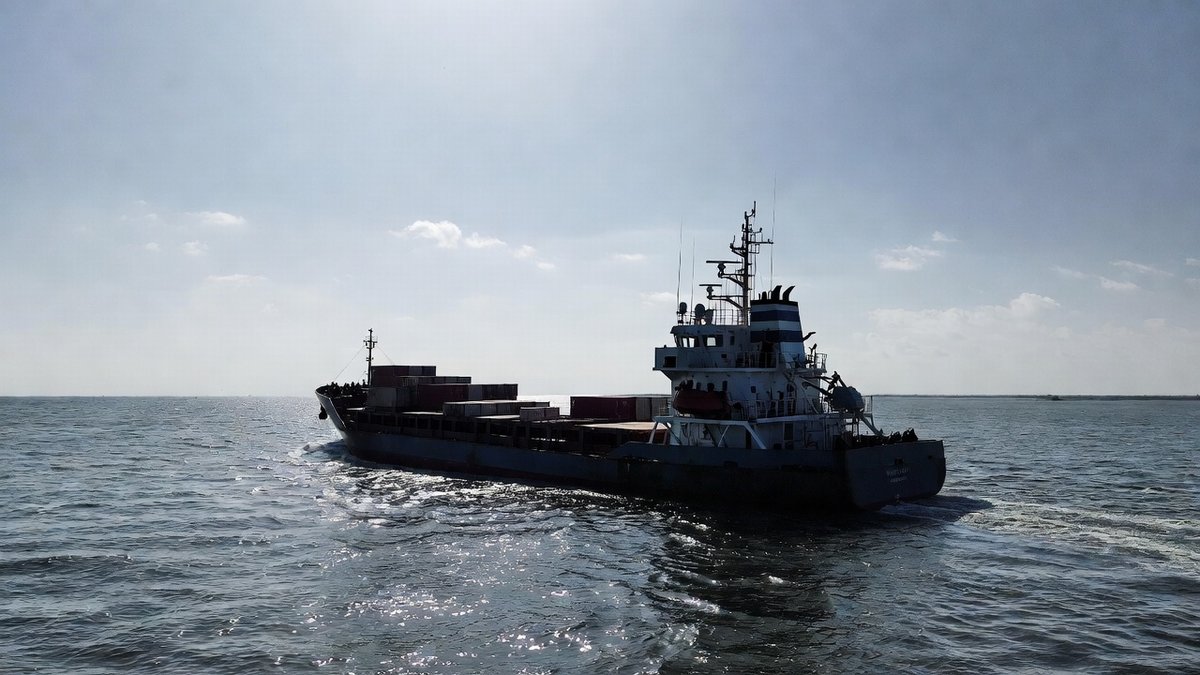
When historians look back at the week of May 5-10, 2026, they will identify it as the moment the Gulf crisis became something fundamentally more dangerous than a bilateral confrontation between the United States and Iran. A commercial vessel in Qatar's territorial waters has been struck by a drone — an attack that, regardless of who is ultimately responsible, represents a dramatic and deeply alarming expansion of the conflict's geographic and economic footprint.
Qatar is not a peripheral actor in the Gulf energy landscape. It is the world's largest exporter of liquefied natural gas — a position that makes its territorial waters, its port infrastructure, and the shipping lanes that serve them among the most strategically valuable maritime real estate on earth. A drone strike on a commercial vessel in Qatari waters is not merely an act of maritime violence. It is a direct threat to the global energy supply chain that keeps the lights on, the factories running, and the economies functioning across Europe, Asia, and beyond.
At digital8hub.com, we bring you the full picture of what has happened, what is known, and what the attack on a vessel in Qatari waters means for a crisis that is accelerating toward outcomes nobody in the international community wants to contemplate.
What We Know: The Attack
A commercial vessel operating within Qatar's territorial waters was struck by a drone in an incident that maritime authorities and regional security services are treating with the utmost seriousness. The nature of the drone — whether military-grade, commercially modified, or purpose-built for maritime strike — is part of the active investigation being conducted by Qatari authorities with the support of international partners.
The vessel sustained damage in the strike. The extent of that damage — and whether it has affected the ship's seaworthiness or cargo integrity — is being assessed by maritime emergency response teams. Crew members were reported to be on board at the time of the strike, and the welfare of all personnel is the immediate priority of the emergency response.
Qatar's Emiri Naval Forces have been deployed to the scene, with the country's coast guard coordinating a response that includes medical assessment of any injured crew members, damage control support, and the establishment of a security perimeter around the affected vessel. Qatar has informed its international defence partners — including the United States Central Command, which operates Al Udeid Air Base on Qatari soil — of the incident.
Attribution has not been formally established at the time of publication. The pattern of escalation in the Gulf — the Fujairah oil refinery attack, Iran's denial and counter-accusation against the United States, the Khamenei threat against US naval vessels — provides a context in which multiple actors have both the motive and, in some cases, the capability to conduct this kind of operation.
Why Qatar? The Strategic Logic of Targeting Doha's Waters
The selection of Qatar's territorial waters as the location of this latest attack — if it proves to be part of the same escalatory pattern that has characterised the Gulf crisis in recent weeks — reflects a strategic logic that goes beyond simple retaliation.
Qatar as an LNG Superpower
Qatar produces and exports more liquefied natural gas than any other country on earth. Its North Field — the world's largest single hydrocarbon reservoir, shared with Iran's South Pars field across the maritime border — feeds a network of LNG facilities at Ras Laffan Industrial City that supply critical energy to Europe, Japan, South Korea, China, India, and dozens of other nations.
A disruption to Qatari LNG exports — even a temporary one — would have immediate and severe consequences for global energy markets already stretched by the Iranian supply disruption and the oil price surge above $125 per barrel. European nations that have spent the past three years reducing their dependence on Russian gas through LNG diversification would face acute supply pressure. Asian economies whose industrial activity depends on Qatari LNG would face production disruptions with broad economic consequences.
Targeting commercial shipping in Qatari waters is therefore not merely a military act — it is an economic weapon aimed at the energy infrastructure that underpins global economic stability.
Qatar's Geopolitical Position
Qatar occupies a uniquely complex position in the current Gulf crisis. It is a member of the Gulf Cooperation Council and hosts the largest US military base in the Middle East — Al Udeid, home to US Air Force Central Command and tens of thousands of American military personnel. At the same time, Qatar has historically maintained more open diplomatic channels with Iran than most of its GCC neighbours, and has served as a backchannel for communications between Western governments and Tehran.
This dual positioning has given Qatar a degree of insulation from the escalation that has engulfed other Gulf states — an insulation that the drone attack on a vessel in its territorial waters may have just stripped away.
The Shipping Insurance Cascade
Beyond the immediate physical damage, a drone attack in Qatari territorial waters carries economic consequences that extend far beyond the vessel itself. Maritime insurers — already repricing risk across the Gulf following the Fujairah attack and the ongoing Strait of Hormuz tension — will respond to this latest incident with immediate premium increases for vessels operating in Qatari waters.
Higher insurance costs translate directly to higher shipping costs, which translate to higher delivered prices for LNG and other commodities. The economic attack on global energy supply chains does not require the physical closure of a shipping route — it can be achieved through the systematic elevation of risk that makes those routes prohibitively expensive to use.
The US Response: Al Udeid Under Focus
The drone attack in Qatari waters places the United States in an exceptionally sensitive position. Al Udeid Air Base — the most important American military installation in the Middle East, hosting the forward headquarters of US Air Forces Central — sits on Qatari soil. An attack on shipping in Qatar's territorial waters is, by proximity and by the logic of alliance, an attack in the immediate vicinity of America's most critical regional military hub.
US Central Command has acknowledged the incident and indicated that American forces at Al Udeid are at an elevated state of readiness. The Pentagon has declined to comment on whether American assets were involved in the response to the vessel attack — standard operational security practice — but has made clear that the United States takes any attack on commercial shipping in allied territorial waters as a matter of the gravest concern.
The tension between Qatar's role as America's most important Gulf military partner and its historically nuanced relationship with Iran is now being tested in real time. How Qatar responds — publicly and privately — to the attack on a vessel in its waters will shape both its domestic security posture and its diplomatic position in a crisis that is testing every relationship in the region.
The Global Shipping Industry: At the Breaking Point
The drone attack in Qatari waters is the latest in a sequence of incidents that is pushing the global shipping industry toward a crisis of confidence in Gulf transit that could reshape energy trade patterns for years.
The world's major shipping companies — Maersk, MSC, CMA CGM, Hapag-Lloyd — have already been rerouting vessels away from the highest-risk areas of the Gulf and Red Sea. Insurance costs for Gulf transits have risen dramatically since the escalation began. The practical question of whether commercial shipping can continue to operate safely in the waters between the Strait of Hormuz and Qatar's LNG export terminals is one that shipping executives, energy company procurement departments, and government energy security officials are wrestling with simultaneously.
If the answer — even temporarily — becomes no, the consequences for global energy markets, for European and Asian industrial economies, and for the hundreds of millions of people whose daily lives depend on affordable and reliable energy are severe and potentially cascading.
What Comes Next: The Tipping Point Question
The drone attack in Qatar's territorial waters raises the question that the international community has been trying to avoid confronting directly since the Gulf crisis began: is this conflict approaching a tipping point beyond which de-escalation becomes structurally impossible?
Each incident — Fujairah, the Khamenei threat, Iran's denial and counter-accusation, and now the Qatar vessel attack — has raised the stakes and narrowed the diplomatic space available for a peaceful resolution. The actors most capable of de-escalation — the United States, Qatar, the EU, China, and Russia — are each constrained by their own interests, their own domestic politics, and their own credibility calculations.
The window for diplomacy remains technically open. But it is closing — and the Qatar vessel attack has closed it a little further.
This is a developing story. We will update as verified information becomes available. For the latest breaking news and in-depth coverage of the Gulf crisis, follow digital8hub.com — your trusted source for the stories that shape our world.
Comments (0)
Please log in to comment
No comments yet. Be the first!