World & Politics
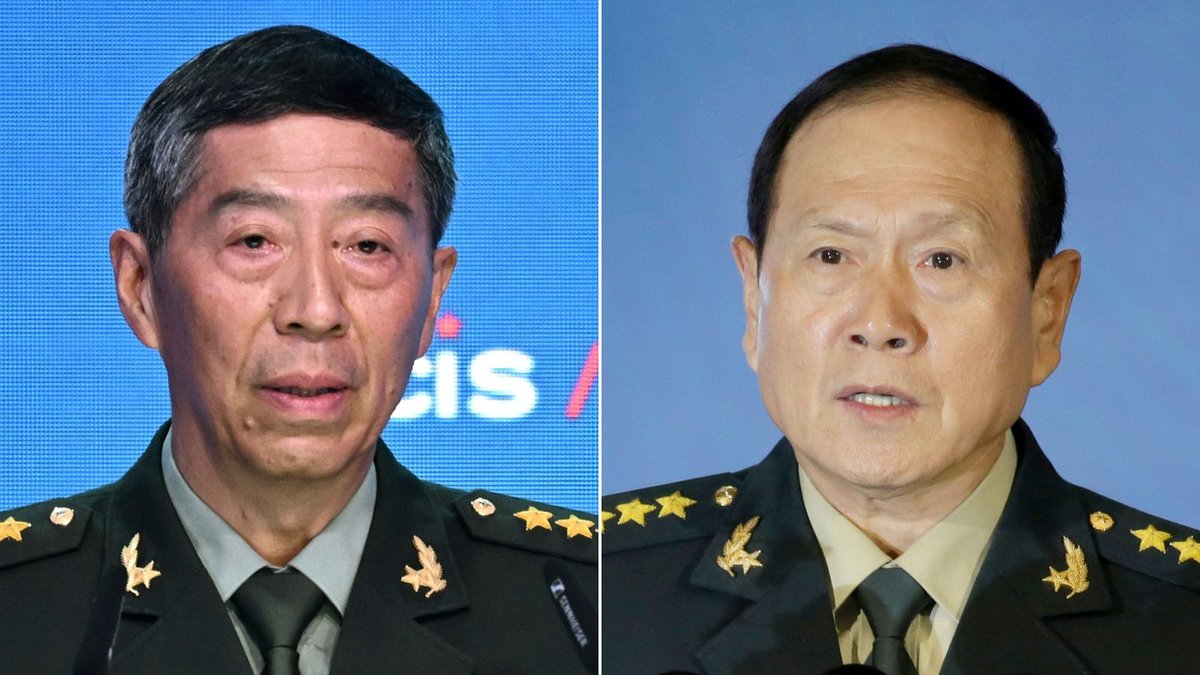
China Sentences Former Defense Ministers Wei Fenghe and Li Shangfu to Death with Two-Year Reprieve for Corruption
China Sentences Former Defense Ministers Wei Fenghe and Li Shangfu to Death with Two-Year Reprieve for CorruptionChina has delivered one of its harshest punishments yet in its long-running anti-corruption drive within the military. Former Defense Ministers Wei Fenghe and Li Shangfu have both been sentenced to death with a two-year reprieve on charges of corruption and accepting massive bribes.The sentencing, announced by Chinese state media on May 7, 2026, marks a dramatic fall from grace for two of the highest-ranking military officials in modern Chinese history and underscores President Xi Jinping’s relentless efforts to root out graft and ensure absolute loyalty in the People’s Liberation Army (PLA).Details of the SentencesAccording to the official announcement, both Wei and Li were found guilty of “serious violations of discipline and law,” including accepting enormous bribes and abusing their power for personal gain. The court imposed the death penalty with a two-year suspension — a common practice in China that often results in commutation to life imprisonment if the convicted show “good behavior” during the reprieve period.The exact amounts of bribes were not publicly disclosed, but sources familiar with the cases suggest they ran into tens of millions of dollars, involving defense contractors and suppliers.Who Are Wei Fenghe and Li Shangfu?Wei Fenghe (born 1954) served as Defense Minister from 2018 to 2023. A former commander of the PLA Rocket Force, he was known for his hardline stance on Taiwan and played a key role in modernizing China’s nuclear and missile capabilities.
Li Shangfu (born 1958) succeeded Wei as Defense Minister in 2023 but was abruptly removed from his post in 2024 amid corruption investigations. He previously headed the PLA’s Equipment Development Department, giving him significant influence over military procurement.
Both men were also removed from the Central Military Commission and stripped of all ranks and titles.Part of a Larger Military PurgeThe convictions are the latest chapter in Xi Jinping’s sweeping anti-corruption campaign targeting the PLA. Since 2023, several high-ranking generals and senior officers — particularly those connected to the Rocket Force and equipment procurement — have been removed, investigated, or disappeared from public view.Notable figures previously targeted include:Former Rocket Force commanders
Multiple vice ministers and senior generals
Officials responsible for military procurement and logistics
Analysts believe Xi is using the anti-graft drive to eliminate potential disloyalty, consolidate personal control over the military, and ensure the PLA remains focused on his goal of making China a world-class military power by 2049.Political and Military ImplicationsThe sentencing carries several important messages:No One Is Untouchable: Even officials at the very top of the military hierarchy can face the harshest penalties.
Loyalty First: The campaign reinforces that personal loyalty to Xi and the Chinese Communist Party is non-negotiable.
Military Modernization: By removing corrupt officials, Xi aims to clean up procurement processes and accelerate military modernization, especially in high-tech areas such as hypersonic missiles, naval power, and space capabilities.
Deterrence: The severity of the punishment is designed to deter other officials from engaging in corruption.
However, the move also raises questions about stability within the PLA. Frequent high-level purges can create uncertainty, disrupt command structures, and potentially affect operational readiness in the short term.International ReactionsThe United States and several Western countries have closely monitored these developments. The removal and punishment of defense ministers who were key interlocutors in U.S.-China military-to-military talks have further strained communication channels between the two powers.Some analysts suggest the internal turmoil could make the PLA more unpredictable or aggressive in the Taiwan Strait and South China Sea as commanders seek to prove their loyalty through hardline actions.Context of Xi’s Anti-Corruption DriveSince coming to power in 2012, Xi Jinping has made fighting corruption a cornerstone of his leadership. The campaign has netted thousands of officials across government, state-owned enterprises, and the military. While popular with the public, critics argue it is also a tool for eliminating political rivals and consolidating absolute power.The sentencing of Wei and Li represents one of the most senior-level punishments since the campaign began. It sends a powerful signal ahead of the upcoming key Communist Party meetings and military reshuffles.What Happens Next?Under Chinese law, if Wei and Li “show remorse” and cooperate during the two-year reprieve, their sentences will likely be commuted to life imprisonment without parole. If not, the death sentences could be carried out.Both men have reportedly been stripped of their pensions, party membership, and all associated benefits. Their families may also face restrictions under China’s anti-corruption rules.Final ThoughtsThe dramatic fall of Wei Fenghe and Li Shangfu highlights the high-stakes nature of Chinese elite politics. In Xi Jinping’s China, even the most powerful military leaders serve at the pleasure of the Party and its paramount leader.While the anti-corruption campaign has helped clean up some elements of the military, it has also created an atmosphere of fear and caution among senior officers. Whether this ultimately strengthens or weakens the PLA’s effectiveness remains one of the most important questions for China watchers in the coming years.As China continues its rise as a global superpower, the internal stability and integrity of its military leadership will play a critical role in shaping regional and global security dynamics.
Comments (0)
Please log in to comment
No comments yet. Be the first!