World & Politics
Black Gold Ignites — Oil Prices Explode Past $125 a Barrel as Trump Eyes Iran Blockade
The Price of Oil Just Changed Everything
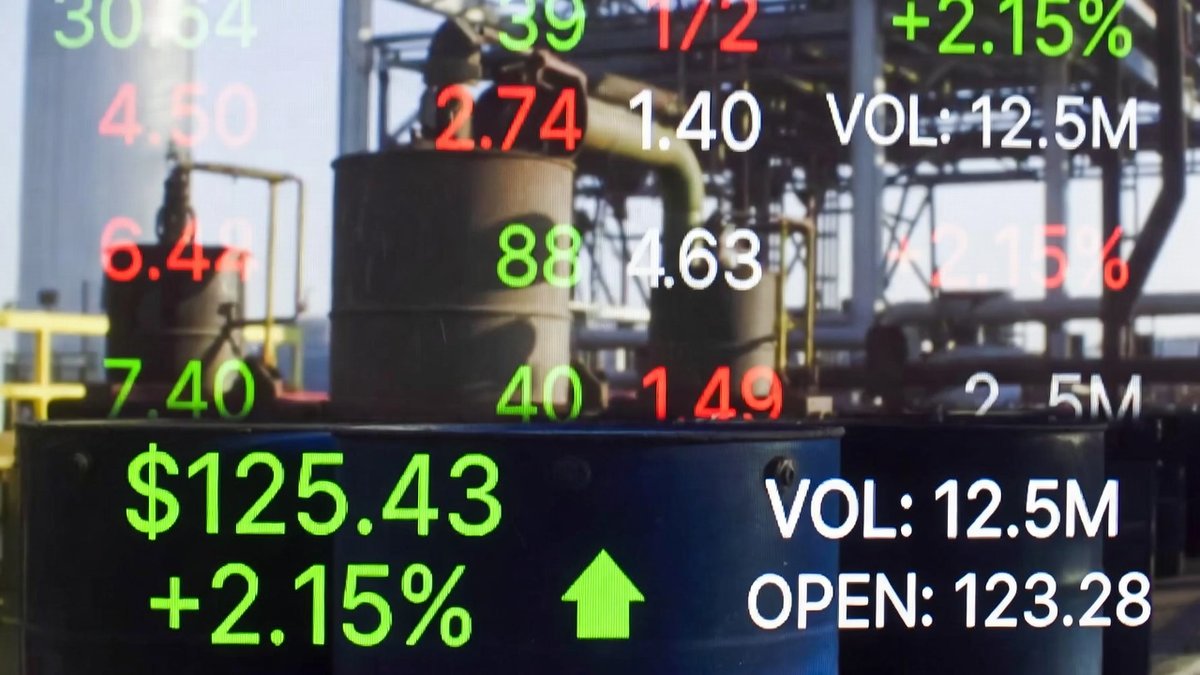
There are moments in global commodity markets when a single number recalibrates the entire economic outlook. The breach of $125 per barrel for Brent crude oil — the first time prices have reached this level since 2022 — is one of those moments.
The trigger is as geopolitical as it is economic. President Donald Trump is reportedly mulling the extension of an Iran blockade that has progressively choked Iranian oil exports from global markets, removing a significant source of supply at precisely the moment when demand pressures were already pushing prices higher. The combination of deliberate supply restriction and surging global demand has produced a price spike that is already reverberating through stock markets, boardrooms, central banks, and the household budgets of hundreds of millions of people worldwide.
At digital8hub.com, we break down exactly what is driving oil above $125, what an extended Iran blockade would mean for global energy markets, and what the consequences of sustained high oil prices are for an already fragile global economy.
How We Got Here: The Road to $125
The breach of $125 per barrel did not happen overnight. It is the culmination of a series of supply shocks, geopolitical decisions, and demand dynamics that have been building pressure in energy markets for months.
Iranian Supply Removal
The foundation of the current price surge is the progressive removal of Iranian oil from global markets through a combination of U.S. sanctions, secondary sanctions on buyers of Iranian crude, and the more recent blockade measures that have physically restricted Iranian oil exports. Iran, at its peak production capacity, is capable of producing approximately 3.5 to 4 million barrels per day — a supply volume whose removal from global markets creates a structural deficit that other producers have struggled to fill.
The Trump administration's decision to significantly tighten enforcement of sanctions on Iranian oil — going beyond the policy inherited from its predecessor — has been the primary driver of the supply shock that has pushed prices higher through 2026. Reports that Trump is now considering extending and deepening the blockade have removed any remaining market expectation that Iranian supply might return to global markets in the near term, contributing to the latest leg of the price surge.
OPEC+ Discipline
The Organisation of Petroleum Exporting Countries and its allies — the OPEC+ grouping that controls the production decisions of the world's largest oil exporters — has maintained production discipline throughout the current price surge, declining to increase output at a pace that would meaningfully offset the Iranian supply shortfall. The reasons for this discipline are partly financial — higher prices benefit producer nations — and partly political, with several OPEC+ members having their own reasons for not rushing to bail out consuming nations facing energy inflation.
Saudi Arabia, the de facto leader of OPEC+, has been particularly firm in resisting U.S. pressure to increase production, calculating that the current price environment serves the Kingdom's Vision 2030 economic transformation goals better than a return to the sub-$80 oil that characterised much of 2023 and 2024.
Demand Recovery and Growth
On the demand side, global oil consumption has rebounded more strongly than many analysts forecast, driven by robust economic activity in Asia — particularly India, which has emerged as one of the world's fastest-growing oil consumers — and by the energy demands of the AI infrastructure buildout, which requires enormous quantities of electricity generated in significant part from natural gas and, in some regions, oil.
The combination of constrained supply and stronger-than-expected demand has created exactly the conditions that produce sharp price increases — and the Iran blockade extension speculation has been the catalyst that pushed prices through the psychologically important $125 threshold.
Trump's Iran Blockade: What It Is and What Extension Would Mean
The Iran blockade — a more aggressive enforcement mechanism than standard sanctions — involves the physical restriction of Iranian oil exports through naval interdiction, port access restrictions, and pressure on shipping companies and insurers to avoid Iranian crude. Its implementation has been controversial, both domestically and internationally, but its impact on Iranian oil exports has been measurable and significant.
The reported consideration of extending and potentially deepening the blockade reflects the Trump administration's assessment that maximum economic pressure on Iran — in the context of ongoing nuclear negotiations and regional security concerns — is more likely to produce the behavioural changes Washington seeks than a relaxation of pressure would be.
From a market perspective, the extension of the blockade would have several significant implications. It would remove any near-term probability of Iranian supply returning to global markets — a probability that, however small, has been providing a modest ceiling on oil price speculation. It would signal U.S. commitment to maintaining maximum pressure regardless of global oil price consequences — removing the implicit assumption that $125+ oil would prompt a policy reconsideration. And it would increase the risk of Iranian retaliation through the Strait of Hormuz — the waterway through which approximately 20% of global oil supply passes daily — adding a further risk premium to already elevated prices.
The Global Economic Consequences: $125 Oil Changes the Math
The breach of $125 per barrel has immediate and far-reaching consequences for the global economy that extend well beyond the energy sector.
Inflation Resurgence
Energy prices are a primary input into virtually every sector of the global economy — from manufacturing and logistics to agriculture and retail. Oil above $125 per barrel will push consumer price inflation higher across all major economies, complicating the task of central banks that have spent the past three years attempting to bring inflation back to target levels. For the U.S. Federal Reserve — already navigating a delicate balance between inflation control and economic support — the oil price surge adds a significant complication to its rate decision calculus, with implications for the rate cuts that equity markets have been anticipating.
Transport and Aviation
Airlines, shipping companies, and road freight operators face immediate and severe margin pressure as fuel costs surge. Airlines that have not adequately hedged their fuel exposure face the prospect of either absorbing costs that could eliminate profitability or passing them through to consumers through higher ticket prices — which would itself contribute to broader inflation. Several major airlines are already reported to be reviewing capacity plans in response to the price surge.
Emerging Market Stress
The countries most severely affected by $125 oil are not the wealthy economies with the resources to absorb energy price shocks — they are the oil-importing emerging markets whose currency reserves, fiscal positions, and social stability are directly threatened by sustained high energy costs. Nations in South Asia, Sub-Saharan Africa, and Southeast Asia face the prospect of fuel subsidy costs that strain government budgets, currency depreciation driven by larger current account deficits, and social unrest driven by fuel and food price increases. The humanitarian dimension of sustained $125+ oil is real and serious.
The Petrodollar Windfall
Not every economy suffers from $125 oil. The Gulf states — Saudi Arabia, the UAE, Kuwait, Qatar — and other major oil exporters including Norway, Canada, and the United States itself are experiencing a significant revenue windfall that is funding everything from sovereign wealth fund expansion to domestic infrastructure investment. The geopolitical power of oil-producing states increases in direct proportion to the oil price — a dynamic that shapes everything from Middle Eastern regional politics to Arctic territorial claims.
What the Market Is Pricing In
Energy traders and financial analysts are currently wrestling with two very different scenarios for oil prices over the next six to twelve months.
The Bear Case for Oil Prices
Demand destruction — the economic phenomenon by which high prices reduce consumption — is the primary counterforce to sustained $125+ oil. High fuel costs reduce discretionary spending, slow industrial activity, and eventually push economies toward recession, all of which reduce oil demand and bring prices back down. Historical precedent — including the 2008 oil price spike to nearly $150 and its subsequent collapse — suggests that $125+ oil is rarely sustainable for extended periods.
The Bull Case for Oil Prices
The structural supply constraints created by the Iran blockade, OPEC+ discipline, and years of underinvestment in new oil production capacity could sustain higher-than-historical prices even as demand moderates. If the Iran blockade is extended and deepened, and if no diplomatic breakthrough releases significant new supply into the market, prices above $125 could persist long enough to cause significant economic disruption before demand destruction brings them back down.
What to Watch
The key variables that will determine whether $125 is a ceiling or a floor in the current oil price cycle include the pace and scope of any Iran blockade extension, OPEC+'s production response to sustained high prices, the Federal Reserve's reaction to oil-driven inflation, diplomatic developments in U.S.-Iran relations, and any Strait of Hormuz incident that could trigger a further supply shock.
For consumers, investors, and policymakers worldwide, the breach of $125 per barrel is not a number to observe from a distance. It is a development that will shape economic conditions, political decisions, and everyday life in the months ahead.
For the latest analysis on energy markets, geopolitical risk, and the global economy, follow digital8hub.com — where the stories that matter are always covered with the depth they deserve.
Comments (0)
Please log in to comment
No comments yet. Be the first!