Health & Fitness
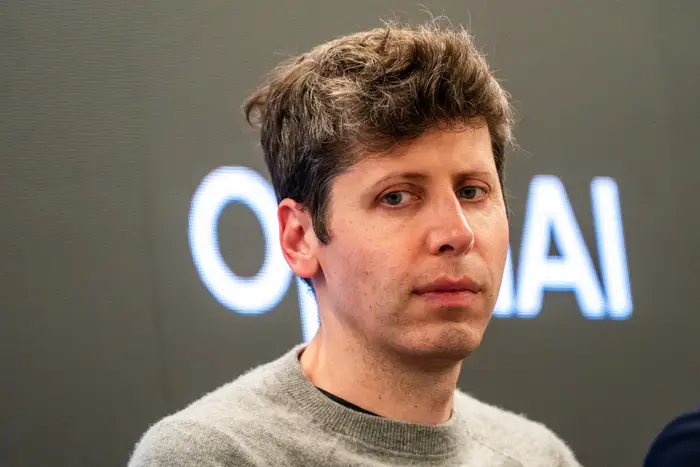
OpenAI CEO Sam Altman Issues Apology Over Failure to Report Tumbler Ridge Shooting Suspect to Police
A Community in Grief — and a Technology Giant on the Back Foot
The small town of Tumbler Ridge, British Columbia, is still processing the trauma of a mass shooting that claimed multiple lives and shattered a tight-knit community. Now, into that grief, has stepped one of the most powerful figures in the global technology industry — Sam Altman, CEO of OpenAI — bearing an apology that many are already describing as too little, too late.
Altman issued a public statement expressing that he was "deeply sorry" after it emerged that OpenAI had identified and banned the Tumbler Ridge shooting suspect's ChatGPT account — but failed to alert law enforcement before the attack took place. The revelation has ignited a fierce and overdue debate about the responsibilities of AI companies when their platforms are used in connection with violent crime, and about whether the industry's existing frameworks for safety and accountability are remotely adequate for the moment we are living through.
At digital8hub.com, we cover this story with the gravity it deserves — examining both the human tragedy at its centre and the systemic questions it forces us to confront.
What Happened in Tumbler Ridge
Tumbler Ridge is a small mining community in northeastern British Columbia — a place of approximately 2,000 people where, as in so many small towns, everyone knows everyone and tragedy lands with particular weight. The mass shooting that struck the community left multiple people dead and a community devastated, generating national and international headlines and an outpouring of grief from across Canada.
In the days and weeks that followed, investigators began piecing together the background of the suspect — including, it has now emerged, a history of interactions with OpenAI's ChatGPT platform that raised sufficient concern for OpenAI to identify and ban the account. The precise nature of those interactions has not been fully disclosed publicly, but the fact that OpenAI took the step of banning the account indicates the company's own systems flagged behaviour serious enough to warrant action.
What the company did not do — and what Sam Altman has now publicly acknowledged as a failure — was alert law enforcement to what it had found.
Altman's Apology: What He Said
In his public statement, Altman described himself as "deeply sorry" for OpenAI's failure to notify police about the suspect's account activity. The apology was addressed directly to the community of Tumbler Ridge — an unusual and personal touch that reflects the severity of the situation and, perhaps, the degree to which Altman himself feels the weight of what occurred.
The statement acknowledged that OpenAI had identified the account and taken action against it, but had not taken the further step of proactively sharing that information with Canadian law enforcement authorities. Altman did not offer detailed explanations of why that step was not taken, but committed to reviewing and strengthening OpenAI's protocols around reporting potentially dangerous user activity to authorities.
The response from the community and from political figures has been pointed. British Columbia Premier David Eby described Altman's apology as "necessary but grossly insufficient" — a characterisation that captures the sentiment of many who feel that words, however sincere, cannot address what is fundamentally a structural and systemic failure.
The Central Question: Did OpenAI Have a Duty to Report?
The legal and ethical question at the heart of this story is one that the technology industry has largely avoided confronting directly: when a platform identifies user behaviour that suggests a credible risk of serious violence, does it have an obligation to report that information to law enforcement — even in the absence of a specific legal requirement to do so?
The answer, in most jurisdictions, is complicated. Technology companies are generally not subject to mandatory reporting requirements for violent threats in the way that, say, mental health professionals or educators are in certain contexts. Section 230 of the Communications Decency Act in the United States — and equivalent frameworks in Canada and other jurisdictions — has historically provided platforms with significant immunity from liability for user-generated content, which has shaped a culture of reactive rather than proactive moderation.
But the moral argument is less ambiguous. If OpenAI's systems identified behaviour serious enough to result in an account ban — behaviour that, in retrospect, was connected to a subsequent mass casualty event — the failure to share that information with law enforcement represents a profound gap between the company's stated commitment to safety and its actual operational practice.
This is not a hypothetical edge case. It is a real-world test of whether AI companies' safety commitments are substantive or performative — and on this occasion, the answer is deeply uncomfortable.
A Pattern of AI-Adjacent Tragedies
The Tumbler Ridge case does not exist in isolation. Reports have emerged of other incidents — including in Florida — in which AI chatbot interactions have been cited in connection with violent events, raising broader questions about the role of large language models in the lives of individuals who may be vulnerable, radicalised, or in crisis.
The pattern raises questions that the AI industry cannot indefinitely defer:
What constitutes a reportable threat? AI companies need clear, consistent internal standards for what user behaviour triggers a proactive law enforcement notification — standards that are currently inconsistent or absent across the industry.
Who bears responsibility? When a platform identifies and bans an account for dangerous behaviour but does not report it to authorities, and that individual subsequently causes harm, the question of legal and moral liability becomes urgent and unresolved.
What do terms of service actually mean? Most AI platforms' terms of service reserve the right to report illegal activity or credible threats to law enforcement. The gap between that reservation and actual practice is clearly significant.
Is self-regulation sufficient? The AI industry has largely argued that it can and should govern itself — that mandatory regulation would stifle innovation and that companies' own safety commitments are adequate. The Tumbler Ridge case is a direct challenge to that argument.
The Industry's Moment of Accountability
Sam Altman's apology, whatever its sincerity, arrives at a moment when the AI industry's relationship with accountability is under unprecedented scrutiny. The companies building and deploying the most powerful AI systems in history have operated, for much of the past decade, with a degree of regulatory latitude that is increasingly difficult to justify.
Governments are responding. The European Union's AI Act is creating mandatory requirements for high-risk AI systems. Canada is advancing its own AI governance legislation. The United States Congress has held multiple hearings on AI safety and accountability — with the Tumbler Ridge case certain to feature prominently in future proceedings. The era of the AI industry setting its own rules, on its own timeline, is ending.
For OpenAI specifically, the path forward requires more than an apology — it requires structural change. Clearer protocols for law enforcement notification. More robust systems for identifying at-risk users. Greater transparency about how safety decisions are made. And genuine engagement with the legal and regulatory frameworks that are being built around the technology it has done so much to shape.
The community of Tumbler Ridge deserves nothing less. And neither does anyone else living in a world increasingly mediated by artificial intelligence.
For the latest analysis on AI accountability, technology policy, and the stories that matter in 2026, follow digital8hub.com — where we cover the digital world without flinching from its hardest questions.
If you or someone you know has been affected by violence or is experiencing a mental health crisis, please contact your local emergency services or a crisis support line in your region.
Comments (0)
Please log in to comment
No comments yet. Be the first!