Health & Fitness
Moderna and Merck Announce Positive Melanoma Trial Results
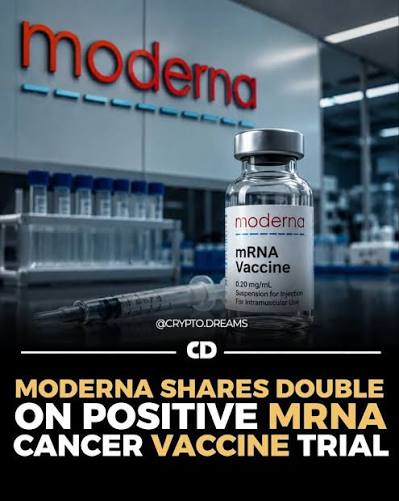
Moderna and Merck have announced positive topline results from a late-stage clinical trial of their investigational personalized mRNA cancer vaccine in combination with Merck’s immunotherapy Keytruda (pembrolizumab). The Phase 3 INTerpath-001 trial met its primary and a key secondary endpoint in patients with completely resected high-risk melanoma.The combination therapy demonstrated statistically significant and clinically meaningful improvements in recurrence-free survival (RFS) and distant metastasis-free survival (DMFS) compared with Keytruda alone.Trial DetailsThe study enrolled 1,137 patients with stage IIB to IV cutaneous melanoma that had been completely surgically removed and who had not received prior systemic therapy. Participants were randomized 2:1 to receive either the personalized mRNA vaccine (intismeran autogene, also known as mRNA-4157 or V940) plus Keytruda, or Keytruda alone, for approximately one year.At a pre-specified interim analysis, the combination met the primary endpoint of recurrence-free survival — the time patients lived without their cancer returning. It also met a key secondary endpoint of distant metastasis-free survival, which measures the time without the cancer spreading to distant parts of the body.The companies stated that the improvements were statistically significant and clinically meaningful but did not release specific hazard ratios or detailed numerical data in the initial announcement. Full results are expected to be presented at an upcoming international medical meeting. Overall survival data continue to be evaluated according to the trial protocol.No new safety signals were observed. The safety profile was consistent with previous studies of the combination.What Makes the Vaccine UniqueIntismeran is an individualized neoantigen therapy. It is created by sequencing a patient’s tumor to identify unique mutations (neoantigens), then using mRNA technology to produce a custom vaccine designed to train the patient’s immune system to recognize and attack those specific cancer cells. The manufacturing process typically takes about six weeks.This approach represents one of the most advanced efforts to develop truly personalized cancer treatments using mRNA technology — the same platform that powered COVID-19 vaccines.Significance of the ResultsThe Phase 3 success is a landmark for both companies and for the field of cancer immunotherapy. It marks the first positive late-stage trial result for an individualized neoantigen therapy and the first Phase 3 study to show that adding a treatment to Keytruda improved outcomes over Keytruda alone in the adjuvant melanoma setting (treatment given after surgery to reduce the risk of recurrence).Earlier Phase 2 data had already shown promising results. Five-year follow-up from a mid-stage trial indicated the combination reduced the risk of recurrence or death by 49% and the risk of distant metastasis or death by 59% compared with Keytruda alone.Market and Company ImpactThe announcement triggered a sharp rise in Moderna’s share price, reflecting investor optimism about the company’s pivot toward oncology following the decline in COVID-19 vaccine demand. Merck shares also rose on the news.Analysts have projected that the therapy could generate significant revenue in melanoma if approved, with some estimates pointing to multi-billion-dollar potential over time. Moderna has indicated it hopes to bring the treatment to market as early as 2027, pending regulatory discussions.The companies plan to engage with regulators regarding potential filings for the combination in this indication.Broader ImplicationsMelanoma is one of the most serious forms of skin cancer. Even after surgical removal, high-risk patients face a substantial chance of recurrence. Improving outcomes in the adjuvant setting has been a long-standing goal in oncology.Success in melanoma could open the door to testing the same personalized mRNA approach in other cancers. Moderna and Merck are already exploring the therapy in additional tumor types, including lung, bladder, and kidney cancers.The results also provide further validation for mRNA technology beyond infectious disease vaccines, supporting the idea that the platform can be adapted for complex therapeutic applications such as cancer.Looking AheadDetailed data from the Phase 3 trial will be closely scrutinized when presented publicly. Regulators will review the full package of efficacy and safety information before any approval decisions. Manufacturing scale-up for individualized vaccines presents unique logistical challenges that the companies will need to address if the product moves toward commercialization.
Comments (0)
Please log in to comment
No comments yet. Be the first!