Finance & Business
Tesla, SpaceX and Amazon Join 56 Firms Blocking OKX-ICE Tokenized Stocks
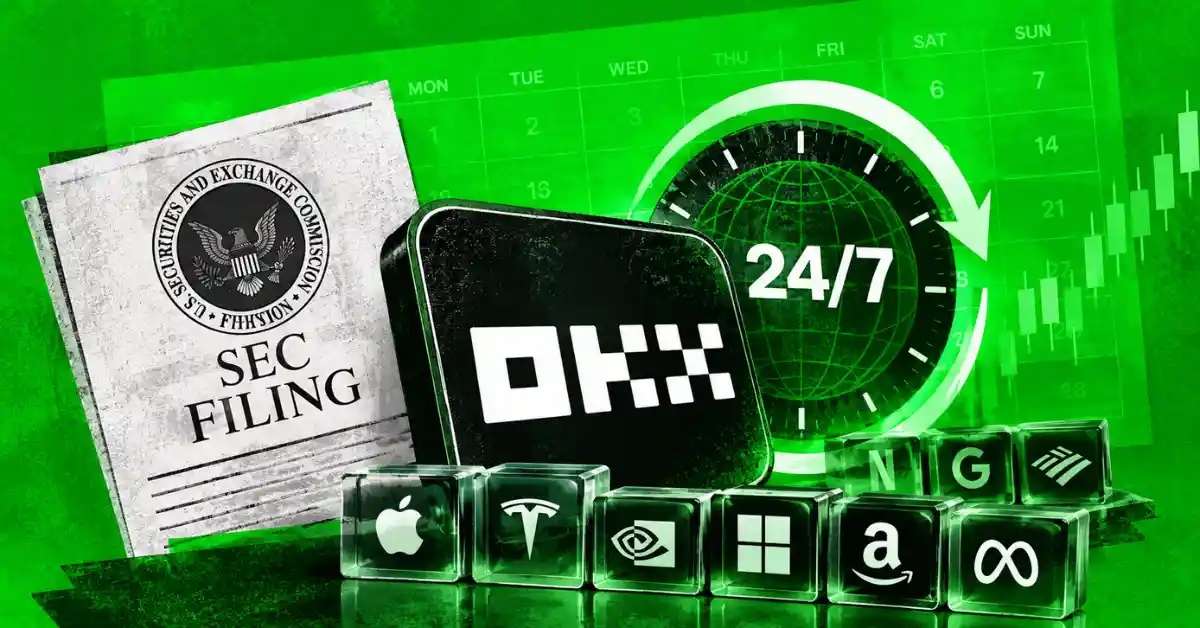
Tesla, SpaceX and Amazon have joined a rapidly growing list of major U.S. companies objecting to the trading of third-party tokenized versions of their shares on a new blockchain-based venue backed by crypto exchange OKX and New York Stock Exchange parent Intercontinental Exchange (ICE). An updated public notice dated November 2 from the joint venture, OKXICE TSV, added these three names along with Netflix, Lam Research and SoFi Technologies, lifting the total number of disclosed objections to 56.Decrypt
Of the 62 companies originally selected for potential trading on the platform, roughly 49—about 79 percent—have now objected. Seven additional objectors fell outside that initial selection. The list had stood at just nine companies on October 15 and 50 as of the prior October 30 notice.Cryptobriefing
The OKX-ICE Tokenized Stock Venue
OKXICE is a 50-50 joint venture between Intercontinental Exchange and OKX’s U.S. holding company. It plans to offer continuous, around-the-clock trading of tokenized U.S. stocks through permissioned automated market-maker pools on OKX’s XLayer blockchain. Investors would trade using stablecoins such as USDC, with each token representing a security entitlement to one underlying share held one-for-one by a registered broker-dealer. Users must complete identity and sanctions checks and hold a nontransferable “soulbound” token verified by the venue’s smart contracts before trading.Decrypt
The venture operates under the SEC’s Innovation Exemption, a five-year conditional order issued on September 17, 2026. The exemption allows qualifying Tokenized Securities Venues (TSVs) to trade tokenized versions of national market system (NMS) stocks without registering as traditional exchanges, subject to volume caps, disclosure requirements and other conditions. OKXICE notified the SEC of its intentions in early October, listing more than 60 potential stocks that included Nvidia, Apple, Microsoft, Tesla, SpaceX and Amazon among others.Theblock
How the Objection Mechanism Works
Under the exemption, before a venue can offer a stock tokenized by an unaffiliated third party, it must give the issuer written notice. The company then has 30 calendar days from receipt to object in writing. A timely objection bars that specific venue from listing the third-party tokenized version of the stock. The objection does not apply to other venues, nor does it prevent the issuer itself from tokenizing and listing its own shares if it chooses to do so.Decrypt
This opt-out right has been exercised broadly. Earlier waves of objections included Nvidia, Microsoft, Alphabet, JPMorgan, Walmart, Goldman Sachs, Costco, Nike and many others spanning technology, retail, finance, healthcare and industrial sectors. Andrew Cuomo, co-chair of the OKXICE joint venture and former New York governor, has noted that many companies preferred to “wait and see” how the market developed.
Tesla, SpaceX, Amazon and the Latest Additions
The November 2 notice brought high-profile additions. Tesla (TSLA) and SpaceX (SPCX), both linked to Elon Musk, formally objected, as did Amazon (AMZN). SpaceX’s decision drew particular attention because tokenized representations of its shares had previously seen substantial offshore trading volume on other platforms after its public listing. Netflix, SoFi Technologies and Lam Research joined them in the same update.Coincentral
At the time of the November 2 filing, Apple remained one of the few remaining megacap names without a disclosed objection, alongside a group of mostly crypto-linked companies such as Coinbase, Robinhood, Strategy, Circle, Securitize and BitGo. Subsequent notices in the following days added Apple, Meta Platforms and others, eventually bringing the total objections above 60 and encompassing every member of the so-called Magnificent Seven technology stocks.Decrypt
Broader Context and Implications
The rapid rise in objections—from a handful in mid-October to dozens within weeks—illustrates corporate caution toward third-party tokenization of their equity. Companies appear concerned about control over their shareholder base, the implications of continuous trading, potential confusion between tokenized and traditional shares, and the operational details of how economic and voting rights would be handled. Industry groups have also raised questions about the exemption’s structure, with some advocating for affirmative issuer consent rather than an opt-out model.
For the OKX-ICE venue, the scale of objections significantly narrows the universe of readily available large-cap stocks at launch. The platform can still list shares that issuers choose to tokenize themselves and can operate with the names that have not objected. Crypto-native or crypto-adjacent public companies have been notably less likely to object so far. Other tokenized stock venues operating under the same SEC framework have also begun to appear, suggesting the experiment will continue even as individual issuers exercise their rights on a platform-by-platform basis.
What to Watch
Further objection notices may still emerge as additional companies receive and respond to formal notifications, since the 30-day clock runs from each issuer’s individual receipt of notice. OKXICE has not yet announced a firm launch date or the precise list of stocks it will offer at the start of trading. Attention will also turn to whether any major issuers decide to tokenize their own shares for listing on the venue, and how trading volumes and market structure evolve under the Innovation Exemption’s volume caps and other conditions. Parallel developments at other tokenized securities venues and any further SEC guidance or industry feedback will help clarify the longer-term path for on-chain equity trading in the United States.
The episode underscores both the interest in bringing traditional equities onto blockchain rails for 24/7 trading and settlement in stablecoins, and the determination of many public companies to retain control over how their shares are represented in new market structures. As the Innovation Exemption’s five-year window unfolds, the balance between innovation, investor access and issuer rights will continue to take shape through these individual decisions and the practical experience of the first venues.
Comments (0)
Please log in to comment
No comments yet. Be the first!