Finance & Business
Tenstorrent Raises $1.5 Billion at a $6.2 Billion Valuation to Scale Open-Weight AI Chips
Tenstorrent chose to raise rather than sell, and the raise more than doubled its price.
The Santa Clara chip startup said Monday it closed a $1.5 billion Series E at a $6.2 billion post-money valuation. Trace Capital, a firm launched this year by Quiet Capital co-founder Ben Mahdavi, and Innovation X led the round. Other participants included ARK Invest, Cadence Ventures, Eclipse, Fidelity, Morgan Stanley, SanDisk, T. Rowe Price, and Tether Investments, among others. The valuation is more than double the roughly $2.6 billion mark from the December 2024 round, which raised more than $693 million. Five months ago the company reportedly drew acquisition interest from Intel and Qualcomm at valuations up to about $5 billion. Jim Keller, the CEO, told Bloomberg the company decided to remain independent and raise after it showed that its Galaxy servers could run DeepSeek models.
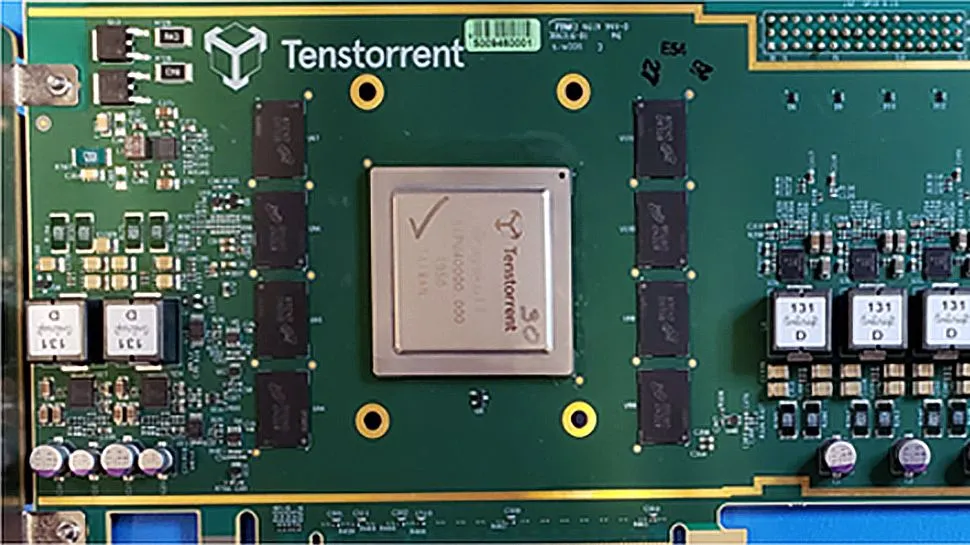
The capital is for scale. Tenstorrent said it will expand production of Galaxy servers, which combine dozens of its AI chips for chatbots, coding assistants, and video generation, and it will keep developing the AI and CPU designs it licenses to companies that build their own chips, including Samsung and LG. Galaxy servers began shipping in April. A current configuration pairs 32 RISC-V Blackhole processors with Tensix AI cores and is rated at 23 petaflops of FP8 compute. Keller’s line in the announcement: “We built one architecture and sell it at every size. The future of compute is open, scalable, and owned by the people building on it.”
Why Open-Weight Is the Product Pitch
The chips are aimed at inference for open-weight models rather than at training the largest closed systems. That is a different market from Nvidia’s highest-end training GPUs and a crowded one. Running DeepSeek, Llama-class, and video models on hardware that does not require an Nvidia software stack is the demonstration Keller cited as the reason to stay independent. RISC-V, the open instruction set, is the architectural bet: no Arm license fee, and a design that customers can modify. Tenstorrent sells the result as cards, workstations, racks, superclusters, and custom silicon. The $1.5 billion is meant to make the rack version available in volume, not only as a reference design.
Open-weight demand is the tailwind the round assumes. Labs and enterprises that do not want to send every token to a closed API, or that want to run Chinese and U.S. open models on hardware they control, are the buyers. A $6.2 billion valuation prices in that those buyers will choose Tenstorrent’s servers over a Nvidia box, an AMD box, or a hyperscaler’s own silicon for at least some of the inference load. The round does not include a revenue figure or a customer count that would let an outsider test that price.
Who Keller Is, and Why the Round Landed
Keller is the résumé the investors bought. He led Tesla’s Autopilot chip effort, held senior design roles at Apple and AMD, and has been building Tenstorrent for about a decade. A chip CEO with that history raising $1.5 billion after turning down strategic buyers is a different story from a first-time founder raising a seed. Trace Capital’s involvement, as a new firm led by a Quiet Capital co-founder, and the presence of crossover names such as Fidelity, T. Rowe Price, and ARK, put public-market-style capital into a still-private hardware company. That mix usually appears when investors expect either an IPO path or a later round at a higher mark. It does not guarantee either.
The decision to stay independent after Intel and Qualcomm interest is the strategic fact. Selling at $5 billion would have ended the open-architecture experiment inside a larger company’s roadmap. Raising at $6.2 billion keeps the experiment and raises the bar for the next exit. Keller will now have to show that Galaxy servers ship in the volumes the valuation implies, and that open-weight inference is a large enough market to support a standalone chip company against Nvidia’s software moat.
Where This Sits in the AI-Chip Wave
Tenstorrent is one of several startups trying to take inference share. Etched has been reported fielding offers at far higher valuations. Others are building for specific model types or for sovereign deployments. The common claim is efficiency on the workload that is not training. The common risk is that Nvidia’s inference GPUs, and the CUDA ecosystem around them, remain the default even when a rival chip is faster per watt on a benchmark. Tenstorrent’s differentiator is the open stack and the RISC-V base, plus Keller’s name. The $1.5 billion buys time and wafers to find out whether that differentiator converts.
Samsung and LG as licensees of the designs are the other revenue line. Licensing is higher-margin and slower to scale than selling servers. Both matter if the company is to justify a valuation that has doubled in under two years.
What to Watch
Galaxy server shipment numbers, which the company has not put in the round announcement.
Named customers running production open-weight workloads on Tenstorrent hardware.
Any further acquisition approach, now at a $6.2 billion anchor.
How the RISC-V software stack compares with CUDA for the models Keller cited.
The next valuation, if a later round or a filing appears.
Tenstorrent raised $1.5 billion at a $6.2 billion valuation to scale chips and Galaxy servers for open-weight AI models. The round more than doubles the late-2024 mark. Jim Keller said the company stayed independent after earlier takeover interest. The money is for production of servers that run chatbots, coding tools, and video generation on RISC-V silicon. The valuation assumes those servers find buyers. The shipments will show whether they do.
Comments (0)
Please log in to comment
No comments yet. Be the first!