Finance & Business
Iran’s Parliament Speaker Warns Gulf States Against Aiding AI and Data Companies, Threatening Enforcement
Iran’s parliament speaker told Gulf governments and investors to stop supporting certain AI and data companies, and he attached a threat.
On Sunday, Mohammad Bagher Ghalibaf wrote on X that “the Persian Gulf Data Authority is coming.” He addressed “governments, funds, and firms in the region” and said they were “kindly advised to give no resources to any AI or data company aiding invasions or killing children.” The resources he listed were finance, equity, land, and energy. “Assist them and face our enforcement,” the post continued. The message does not name Nvidia, Google, Apple, Microsoft, OpenAI, or any other specific firm. It does not cite a new statute, a parliamentary vote, or an implemented authority. It is a public warning from the speaker, paired with the announcement of an entity that does not yet appear to exist as a functioning regulator.
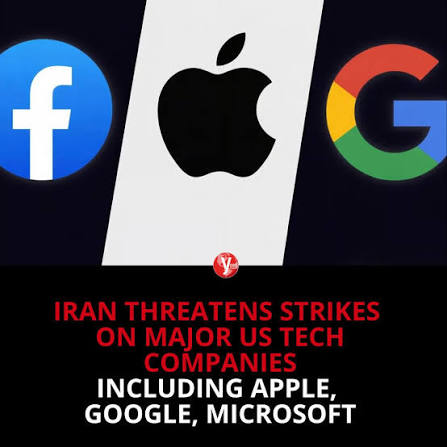
The companies the user’s framing names sit in the background of earlier Iranian statements, not in Sunday’s post. The Islamic Revolutionary Guard Corps has previously published lists of U.S. technology firms — including Microsoft, Google, Meta, Apple, Oracle, and Nvidia — and has named Emirati AI company G42, accusing them of supporting U.S. military operations. Mohsen Rezaei, secretary of the Supreme National Security Council, said last week that if war resumed, cables, data centers, and AI facilities valued at $2 trillion would be within range, and that American technology assets in the UAE and around the Strait of Hormuz had not yet been targeted but could be. Sunday’s post is the political version of that pressure, aimed at the hosts rather than only at the companies.
What the Gulf Actually Hosts
The UAE and Saudi Arabia have spent heavily to become AI hubs. G42 in Abu Dhabi is building Stargate UAE with OpenAI, Nvidia, and others. The UAE has received initial shipments of Nvidia CPUs and GPUs after U.S. approvals and security assurances. Saudi Arabia’s Humain has also received some advanced Nvidia chips. U.S. export licenses for further Blackwell-class chips to both have moved slowly, held up by investment pledges, regulatory reviews, and Washington’s concerns about technology reaching China. A Nvidia policy official said this month that Gulf AI plans had not changed despite the conflict, and that the countries still see the technology as economic diversification.
Ghalibaf’s list — finance, equity, land, energy — maps onto exactly those projects. Land and energy are what a Gulf data center needs. Equity and finance are what the joint ventures use. A warning that providing them will face “enforcement” is a warning to the partners and the hosts, not a technical export-control rule. Iran does not regulate U.S. chip shipments. It can threaten the facilities those chips would fill, and it can threaten the governments that approve the land and the power.
What “Enforcement” Can Mean
Iran has struck targets in the region during the current conflict cycle. It has threatened undersea cables and data centers. It has not, in the public record of this week, destroyed a Gulf AI campus. Rezaei’s distinction — that U.S. tech assets in the UAE were not yet on the target list but could be — is the operational caveat. Ghalibaf’s “Persian Gulf Data Authority” is, so far, a phrase in a post. Whether it becomes an office that issues orders, a sanctions list, or a rhetorical frame for later strikes is not established by the Sunday message.
For the companies, the practical exposure is the physical one. A data center in the UAE or Saudi Arabia that depends on local power, land leases, and political welcome is exposed to the host’s risk calculation. If Abu Dhabi or Riyadh decides the enforcement risk is real, projects slow. If they decide it is not, the projects continue under the same U.S. export constraints they already face. Nvidia’s public line this month was that the imperatives had not changed. Sunday’s post is a test of that line.
What the Post Does Not Do
It does not ban Nvidia, Google, Apple, Microsoft, or OpenAI from the Gulf by Iranian law. Those companies are not subject to Iranian commercial regulation in the UAE. It does not order the UAE or Saudi Arabia to expel them. It advises the hosts and investors, and it threatens consequences for assistance. The difference matters for accuracy. A formal prohibition would be a legal act with a text. This is a speaker’s warning with a future tense (“is coming”) and a conditional (“assist them and face our enforcement”).
The “aiding invasions or killing children” clause is the criterion Ghalibaf supplied. It is not defined in the post. Applied broadly, it can cover any firm whose technology is used by the U.S. military. Applied narrowly, it requires a showing the post does not provide. The earlier IRGC lists suggest the broad reading is available to Tehran.
What to Watch
Whether the “Persian Gulf Data Authority” is given a charter, a website, or a list of prohibited firms.
Any UAE or Saudi official response to the Sunday post.
Movement, or further delay, in U.S. approvals for additional Nvidia chips to G42 and Humain.
Rezaei or IRGC statements that add specific Gulf data-center sites to a target list.
Insurance and project-finance terms for new AI campuses in the UAE after this week.
Iran’s parliament speaker warned Gulf governments, funds, and firms not to provide finance, equity, land, or energy to AI and data companies he said aid invasions, and he said assistance would face enforcement. He announced a Persian Gulf Data Authority that is not yet operating. He did not name Nvidia, Google, Apple, Microsoft, or OpenAI in the post. Prior Iranian statements have. The UAE and Saudi projects that involve those firms are the infrastructure the warning points at. Whether the hosts treat it as a reason to pause is the open question.
Comments (0)
Please log in to comment
No comments yet. Be the first!