Finance & Business
Anthropic Spends $3.4 Billion to Lock In 1.7 GW of Gas Generators for AI Data Centers
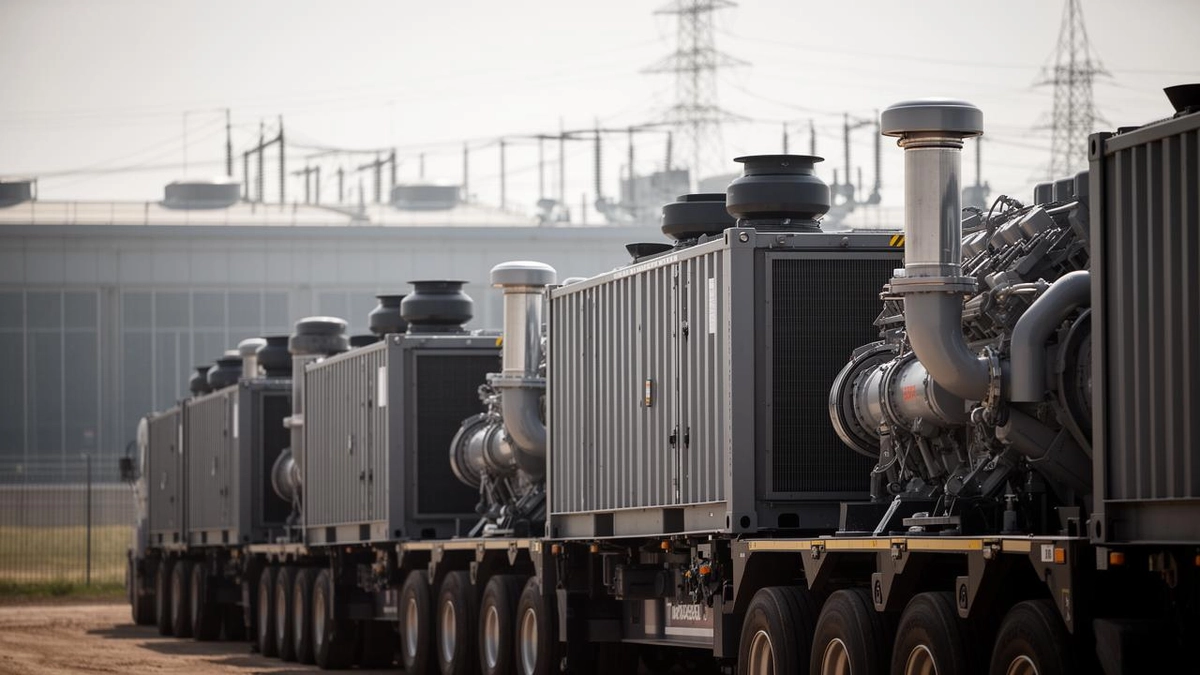
Anthropic has agreed to spend approximately $3.4 billion to secure 1.7 gigawatts of heavy-duty gas-fired generators for its AI data centers, according to a Financial Times report. The company took over existing Caterpillar generator orders held by San Antonio-based OnePWR Solutions in late September rather than purchasing the supplier itself.Bloomberg
The transaction includes the generators plus the engineering and construction capabilities needed to install them. No OnePWR employees transferred to Anthropic, and the specific sites where the units will be deployed have not been disclosed. Both companies declined to comment, and independent verification of the full details remains limited.Reuters
How the Deal Was Structured
OnePWR Solutions, a developer of behind-the-meter power plants and microgrids, had placed the Caterpillar orders roughly two years earlier but required financing to complete the purchase. Anthropic initially considered buying power from OnePWR as a customer. Instead, it assumed the equipment orders directly, securing a place in a constrained manufacturing queue.Dealroom
At the reported figures, the commitment equates to roughly $2 million per megawatt, or about $2,000 per kilowatt, for the generators and associated installation support. Investment bank Piper Sandler has listed a $3.4 billion sale of OnePWR’s power-generation platform to an unnamed frontier AI lab in September, consistent with the timing of the reported transaction.Mlq
The Financial Times described the arrangement as the largest known single purchase of power-generation equipment by an AI laboratory. Similar equipment purchases have occurred elsewhere—xAI, for example, has acquired mobile gas turbines—but none have matched the reported scale of this single commitment.
Why Gas Generators and Why Now
Demand for large turbines and generators has outpaced factory capacity as AI companies race to expand data-center capacity. New orders now face multi-year delivery timelines and allocation constraints. By stepping into OnePWR’s existing queue, Anthropic avoided the longer wait that a fresh order would likely entail.
Anthropic’s recent regulatory filings have acknowledged that certain planned data-center facilities will rely on dedicated on-site natural-gas generation. The company has noted exposure to fuel-price and supply risk and has listed turbines and generators among equipment categories facing extended delivery schedules. Clean-energy alternatives, while preferred in many public statements, may not be available on the timelines required for the current buildout.Cryptobriefing
On-site gas generation offers a practical path to reliable power when grid connections are delayed or constrained. It also allows operators to bring capacity online without waiting for transmission upgrades. For a company whose Claude models are seeing strong demand, securing reliable electricity is a prerequisite for continued growth in training and inference capacity.
Broader Infrastructure Context
The generator purchase sits inside a much larger capital program. Anthropic has previously indicated expectations of spending more than $500 billion over the next decade on AI infrastructure. Recent filings have referenced computing commitments approaching $900 billion through 2045 in some characterizations, though figures vary by source and definition. The $3.4 billion generator commitment is therefore a visible but relatively small slice of the overall spend.Reuters
Other large AI developers are pursuing similar strategies. Several have signed power-purchase agreements, pursued nuclear options, or arranged behind-the-meter generation. The common thread is that electricity has become one of the binding constraints on AI scaling, alongside chips and cooling. Companies that can lock in generation capacity early gain a competitive advantage in bringing new clusters online.
Caterpillar’s power-generation business has itself reported strong growth, driven largely by data-center demand. The Anthropic-related orders, if confirmed, represent a material contribution to that segment’s recent performance.
Environmental and Operational Considerations
Natural-gas generation produces lower emissions than coal but remains a fossil-fuel source. Critics of AI infrastructure expansion have pointed to the cumulative climate impact of large gas fleets, particularly when they operate for extended periods. Proponents note that gas can serve as a bridge while nuclear, renewables, and storage scale, and that on-site units can be paired with future low-carbon options.
From an operational standpoint, the generators provide dispatchable power that can match the variable loads of AI training clusters. They also reduce dependence on local grid conditions, which in some regions are already strained by data-center growth. Fuel supply contracts, maintenance schedules, and emissions-control equipment will be important details as the units are installed and commissioned.
What the Deal Does Not Include
The agreement does not transfer ownership of OnePWR Solutions, nor does it guarantee a specific delivery schedule or deployment location. Those details are expected to emerge as installation work progresses. Anthropic retains the flexibility to allocate the capacity across multiple facilities as its data-center plans solidify.
What to Watch
Confirmation of delivery timelines and the first sites where the generators are installed.
Any additional power-equipment purchases by Anthropic or peer AI labs as queues remain tight.
Updates in Anthropic’s filings regarding on-site generation capacity and fuel-risk mitigation.
Market reaction in the power-equipment sector, particularly Caterpillar’s power-generation segment.
Policy and permitting developments that could affect on-site gas generation for data centers.
Progress on longer-term low-carbon alternatives that could eventually complement or replace the gas units.
Anthropic’s $3.4 billion commitment for 1.7 GW of gas generators underscores how tightly power availability is now linked to AI progress. By securing an existing order queue, the company has taken a practical step to reduce one major source of delay in its data-center expansion. As the generators move from order to installation, the industry will gain a clearer picture of how large AI developers are balancing speed, cost, and energy strategy in the current buildout cycle.
Comments (0)
Please log in to comment
No comments yet. Be the first!