Finance & Business
AMD Acknowledges Radeon Driver Bug Causing Constant SSD Writes, Fix In The Works
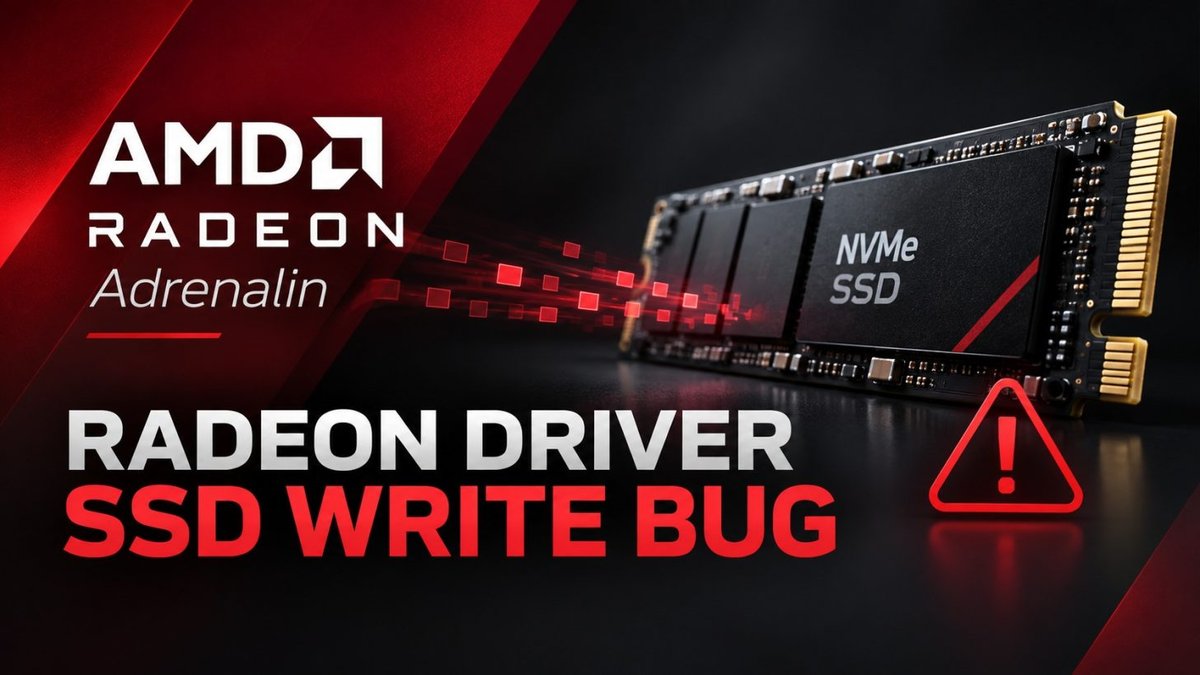
AMD has acknowledged a bug in its Radeon graphics drivers that can produce sustained, unnecessary writes to solid-state drives even when systems are idle. The issue, traced to the AMD External Events Utility and its associated process atieclxx.exe, has drawn renewed attention from users and technology sites after reports of write rates ranging from roughly 0.3 MB/s to as high as 5 MB/s on affected Windows PCs.Wccftech
Company representatives confirmed the problem on Reddit and indicated that a low-risk fix has already been submitted for final validation and testing. While the latest Adrenalin Edition 26.10.2 (released October 30) does not address the behavior, AMD staff have expressed hope that the correction will land in the next driver release. No firm release date has been published.Digitaltrends
What the Bug Does
The AMD External Events Utility is a background service installed with Radeon Adrenalin software. It handles display-related functions such as monitor detection, Adrenalin hotkeys, and FreeSync support. On some systems the service enters what AMD has described as an infinite loop, repeatedly writing diagnostic, status, and event data to the system drive even when the PC is doing nothing else.Digitaltrends
User reports on Windows 10 and Windows 11 show the activity persisting across multiple Adrenalin versions, including recent 26.x releases. Not every Radeon configuration is affected; some owners report zero abnormal activity on the same driver versions. When the writes do occur they are continuous rather than bursty, which is why the cumulative volume can become significant over days and weeks.
At the lower end of reported rates (around 0.3 MB/s) the process can generate roughly 26 GB of writes per day. At the higher end cited in some measurements (5 MB/s) the theoretical daily total reaches approximately 432 GB, or nearly 13 TB per month if the activity never pauses. These figures represent host writes; the actual amount of data that reaches NAND flash after controller buffering and compression is typically lower, but still non-trivial for long-term endurance.Easternherald
SSD Endurance Context
Modern SSDs are rated in terabytes written (TBW). A typical 500 GB consumer drive might carry a rating in the 150–300 TBW range, while higher-endurance models go substantially higher. Continuous unnecessary writes accelerate wear, particularly on smaller drives or those using QLC NAND with lower program/erase cycle ratings. For a user who leaves a machine on 24/7, even moderate sustained rates can consume a noticeable percentage of rated endurance over a year.
It is important to note that the lifespan impact has not been independently quantified across a large sample of drives, and real-world wear also depends on the drive’s controller, over-provisioning, and how much other system activity is occurring. The concern is nevertheless legitimate because the writes serve no user-visible purpose and continue during idle periods.
This is not the first time AMD software has been linked to excessive background storage activity. A similar issue previously affected AMD chipset drivers; that problem was addressed in a later release. The current Radeon case appears related to an interaction between the External Events Utility and Microsoft’s PCIe filter driver, according to comments from AMD representatives.4sysops
Workarounds While Waiting for a Fix
Affected users have identified two temporary workarounds, each with trade-offs:
Disabling the AMD External Events Utility service (via services.msc) stops the writes for many people. However, it can also disable Adrenalin hotkeys and may affect FreeSync behavior or frame pacing in some titles.
Disabling Resizable BAR (ReBAR) in the BIOS has been reported to eliminate the activity on some systems. This feature allows the CPU to access more of the GPU’s memory; turning it off can reduce performance in certain games and applications.
Neither option is ideal for everyday use. Users who want to confirm whether their system is affected can open Resource Monitor (Win + R, type resmon, then check the Disk tab) and look for steady write activity from atieclxx.exe while the machine is otherwise idle. Process Monitor or Task Manager’s disk columns can also surface the behavior.
AMD’s Response and Timeline
AMD_Matt acknowledged the issue in October and confirmed it was under investigation. AMD_Vik later stated that a colleague had submitted a low-risk fix and hoped it would ship “very soon.” The October 30 Adrenalin 26.10.2 release notes contain no mention of the SSD-write problem. Subsequent comments from AMD staff suggest the fix is expected in the next driver package—possibly Adrenalin 26.11.1 later in November—though this remains an expectation rather than a committed release date.Xenospectrum
The company has not issued a formal public advisory beyond the Reddit responses. Given that the behavior is not universal, many owners will never notice it. Those who do, especially anyone running drives with lower TBW ratings or systems that stay powered on for long periods, are the most likely to benefit from the upcoming patch.
Broader Implications for Driver Quality
Graphics drivers have grown increasingly complex as they incorporate features such as FreeSync, frame generation, AI upscaling, and extensive telemetry. Background services that run continuously create more opportunities for edge-case loops or unintended interactions with the operating system’s storage and PCIe stacks. AMD is not alone in encountering such issues; similar background-activity bugs have appeared in other vendors’ software over the years. Prompt acknowledgment and a path to a fix help limit the practical impact.
For Radeon users the immediate takeaway is straightforward: check disk activity if you are concerned, apply a workaround only if the writes are confirmed and bothersome, and watch for the next Adrenalin release. Most systems will continue to operate normally in the meantime, and the endurance impact, while real for affected machines, is unlikely to cause sudden drive failure for the average user.
What to Watch
Release of the next Adrenalin driver and whether its notes explicitly list the SSD-write fix.
User confirmation after the update that atieclxx.exe activity returns to normal.
Any additional clarification from AMD on the precise interaction with the PCIe filter driver.
Whether the same behavior appears on newer Radeon generations or Windows builds as they roll out.
Long-term endurance data if independent testers measure write amplification before and after the patch.
AMD’s Radeon GPUs continue to compete strongly on price-to-performance and feature set. A targeted driver fix that eliminates unnecessary background writes will remove a source of unnecessary concern for owners and restore the expectation that idle systems remain idle. Until that update arrives, simple monitoring and optional workarounds give users practical control over the issue.
Comments (0)
Please log in to comment
No comments yet. Be the first!