Education & Career
General Motors Cuts Up to 600 White-Collar IT Jobs
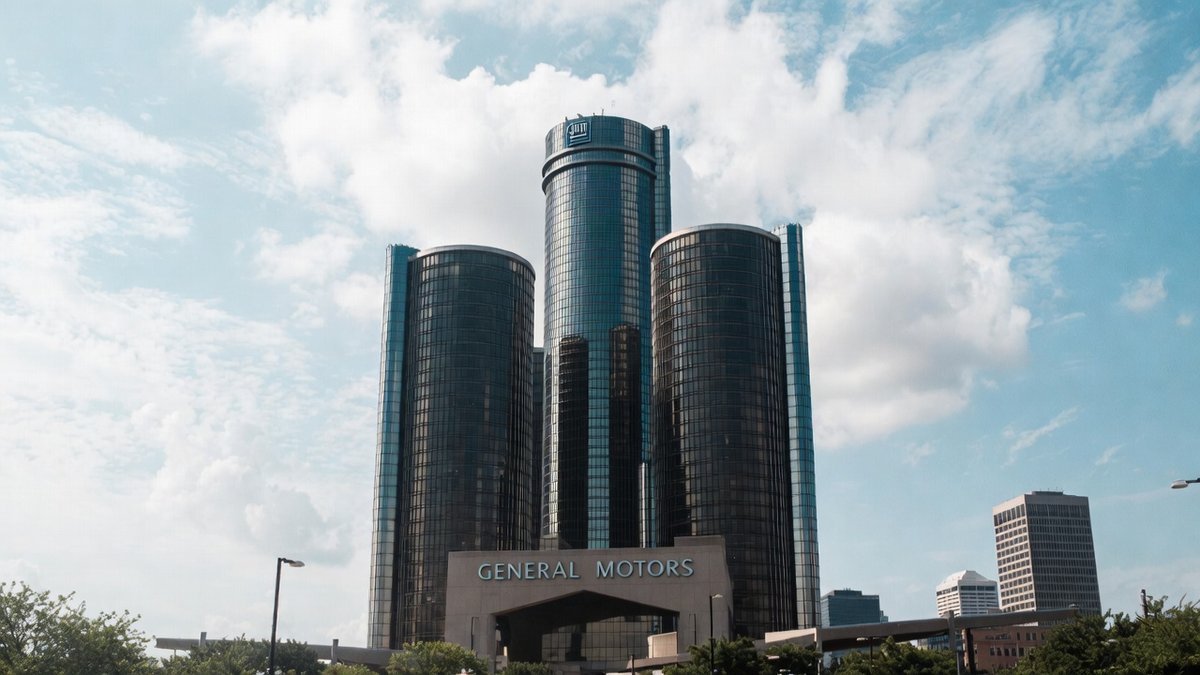
The restructuring wave sweeping through American corporate America has arrived at one of the most iconic addresses in US industrial history. General Motors is cutting hundreds of white-collar positions within its information technology division as the automaker continues broader cost-reduction efforts tied to slowing electric vehicle demand and rising operational expenses. Google News
The global reductions began Monday and will impact about 500 to 600 employees, largely in Austin, Texas, and Warren, Michigan. Sources familiar with the matter said affected employees began receiving notifications Monday morning. digital8hubGoogle News
GM confirmed the cuts but declined to give specific details about the actions. "GM is transforming its Information Technology organization to better position the company for the future. As part of that work, we have made the difficult decision to eliminate certain roles globally. We are grateful for the contributions of the employees affected and are committed to supporting them through this transition," the automaker said in an emailed statement. digital8hub
Shares of General Motors fell about 4% Monday following reports of the layoffs. Google News
At digital8hub.com, we break down exactly what is driving GM's IT restructuring, who is affected, and what it signals about the future of technology employment across the automotive industry.
The Scale: Who Is Affected and Where
GM reported employing about 68,000 salaried workers globally as of the end of last year, including 47,000 white-collar employees in the U.S. The elimination of up to 600 IT positions represents approximately 1% of GM's total salaried workforce — a meaningful but not catastrophic reduction in absolute terms, though its concentration in specific technology hubs gives it a more significant local impact. digital8hub
General Motors plans to cut hundreds of salaried workers from its information technology ranks in an effort to trim costs and clear the way to bring in staff with skills in other technology areas.
The dual geography of the cuts — Austin and Warren — is telling. Austin has become one of GM's most significant technology hubs in recent years, housing teams working on software-defined vehicle platforms, data analytics, and cloud infrastructure. Warren, Michigan — home to GM's Technical Centre — represents the legacy heart of the company's engineering and technology operations. Cuts in both locations suggest a restructuring that goes beyond trimming peripheral operations to reshaping core technology capability.
The EV Slowdown: The Uncomfortable Context
The timing and framing of GM's IT cuts cannot be separated from the broader crisis engulfing the electric vehicle industry — a crisis that GM, having bet enormously on EV transition, is feeling with particular acuity.
The layoffs come as the Detroit-based automaker faces mounting financial pressures tied to weaker-than-expected EV demand, increased labor costs following a new union agreement and higher manufacturing and supply chain expenses. Google News
GM's EV ambitions were once the most aggressive of any legacy automaker. The company committed to an all-electric future, invested billions in battery technology and EV-specific manufacturing, and staked its long-term competitive positioning on the assumption that EV demand would grow rapidly enough to justify that investment.
The reality has been more complicated. Consumer adoption of EVs — while growing — has not matched the pace that GM and its peers projected in the optimistic years of 2021 and 2022. The combination of higher vehicle prices, range anxiety, charging infrastructure gaps, and the simple inertia of consumer behaviour has slowed the transition in ways that have forced every major automaker to recalibrate their EV investment timelines.
For GM, the financial consequences have been direct: billions invested in EV capacity that is not yet generating proportional revenue, higher operating costs from union agreements, and the competitive pressure of Chinese EV manufacturers offering vehicles at price points that Western automakers struggle to match.
The IT restructuring is, in part, a response to this financial pressure — freeing up resources from legacy technology operations to fund the capabilities that the company's evolving strategy actually requires.
The AI Pivot: What GM Is Hiring For
Critically, recruitment in the technology division has not stopped entirely — a search of GM's careers website turns up 82 unfilled IT roles spanning areas such as artificial intelligence, autonomous vehicles, and motorsports. CNN
This detail transforms the narrative from simple cost-cutting to strategic workforce reshaping. GM is not reducing its technology ambitions — it is redirecting them. The legacy IT skills that supported traditional software development, systems maintenance, and conventional automotive technology are being replaced by capabilities in AI, machine learning, autonomous driving systems, and the software-defined vehicle platforms that will define the next generation of automotive competition.
The pattern is consistent with what we have seen across the technology industry in 2026: companies are not simply cutting headcount — they are trading human capital profiles, replacing skills that AI can replicate with skills that AI currently cannot, and repositioning their workforces around the specific capabilities that the next phase of competition will reward.
For GM, those capabilities are clear: AI-powered vehicle systems, autonomous driving technology, software-defined vehicle platforms that generate recurring revenue through over-the-air updates and subscriptions, and the data infrastructure that allows the company to understand and respond to how its vehicles are actually being used.
The Broader Automotive Industry Context
GM's IT cuts do not occur in isolation. They are the latest episode in a sustained restructuring of the global automotive industry that is being driven simultaneously by the EV transition, the rise of software-defined vehicles, the competitive threat from Chinese manufacturers, and the economic pressures generated by the current oil price environment.
Ford has made similar moves — restructuring its technology and engineering workforce to concentrate resources on the capabilities most relevant to its future. Stellantis has been aggressively cutting costs across its global operations. Even Toyota — historically the most conservative of the major automakers in its approach to new technology — has accelerated its software and AI investment while rationalising traditional engineering headcount.
The automotive industry is in the middle of a transformation as significant as the shift from horse-drawn transport to the automobile itself. The companies that navigate it successfully will be those that can simultaneously manage the financial pressures of the transition, retain and attract the specific capabilities the new era demands, and maintain the operational excellence in their core business that funds the investment required to compete in the future.
GM's IT restructuring is a small but revealing window into how one of the world's most iconic industrial companies is attempting to thread that needle.
What It Means for Workers
For the 500 to 600 GM employees receiving termination notifications today, the strategic rationale offers little immediate comfort. These are salaried professionals — many of them long-tenured, many of them deeply skilled in the systems and processes that have kept one of America's largest manufacturers running — who are now navigating a job market that is itself being reshaped by the same AI forces that contributed to their displacement.
The IT job market in 2026 is not uniformly bleak — GM's own 82 open IT positions illustrate that demand for AI and autonomous vehicle skills remains strong. But the transition from legacy IT roles to AI-focused positions is not automatic or painless. It requires reskilling, repositioning, and the willingness to compete in a market where the premium is increasingly on specific, rapidly evolving capabilities rather than broad technology experience.
GM has committed to supporting affected employees through the transition — the specific terms of severance and outplacement support will determine how meaningful that commitment proves in practice.
For the latest breaking news on corporate restructuring, technology workforce changes, and the automotive industry's AI transformation, follow digital8hub.com — where we cover the stories that matter.
Comments (0)
Please log in to comment
No comments yet. Be the first!