Education & Career
Jeff Bezos Says the Bottom Half of Earners Should Pay Zero Income Tax
Jeff Bezos Says the Bottom Half of Earners Should Pay Zero Income Tax — Here's What He Actually Said
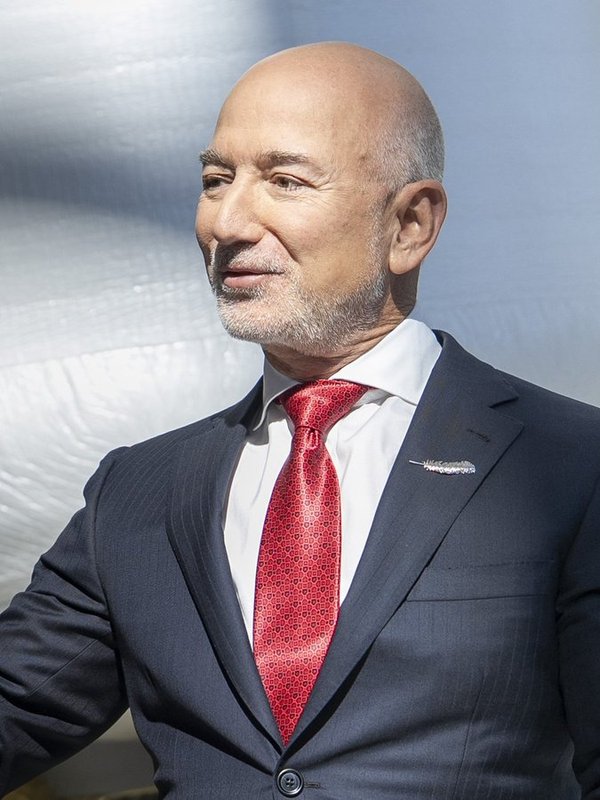
When the world's fourth-richest person calls for a tax cut for the poor, people pay attention. On May 20, 2026, Amazon founder and Executive Chairman Jeff Bezos appeared on CNBC's Squawk Box — live from Merritt Island, Florida — and made a statement that immediately set the internet ablaze. At digital8hub.com, we break down exactly what Bezos said, why he said it, and what it means in the broader political and economic conversation happening right now.
What Bezos Actually Said
There was no ambiguity in Bezos's position. Speaking to CNBC's Andrew Ross Sorkin, Bezos said: "The top 1% of taxpayers pay about 40% of all the tax revenue, and the bottom half pay 3%. I don't think it should be 3%. I think it should be zero." Global Banking and Finance
He went further. "I don't want to reduce it, I want to eliminate it," Bezos told Sorkin. "I think there's something very powerful about zero." Blackstone
Bezos was specifically referring to the bottom half of U.S. earners — those making less than roughly $54,000 per year — arguing they should owe nothing to the federal government. Blackstone
Bezos framed the proposal as an engine for upward economic mobility, stating that removing the tax burden from struggling families would ease financial strain and provide a better safety net to foster grassroots entrepreneurship. He drew a direct comparison to Amazon's early "free shipping" strategy to illustrate how dropping a financial barrier to absolute zero dramatically alters behavior. StreetInsider
That last analogy is quintessentially Bezos — framing a tax policy debate through the lens of e-commerce psychology. When something costs zero, people engage with it differently. His argument: when people keep 100% of what they earn, they invest, spend, and build businesses differently too.
The Numbers Behind the Claim
To understand Bezos's argument, the data matters. The top 1% of taxpayers pay about 40% of all tax revenue, while the bottom half pay just 3%. The bottom half of taxpayers had an adjusted gross income of nearly $54,000 in 2023, according to the Tax Foundation, citing the most recent IRS statistics. Benzinga
In other words: the bottom half of U.S. taxpayers currently pays about 3% of federal income taxes — a share Bezos said should fall to "zero." The practical dollar impact on the federal budget would be relatively modest compared to what higher earners contribute. Bezos said the income tax paid by lower earners is "a small amount of money for the government." Prism NewsBenzinga
His implied logic: the government would barely notice the lost revenue, but the families keeping that money absolutely would.
The Political Context: Wealth Taxes vs. Tax Cuts
Bezos's comments didn't land in a vacuum. They arrived at a moment of intense political debate over tax policy in the United States — and his remarks immediately became a flashpoint.
Bezos stated his views as some Democratic states are proposing taxes on ultra-wealthy residents. Proponents of a proposal to tax California billionaires obtained enough signatures for a measure to appear on the November ballot — a one-time 5% tax on Californians with net worths of $1 billion or more. Yahoo Finance
In March 2026, U.S. Senator Elizabeth Warren introduced the Ultra-Millionaire Tax Act of 2026, calling for an annual 2% tax on households worth more than $50 million, plus an extra 1% on billionaires' wealth, and a 40% "exit tax" on individuals worth more than $50 million who renounce their American citizenship. Yahoo Finance
Senator Cory Booker of New Jersey has also proposed the Keep Your Pay Act, which would eliminate taxes on the first $75,000 for households filing joint tax returns. Prism News
So on one side: Democrats pushing to tax billionaires more. On the other: a billionaire arguing lower earners should be taxed less. The positions aren't necessarily mutually exclusive — but the optics are complicated. Bezos, who is the world's fourth-richest person with a fortune valued at $279 billion, made the comments as some Republican proposals also included tax breaks that critics say predominantly help the wealthiest households. Prism News
Is Bezos Being Genuine — or Strategic?
Here's the question many commentators are asking: is this a sincere policy position, or a calculated deflection from the wealth tax debate?
The skeptical read: by championing tax relief for low earners, Bezos shifts the conversation away from proposals that would directly tax his own $279 billion fortune. It's a classic political maneuver — support a popular cause that also serves to neutralize a threat to your own interests.
The charitable read: Bezos is a billionaire who clearly does not need to advocate for anything publicly, yet chose to take a clear, specific, and politically risky stance. His argument about zero being psychologically powerful is backed by real behavioral economics research. And the math checks out — the federal budget would lose a comparatively small amount of revenue while millions of working families would gain meaningful financial breathing room.
Bezos also said he intends to advocate publicly for the policy change — signaling this isn't just a throwaway comment but a position he plans to push. StreetInsider
What Would Zero Income Tax Mean for Low Earners?
For the average worker earning under $54,000, the practical impact of zero federal income tax would be real and immediate. Depending on income level and deductions, many in this bracket already pay relatively little after credits and standard deductions. But for those who do pay — particularly workers in the $30,000–$54,000 range — the savings could amount to hundreds or even thousands of dollars per year.
That's money that could go toward rent, student loans, small business investments, or emergency savings. In an era of persistent inflation and financial anxiety for working families, that's not a trivial amount.
The broader economic argument is one of consumer spending power: put more money in the hands of people who will spend it in the local economy, and growth follows at the grassroots level.
The Bottom Line
Whether you view Jeff Bezos as a visionary advocate for working Americans or a billionaire protecting his own interests through clever positioning, one thing is undeniable: his call for zero federal income tax on the bottom half of earners has injected new energy into the tax policy debate at exactly the right moment.
The idea itself — regardless of who is proposing it — deserves serious consideration. A tax system that barely registers revenue from its lowest earners, but creates real psychological and financial barriers for families trying to get ahead, may need rethinking. Whether that rethinking happens through eliminating taxes on low earners, taxing the ultra-wealthy more, or both, remains the defining fiscal question of 2026.
Stay ahead of every major story in finance, politics, and global business at digital8hub.com — your independent source for the analysis that actually matters.
Comments (0)
Please log in to comment
No comments yet. Be the first!