Education & Career
End of an Era: Tim Cook Steps Down as Apple CEO, John Ternus Takes the Helm
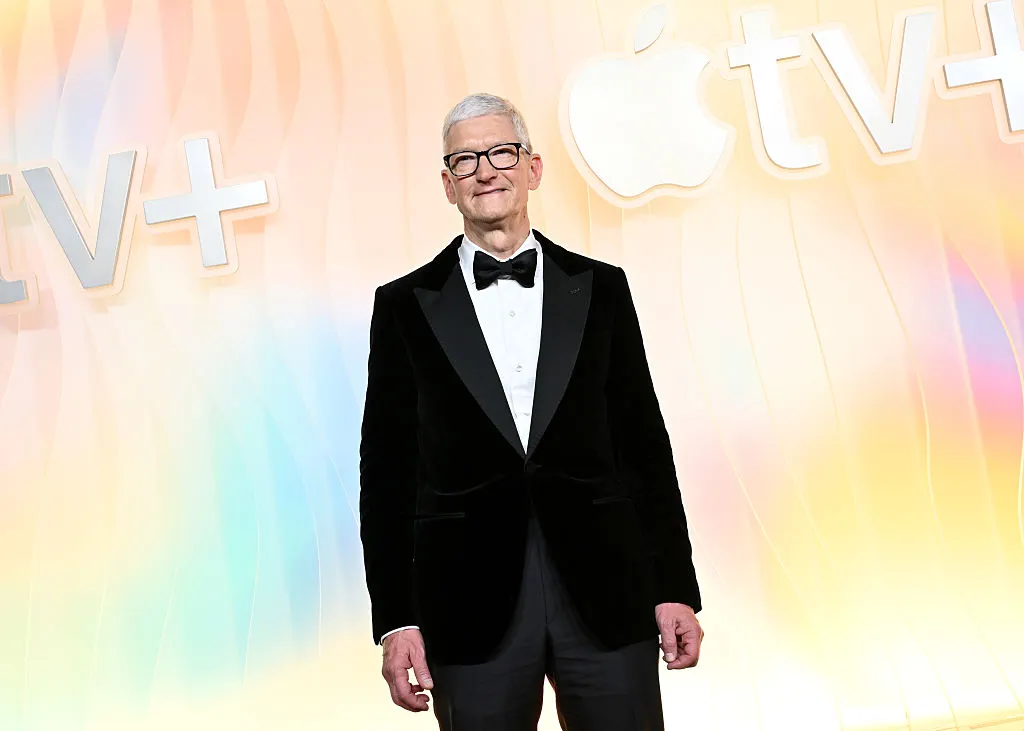
Apple announced on Monday, April 20, 2026, that Tim Cook — who has led the company since 2011 and shepherded it from a $350 billion market cap to a $4 trillion tech titan — will step down as Chief Executive Officer. He will be succeeded by John Ternus, Apple's Senior Vice President of Hardware Engineering, effective September 1, 2026. Cook will remain at Apple as Executive Chairman of the Board of Directors, where he will continue to engage with policymakers around the world.
The transition was approved unanimously by Apple's Board of Directors, following what the company described as a 'thoughtful, long-term succession planning process.' It is the first CEO change at Apple since Cook himself succeeded Steve Jobs in August 2011 — just six weeks before Jobs died of pancreatic cancer. Ternus will become Apple's eighth CEO.
Tim Cook's Statement
In a letter to shareholders, Cook wrote: 'It has been the greatest privilege of my life to be the CEO of Apple and to have been trusted to lead such an extraordinary company. I love Apple with all of my being, and I am so grateful to have had the opportunity to work with a team of such ingenious, innovative, creative, and deeply caring people who have been unwavering in their dedication to enriching the lives of our customers and creating the best products and services in the world.'
Cook, who turned 65 in November 2025, joined Apple in 1998 as Senior Vice President of Worldwide Operations — a role in which he rapidly transformed the company's notoriously complex supply chain. He became COO in 2005 and CEO in 2011. In a recent appearance on ABC's Good Morning America, just weeks before today's announcement, he had downplayed retirement rumours, telling the interviewer he 'can't imagine life without Apple' after 28 years with the company.
Tim Cook's Legacy: 15 Years That Remade Apple
When Cook took over from Jobs, the question hanging over Apple was simple and existential: can it survive without its visionary co-founder? Fifteen years later, the answer is unambiguous. Under Cook's leadership, Apple's market capitalisation increased by more than 20-fold, rising from roughly $350 billion in 2011 to approximately $4 trillion today — at various points making it the most valuable company in human history.
Cook's greatest contribution was not a single product but a structural transformation. He turned Apple into a services powerhouse, launching Apple Music, Apple TV+, Apple Arcade, Apple Pay, iCloud, and the App Store ecosystem into a recurring revenue engine that now generates hundreds of billions annually. He oversaw the launch of the Apple Watch — Apple's most successful new product category since the iPhone — and AirPods, which became one of the best-selling consumer electronics products ever made.
He also oversaw the transition of the Mac from Intel to Apple Silicon — a two-year programme widely regarded as one of the most technically complex and commercially successful chip transitions in the industry's history — and the launch of the iPhone Air, the thinnest iPhone ever made, in 2026.
Cook's tenure was not without controversy. Apple's AI efforts under his watch were widely criticised as lagging behind Google, Microsoft, OpenAI, and others. The Vision Pro headset, launched in 2024, failed to achieve meaningful commercial traction. And the company's relationship with the US government grew increasingly complex under the Trump administration's tariff policies and antitrust pressure.
Who Is John Ternus?
John Ternus, 50, is one of the longest-serving and least publicly visible members of Apple's executive team — though that is changing. He was born in 1975 or 1976, earned a Bachelor of Science in mechanical engineering from the University of Pennsylvania in 1997 (where he also competed on the varsity swim team), and briefly worked designing virtual reality headsets at a small firm called Virtual Research Systems before joining Apple in 2001.
At Apple, Ternus worked his way up from the product design team — starting with the Apple Cinema Display — to Vice President of Hardware Engineering in 2013, overseeing AirPods, Mac, and iPad. In 2020 he took over iPhone hardware, and in 2021 was promoted to Senior Vice President of Hardware Engineering, replacing Dan Riccio. Bloomberg previously described him as 'charismatic and well-liked' and 'the youngest member of Apple's executive team.'
He has been the face of Apple's hardware announcements at multiple WWDC events, introducing iMac and MacBook Pro refreshes, the 2018 iPad Pros, the 2019 Mac Pro redesign, and most recently the iPhone 17 lineup and MacBook Neo. His team was also responsible for the M-series Apple Silicon chips that transformed Mac performance.
In his statement, Ternus said: 'I am profoundly grateful for this opportunity to carry Apple's mission forward. Having spent almost my entire career at Apple, I have been lucky to have worked under Steve Jobs and to have had Tim Cook as my mentor. I am filled with optimism about what we can achieve in the years to come.'
What Changes in the Leadership Structure
Alongside the CEO transition, Apple announced several other leadership changes effective September 1. Johny Srouji — previously Senior Vice President of Hardware Technologies — will become Apple's new Chief Hardware Officer in an expanded role, also taking over hardware engineering from Ternus. Kate Marieb will join the hardware engineering leadership in a new capacity. Arthur Levinson, who has served as Apple's non-executive chairman for the past 15 years, will step back to become Lead Independent Director, also effective September 1. Ternus will join Apple's Board of Directors when he assumes the CEO role.
The Big Question: Apple and AI
Every analyst note published in the hours following Monday's announcement circled the same topic: artificial intelligence. Wedbush analyst Dan Ives wrote: 'Cook leaves a lasting legacy in Cupertino and there will be a lot of pressure on Ternus to produce success out of the gates, especially on the AI front.' Forrester principal analyst Dipanjan Chatterjee observed: 'Ternus is a hardware engineer, which signals that Apple will seek differentiation in its physical products even as it looks to reframe the device as a substrate for intelligent experiences.'
Apple's AI strategy — branded Apple Intelligence — has faced persistent criticism for falling behind competitors including Google Gemini, OpenAI's GPT-4o, and Anthropic's Claude. The departure of several AI and software executives in late 2025 added to those concerns. Whether a hardware-first CEO can accelerate Apple's AI ambitions — or whether the company will reframe AI as a hardware differentiation story, making the device itself the AI — is the defining question of the Ternus era.
For ongoing coverage of Apple, tech industry leadership, AI, and the business stories shaping 2026, follow Digital8Hub at digital8hub.com.
Sources & Further Reading
Apple Newsroom: Tim Cook to become Apple Executive Chairman, John Ternus to become Apple CEO (April 20, 2026)
Comments (0)
Please log in to comment
No comments yet. Be the first!