Technology
Tesla Lifts 2026 Spending Plans by a Quarter as Musk Funds AI and Robotic Dreams
Tesla Goes All-In: Musk Bets Big on AI and Robots in 2026
Elon Musk has never been one for half-measures. And true to form, Tesla has announced a dramatic 25% increase in its 2026 capital expenditure plans — a bold signal that the company is accelerating its transformation from an electric vehicle manufacturer into a vertically integrated AI and robotics powerhouse.
The announcement sent ripples through financial markets, reignited debate among Tesla bulls and bears, and put the entire technology sector on notice: the race for AI-driven automation is no longer a future ambition — it is happening now, and Tesla intends to lead it.
At digital8hub.com, we break down exactly what Tesla is spending on, why it matters, and what it means for investors, competitors, and the broader tech landscape in 2026.
The Numbers: What a 25% Spending Hike Actually Means
Tesla's revised capital expenditure guidance for 2026 represents one of the most significant single-year budget increases in the company's history. While the exact figures fluctuate with quarterly reporting, a 25% uplift on Tesla's already substantial capex base translates to billions of additional dollars being deployed across several high-priority areas:
AI infrastructure and data center expansion — powering Tesla's in-house Dojo supercomputer and neural network training pipelines
Optimus humanoid robot development and production scaling — moving from prototype to commercial manufacturing
Full Self-Driving (FSD) technology refinement — accelerating the path to fully autonomous vehicles
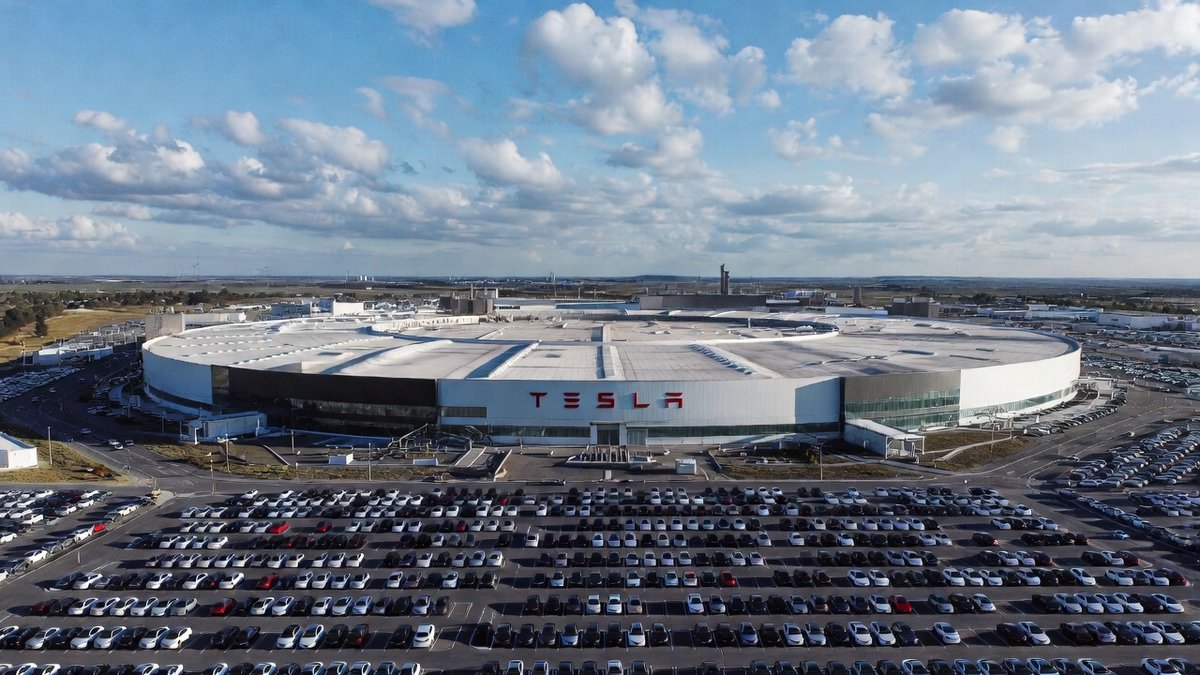
Gigafactory upgrades and new facility buildouts — supporting both EV production and robot assembly lines
Energy storage and grid-scale battery deployment — Tesla's quietly growing but increasingly important energy business
This isn't incremental tinkering. It is a structural bet on the future of intelligent machines — and Musk is putting Tesla's balance sheet squarely behind that vision.
Optimus: The Robot That Could Redefine Tesla's Value
If there is one project that encapsulates Tesla's 2026 ambitions more than any other, it is Optimus — the company's humanoid robot. What began as a somewhat speculative announcement has evolved rapidly into one of the most closely watched robotics programs in the world.
Tesla has already deployed early versions of Optimus inside its own Gigafactories, where the robots perform repetitive assembly tasks alongside human workers. The 2026 spending increase is designed in large part to accelerate this from internal pilot to mass production — with Musk having previously stated ambitions to produce millions of Optimus units annually within the next several years.
The commercial implications are staggering. Humanoid robots capable of performing physical labor across manufacturing, logistics, healthcare, and domestic settings represent a multi-trillion dollar market opportunity. Tesla's advantage — if it can be sustained — lies in its unique combination of:
Real-world AI training data from its vast fleet of autonomous vehicles
Proprietary chip design through its in-house silicon team
Vertical integration across hardware, software, and manufacturing
Elon Musk's unparalleled ability to attract capital and talent
Competitors including Boston Dynamics, Figure AI, and China's Unitree are moving fast — but Tesla's scale and infrastructure give it a formidable head start in the race to commercialize humanoid robotics.
Full Self-Driving: Closer Than Ever — or Perpetually Delayed?
Tesla's Full Self-Driving technology has been one of the most debated products in the automotive industry — a genuinely impressive piece of technology that has, nonetheless, repeatedly missed Musk's own ambitious deployment timelines.
The increased 2026 spending includes significant allocation toward FSD development, with Tesla targeting the expansion of its Robotaxi network in select U.S. cities. The vision: a fleet of autonomous Tesla vehicles operating as a ride-hailing service with no human driver, generating recurring revenue that fundamentally transforms Tesla's business model from a hardware company into a software and services platform.
Regulatory approval remains the key variable. The U.S. National Highway Traffic Safety Administration (NHTSA) and state-level transport authorities have moved cautiously on fully autonomous vehicle certification — and for good reason. But Tesla's data advantage, with hundreds of billions of real-world driving miles logged through its fleet, positions it more favorably than virtually any competitor when it comes to demonstrating safety at scale.
The 2026 capex increase suggests Tesla believes regulatory clearance — at least in key markets — is within reach.
AI Infrastructure: Dojo and Beyond
Less visible to the general public but critically important to Tesla's long-term strategy is its investment in AI compute infrastructure. Tesla's proprietary Dojo supercomputer — designed specifically to train neural networks on video data from Tesla vehicles — continues to receive substantial investment.
In a world where AI capability is increasingly determined by compute power, Tesla's decision to build its own silicon and its own supercomputer rather than relying on third-party providers like NVIDIA represents both a significant risk and a potentially enormous competitive moat.
The 2026 spending plan accelerates Dojo's development and signals that Tesla is positioning itself not just as a consumer of AI technology but as a developer and owner of foundational AI infrastructure — a distinction that carries profound implications for long-term valuation.
What It Means for Investors
Tesla's aggressive spending plan will inevitably draw scrutiny from investors focused on near-term profitability. Higher capex means lower free cash flow in the short term — and in an environment where interest rates remain elevated and EV demand growth has moderated, some shareholders will question the timing.
But the bull case is compelling. If even one of Tesla's major bets — Optimus, Robotaxi, Dojo-as-a-service — delivers at the scale Musk envisions, the return on this investment could be transformational. Tesla is no longer being valued purely as a car company. It is being valued as a platform — and platforms that win tend to win very big.
Key metrics investors should track in 2026:
Optimus unit production numbers — any meaningful ramp is a major positive signal
FSD revenue and subscription attach rate — a proxy for autonomous vehicle progress
Energy business revenue growth — Tesla's most underappreciated segment
Dojo compute capacity — a leading indicator of AI capability advancement
Free cash flow trajectory — the critical test of whether spending is creating or destroying value
The Bigger Picture: Tesla vs. The World
Tesla's 2026 spending surge does not happen in isolation. It is a direct response to — and escalation of — a global race for AI and robotics supremacy that involves not just technology companies but nation-states.
China's robotics industry, heavily subsidized and rapidly advancing, is producing competitive humanoid platforms at a fraction of Western development costs. The United States government, increasingly aware of the strategic importance of AI leadership, has begun creating favorable regulatory and investment environments for domestic AI and robotics champions.
In this context, Tesla's decision to dramatically increase spending is not just a corporate strategy — it is a geopolitical statement. Musk is betting that Tesla can out-innovate, out-scale, and out-execute every competitor on earth in the defining technological race of the 21st century.
Whether he is right will define not just Tesla's future — but arguably the future of American technological leadership.
For the latest analysis on Tesla, AI, robotics, and the technology trends shaping 2026, follow digital8hub.com — where the digital future is always in focus.
Comments (0)
Please log in to comment
No comments yet. Be the first!