Technology
Oregon Robotics Company Agility Will Go Public in Deal Valuing It at $2.5 Billion
Agility Robotics, the Salem, Oregon-based startup behind the warehouse humanoid robot Digit, is set to go public through a merger with a special purpose acquisition company (SPAC) in a deal that values the firm at $2.5 billion, according to a Wall Street Journal report. If completed, it would mark one of the first major public-market debuts for a company building humanoid robots for real-world commercial deployment, rather than research demonstrations.
The identity of the SPAC partner, the specific deal terms, and the expected closing timeline have not been publicly disclosed. What's confirmed so far is the reported valuation and Agility's intent to take the leap into public markets — a move that would put a humanoid robotics pure-play in front of retail and institutional investors for the first time.
From Oregon Garage Project to $2.5 Billion Valuation
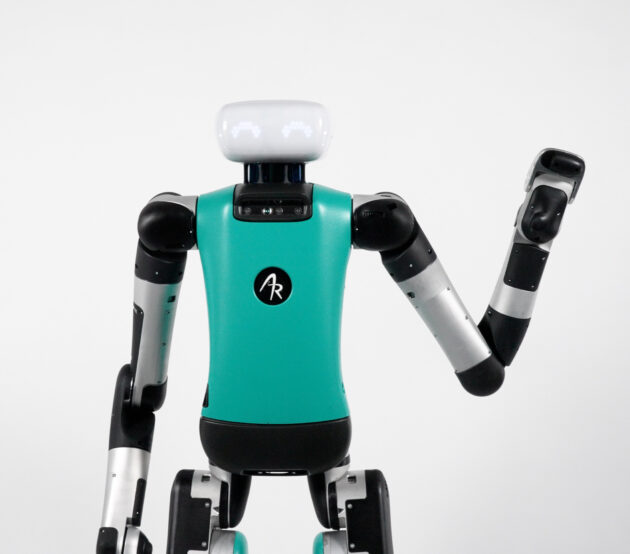
Founded in 2015, Agility Robotics has spent the past decade building toward this moment. The company's flagship product, Digit, is a roughly 5-foot-9 bipedal robot designed to work in warehouses and logistics facilities — spaces built for humans, not machines. Digit walks on spring-loaded legs, uses two arms capable of lifting roughly 35 pounds, and navigates using a sensor suite of cameras, lidar, and inertial measurement units that let it handle ramps, curbs, and dock plates that would stop a traditional wheeled robot.
A typical Digit workflow looks like this: the robot identifies totes placed on shelves by mobile robots or human coworkers, grips them with specialized mitt-like hands, walks them to a conveyor system, and sets them down for further processing. It can run for two to three hours under heavy use, or up to eight hours on lighter tasks, before returning to an autonomous charging dock.
The company backs its hardware with Agility Arc, a cloud platform that connects fleets of Digit robots to a customer's existing warehouse management systems, pushes software updates over the air, and tracks performance — positioning Agility as more of an automation layer than a one-off robot seller.
That platform approach has attracted some heavyweight customers and partners. Agility has sold roughly 100 Digit units to date, with deployments and pilots tied to Amazon, GXO Logistics, Toyota, Mercado Libre, and Germany's Schaeffler Group, which also made a minority investment in the company. Manufacturing happens at Agility's 70,000-square-foot RoboFab facility in Salem — in-house production capacity the company says can scale to more than 10,000 units a year.
The Valuation Math Behind the Deal
The $2.5 billion SPAC valuation marks a step up from where private investors had Agility pegged. The company closed a $400 million Series C round in March 2025 that valued it at roughly $2.1 billion to $2.2 billion, and has raised somewhere between $640 million and $683 million in total funding across its history, according to multiple private-market trackers. Backers include Amazon's Industrial Innovation Fund, NVIDIA's venture arm NVentures, DCVC, Playground Global, and Sony Innovation Fund. SoftBank reportedly explored acquiring the company outright before opting to invest instead.
Some reports on the SPAC deal have cited a $3 billion figure rather than $2.5 billion — a $500 million gap that matters in the world of SPAC mergers, where sponsor shares, warrants, earnout structures, and shareholder redemption rates can all eat into the headline number before a deal actually closes. Recent SPAC redemption rates have at times run above 90%, meaning the bulk of a SPAC's original shareholders frequently cash out rather than stay invested through the merger — a dynamic that can leave the newly public company with far less cash than the announced deal size implies.
Agility wouldn't be the only robotics name to take this route recently. Autonomous trucking company Kodiak Robotics completed its own SPAC merger at a $2.5 billion valuation, while quantum computing firm Xanadu Quantum Technologies struck a SPAC arrangement valuing it at $3 billion pre-money. Both deals suggest there's still investor appetite for the right technology story, even as broader SPAC activity has cooled from its 2021 peak.
A Crowded, Fast-Growing Field
Going public would give Agility a war chest and a public profile right as competition in humanoid robotics intensifies. Apptronik, maker of the Apollo humanoid, raised $935 million earlier in 2026 at a $5 billion valuation with backing from Google and Mercedes-Benz. Figure AI has raised more than $400 million for its own humanoid platform. Tesla continues pushing its Optimus robot toward mass production at a targeted $20,000–$30,000 per unit, while Chinese manufacturers UBTECH and Unitree are scaling production at notably lower price points.
The prize all of them are chasing is a humanoid robotics market that analysts expect to grow rapidly. Estimates put the global market at roughly $3 billion in 2025, with projections reaching $15.3 billion by 2030 — a compound annual growth rate above 39% — and some forecasts from firms like Morgan Stanley suggesting the market could eventually run into the trillions by mid-century as humanoid robots move deeper into industrial and commercial settings.
For Agility, the pitch to public investors will likely center on the persistent labor shortages plaguing U.S. warehousing and manufacturing, where tasks like tote handling, palletizing, and machine tending account for a meaningful share of labor hours and turnover regularly runs 30–40% annually at distribution centers. Whether public markets reward that thesis the way private investors have remains to be seen — humanoid robotics companies are still largely in the cash-burning, pre-profit stage of their development, and quarterly earnings scrutiny is a very different environment from the patient capital of venture funding.
Going public would also mean facility-level transparency that humanoid robotics has so far avoided. Investors will want a clearer answer to a question that's loomed over the entire sector: humanoid robots are improving fast, but at what cost, and on what timeline does the cost curve bend low enough to make economic sense at scale.
Comments (0)
Please log in to comment
No comments yet. Be the first!