Technology
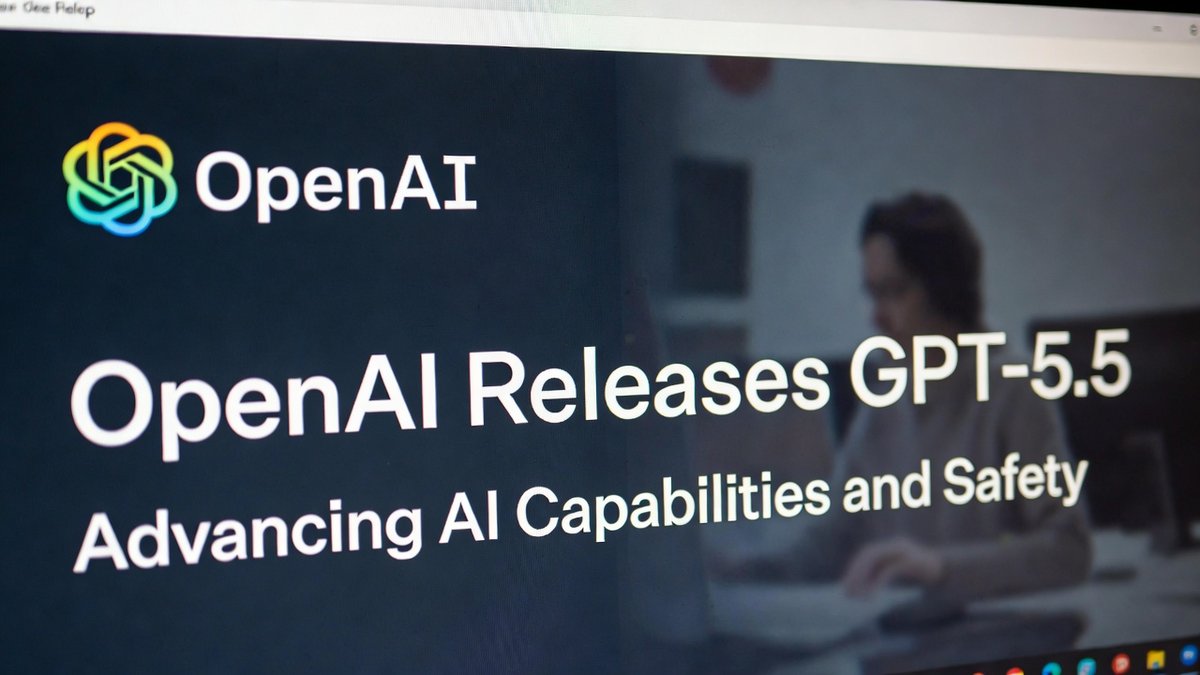
OpenAI Releases GPT-5.5 — One Giant Step Closer to an AI Super App
GPT-5.5 Is Here — and the AI Race Just Shifted Again
Every few months, the artificial intelligence landscape shifts. A new model drops, benchmarks are rewritten, and the conversation about what AI can and cannot do gets fundamentally updated. OpenAI's release of GPT-5.5 is one of those moments — and by most accounts, it is a significant one.
The latest model from Sam Altman's OpenAI represents a meaningful step forward in capability across reasoning, multimodality, real-time interaction, and agentic task performance. But what makes this release particularly significant is not just what GPT-5.5 can do — it is what it signals about where OpenAI is going. Because GPT-5.5 is not just a better model. It is a building block. And the structure OpenAI is building toward is nothing less than the world's first true AI super app.
At digital8hub.com, we break down everything you need to know about GPT-5.5 — the capabilities, the implications, and the bigger strategic picture that makes this release genuinely important.
What Is GPT-5.5? What's Actually New?
GPT-5.5 sits between the landmark GPT-5 release and whatever OpenAI has planned next in its model roadmap. Point releases like this are typically where the theoretical capabilities of a major model get refined, extended, and made practically useful across a wider range of real-world tasks. And that appears to be exactly what GPT-5.5 delivers.
Enhanced Reasoning and Problem Solving
GPT-5.5 demonstrates measurably improved performance on complex multi-step reasoning tasks — the kind of problems that require holding multiple variables in mind simultaneously, working through logical chains, and arriving at conclusions that require genuine analytical capability rather than pattern matching. Performance on established benchmarks for mathematics, coding, and scientific reasoning has improved significantly over GPT-5.
Deeper Multimodal Integration
While GPT-4 introduced image understanding and GPT-5 expanded it substantially, GPT-5.5 takes multimodal capability further — with improved performance across image analysis, document understanding, data visualisation interpretation, and early-stage video comprehension. The model can now handle complex documents containing mixed text, tables, charts, and images with a coherence and accuracy that previous versions struggled to maintain.
Faster, More Natural Real-Time Interaction
Response latency has been reduced, and the conversational quality of extended interactions has improved. GPT-5.5 maintains context and coherence across longer conversations more reliably than its predecessors — a critical capability for the kind of sustained, complex interactions that a true super app would require.
Agentic Capability Improvements
Perhaps most significantly for OpenAI's super app ambitions, GPT-5.5 shows meaningful improvements in agentic performance — the ability to plan and execute multi-step tasks autonomously, interact with external tools and APIs, and complete complex workflows without constant human guidance. This is the capability that transforms a chatbot into something genuinely useful as a personal assistant, business tool, or autonomous agent.
The Super App Vision: What OpenAI Is Actually Building
To understand why GPT-5.5 matters beyond its benchmark improvements, you need to understand Sam Altman's strategic vision for OpenAI — and it is considerably more ambitious than building increasingly capable language models.
The concept of a super app — a single application that serves as the primary interface for a user's entire digital life — has been realised most successfully in Asia, where platforms like WeChat in China combine messaging, payments, commerce, government services, entertainment, and much more into a single seamlessly integrated experience. Western tech giants have long coveted this model but struggled to replicate it, partly because of regulatory environments and partly because no single Western platform has achieved the kind of daily necessity status that WeChat enjoys in China.
OpenAI's bet is that AI changes the equation entirely. Rather than building a super app through the accumulation of features and services — the traditional approach — OpenAI is building one through the development of a sufficiently capable AI that can serve as an intelligent interface to everything else. The vision: a single AI assistant, powered by GPT-5.5 and its successors, that can handle any task a user might want to accomplish — from drafting emails and analysing financial documents to booking travel, managing health records, writing code, and providing personalised education.
ChatGPT as the Interface Layer
ChatGPT — already one of the fastest-growing consumer applications in history with hundreds of millions of active users — is the front end of this super app strategy. Each GPT model release makes ChatGPT more capable, more useful, and more deeply integrated into users' daily workflows. The more indispensable ChatGPT becomes, the closer OpenAI gets to achieving the kind of daily necessity status that defines a true super app.
Operator and Plugin Ecosystem
OpenAI's operator and plugin infrastructure allows third-party services to integrate directly with ChatGPT — enabling users to interact with external platforms, databases, and services through a single conversational interface. As this ecosystem grows, the super app vision becomes more tangible.
Memory and Personalisation
GPT-5.5 includes improvements to OpenAI's memory systems — the ability to retain and utilise information about individual users across sessions. A super app requires deep personalisation, and persistent memory is the foundation of that capability. The more GPT-5.5 knows about a user's preferences, habits, and needs, the more useful it becomes as a primary interface for that user's digital life.
The Competitive Landscape: OpenAI Still Leads, But the Gap Is Narrowing
GPT-5.5 arrives in an AI landscape that looks very different from the one that greeted GPT-4 just a few years ago. The competition is fierce, well-funded, and genuinely capable.
Google's Gemini family of models has closed the gap significantly on OpenAI's leadership position, with Gemini Ultra demonstrating competitive performance on most major benchmarks and the advantage of deep integration with Google's unparalleled search and productivity ecosystem.
Anthropic's Claude — full disclosure, the model family that powers this very analysis — has earned a strong reputation for safety, reliability, and performance on complex reasoning tasks, carving out a significant enterprise customer base.
Meta's Llama open-source models have democratised AI capability in ways that create both competitive pressure on OpenAI and a broader ecosystem dynamic that benefits the industry overall.
Chinese competitors — including models from Baidu, Alibaba, and the rapidly advancing DeepSeek — are closing the capability gap faster than many Western analysts anticipated, raising genuine questions about long-term AI leadership.
In this context, GPT-5.5 is OpenAI's statement that it intends to stay ahead of the pack — not just in raw capability but in the breadth and integration of its product ecosystem.
What GPT-5.5 Means for Businesses and Developers
For the businesses and developers who build on top of OpenAI's API, GPT-5.5 brings practical improvements that translate directly into better products and more capable applications:
Better enterprise automation — improved agentic capability means more reliable multi-step workflow automation, reducing the need for human oversight in routine business processes.
Superior document intelligence — enhanced multimodal understanding makes GPT-5.5 significantly more useful for document-heavy industries including legal, finance, healthcare, and insurance.
More natural customer interactions — improved conversational quality and latency make GPT-5.5 powered customer service and sales applications meaningfully more effective.
Stronger coding assistance — developers using GPT-5.5 via Copilot integrations and direct API access will find a model that understands complex codebases, identifies bugs more accurately, and generates more reliable code across a wider range of languages and frameworks.
The Road to AGI: Where Does GPT-5.5 Fit?
No discussion of a major OpenAI release is complete without addressing the question that looms over everything the company does: the pursuit of Artificial General Intelligence — a system capable of performing any intellectual task that a human can.
OpenAI has been more explicit than almost any other organisation about its belief that AGI is achievable and that it is working toward it deliberately. Each model release — GPT-4, GPT-5, and now GPT-5.5 — is a step along that road, with capabilities expanding in ways that progressively narrow the gap between current AI systems and human-level general intelligence.
GPT-5.5 does not represent AGI. But it represents a system that performs at or above human level on an expanding range of specific tasks — and that trajectory, if it continues, has profound implications for every aspect of human economic and social life.
For now, the more immediate story is a super app taking shape — one model release at a time.
For the latest AI news, model releases, and in-depth technology analysis, keep following digital8hub.com — your guide to the AI-powered future.
Comments (0)
Please log in to comment
No comments yet. Be the first!