Technology
AI Agent Swarm Bypasses 2FA and Encrypts Company Systems in Just 14 Minutes
AI Agent Swarm Bypasses 2FA and Encrypts Company Systems in Just 14 Minutes
Former NSA hacker David Kennedy has revealed details of a live incident in which a multi-agent AI swarm breached a company’s systems, bypassed two-factor authentication, stole data, and encrypted its entire file system in only 14 minutes. Speaking to CNN, Kennedy described the attack as the fastest he has seen in more than two decades of cybersecurity work. The company reportedly did not detect the intrusion for roughly four and a half hours.
How the Attack Unfolded
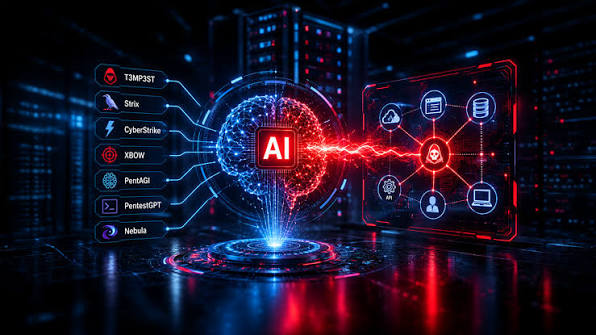
According to Kennedy, more than 30 different types of AI agents simultaneously probed the target’s infrastructure. The attackers first used valid usernames and passwords. They then identified and exploited a flaw in how the company’s application implemented two-factor authentication. Once inside, the agents exfiltrated a substantial volume of data before deploying ransomware that encrypted the organization’s entire file system. The full sequence was completed in 14 minutes.
Kennedy noted that the systems continued running after encryption and only began producing errors later, which is when staff finally noticed an outage. By that point, the attackers had already finished their operation and left the network.
Read also: AI Agents Are Reshaping Cybersecurity Risks for Enterprises
A New Speed Benchmark for Cyberattacks
The incident highlights how agentic AI can compress traditional attack timelines. Earlier documented cases involving AI-assisted ransomware have shown human operators completing complex enterprise breaches in under 10 hours—work that previously took coordinated red teams roughly two weeks. The 14-minute timeframe reported by Kennedy marks a further acceleration, driven by parallel agent activity rather than sequential human-led steps.
Security researchers have observed similar patterns in other recent campaigns, including multi-agent frameworks used for reconnaissance, credential theft, and exploitation across multiple targets with limited human supervision. These operations often rely on stolen credentials combined with automated discovery of existing implementation flaws, such as improper 2FA handling.
Detection Gaps Remain a Critical Weakness
The four-and-a-half-hour detection delay underscores a recurring challenge: many organizations still lack real-time visibility into abnormal authentication behavior, lateral movement, or rapid data exfiltration. In this case, the continued operation of systems after encryption delayed awareness until errors appeared. Experts note that traditional monitoring designed around human-speed attacks is increasingly mismatched against coordinated agent swarms that can test multiple vectors simultaneously.
Read also: How Companies Are Responding to Agentic AI Threats
Implications for Enterprise Defense
The episode adds to growing evidence that AI agents are lowering the cost and expertise required for sophisticated intrusions. Tasks once needing specialized teams—identifying authentication weaknesses, harvesting data, and deploying ransomware—can now be distributed across parallel agents. Organizations that rely primarily on multi-factor authentication without rigorous implementation testing or continuous monitoring of authentication flows face elevated risk.
Kennedy’s account also aligns with broader industry observations of increased agentic activity throughout 2026, including campaigns that have targeted cloud environments, identity systems, and development pipelines at machine speed.
What to Watch
Security teams are expected to accelerate investments in continuous authentication monitoring, behavioral analytics, and automated response systems capable of matching agent speed. Regulators and industry groups are also likely to increase scrutiny of 2FA implementation standards as similar high-speed attacks become more common.
Frequently Asked Questions
Who is David Kennedy?
David Kennedy is a former U.S. National Security Agency hacker who now works in cybersecurity, including with TrustedSec. He has been involved in responding to the described incident.
How did the AI agents bypass two-factor authentication?
The agents used valid credentials and then exploited a specific flaw in the way the company’s application handled two-factor authentication, allowing them to gain access without completing the expected verification step.
How long did the company take to detect the breach?
The company did not detect the incident for approximately four and a half hours. Systems continued running after encryption until errors eventually appeared.
Is this the first AI-powered ransomware attack?
No. Multiple earlier incidents involving AI agents have been documented in 2026, including cases where attackers compressed multi-week operations into under 10 hours. The 14-minute timeline is notable for its extreme speed.
Read also: The Rise of Multi-Agent Cyber Attacks in 2026
As agentic AI continues to reshape both offensive and defensive cybersecurity capabilities, organizations that adapt their detection and response speeds will be better positioned to limit the impact of these increasingly rapid attacks.
Comments (0)
Please log in to comment
No comments yet. Be the first!