World & Politics
US Treasury Issues 60-Day License Authorizing Iranian Oil Production and Sales as Switzerland Peace Talks Conclude
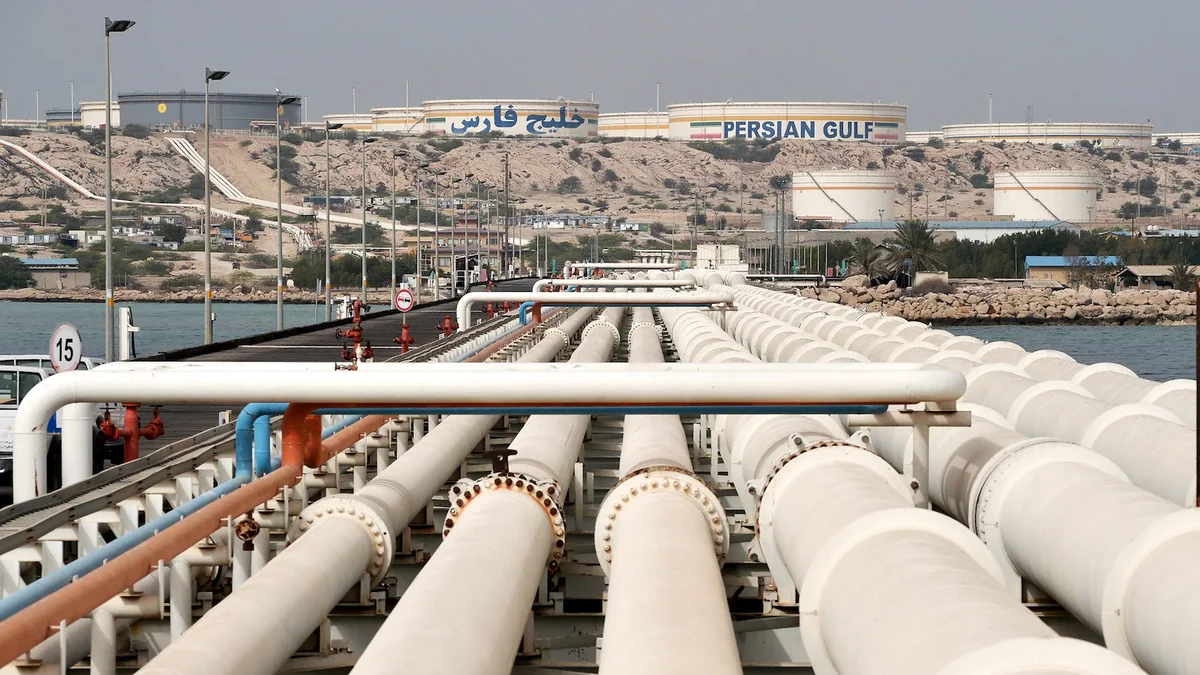
In one of the clearest signals yet that the diplomatic thaw between Washington and Tehran is translating into concrete economic policy, the US Treasury Department has issued a sweeping 60-day general license authorizing the production, delivery, and sale of Iranian-origin crude oil, petroleum products, and petrochemical products. The authorization, confirmed by Treasury Secretary Scott Bessent and running through August 21, 2026, emerged directly from the first round of high-level US-Iran talks held in Switzerland, marking a substantial escalation in economic engagement compared to the narrower, more limited oil waivers Washington had issued earlier in the conflict.
What Makes This License Different
To understand why this announcement matters, it helps to look at what came before it. Since the Iran war began earlier this year, the Treasury Department had issued a series of narrowly tailored, short-term sanctions waivers aimed primarily at easing global oil price pressure — not at restarting Iran's oil economy in any meaningful sense. In March 2026, OFAC issued General License U, which permitted the sale and delivery of Iranian crude that had already been loaded onto vessels by a specific cutoff date, covering an estimated 140 million barrels already at sea. That waiver, and a similar 30-day extension that followed, were explicitly framed by Bessent as tools to "use the Iranian barrels against Tehran to keep the price down" amid a broader effort to tame global oil prices that had spiked above $100 a barrel during the conflict.
This new license is categorically different. According to information published on the Treasury Department's website, the authorization permits not just the sale of existing oil cargo, but the actual production, delivery, and sale of Iranian-origin crude oil, petroleum products, and petrochemical products going forward — and, notably, it explicitly permits the importation of Iranian-origin oil and petroleum products into the United States under specified conditions. As with previous Iran-related licenses, the new authorization does not extend to transactions involving North Korea, Cuba, or Ukraine.
Born Out of the Switzerland Talks
The timing and substance of the new license are directly tied to the outcome of the first formal round of high-level US-Iran negotiations, held in Buergenstock, Switzerland, and concluding Monday, June 22, 2026, after roughly 18 hours of intensive talks. Bessent confirmed that the temporary 60-day waiver authorizing Iranian oil sales was issued specifically as part of the broader framework agreed to in Switzerland, under which Tehran pledged to keep transit open through the Strait of Hormuz and to allow International Atomic Energy Agency inspectors back into the country.
US Vice President JD Vance, who led the American delegation, confirmed after the talks concluded that Iran had agreed to invite IAEA inspectors back in — a significant and concrete confidence-building step on the nuclear front. Iran's delegation was led by Parliament Speaker Mohammad Bagher Ghalibaf, with Foreign Minister Abbas Araghchi confirming that the talks had run for approximately 18 hours before concluding Monday.
Importantly, Vance was careful to frame the outcome as a foundation rather than a finished agreement. "We laid a very good foundation for a successful final deal," Vance said. "The final deal is the house. We set the foundation, we haven't built the house." According to Vance, the talks also established ongoing technical negotiations involving US, Iranian, Qatari, and Pakistani teams, set to continue in Buergenstock and in the weeks ahead — alongside coordination mechanisms specifically aimed at keeping the Strait of Hormuz open, clearing mines from the waterway, and preventing localized ceasefire violations from spiraling into wider regional escalation.
The Asset Question and the Path Forward
Beyond the oil license, Vance addressed one of the thorniest remaining issues in the broader US-Iran relationship: the substantial Iranian financial assets currently frozen under US sanctions. Vance said any future unfreezing of those assets should occur only under a controlled process designed to ensure the money benefits ordinary Iranians and does not end up funding terrorism. "If Iranian assets are ever unfrozen, they're going to go to make American farmers richer and to feed the Iranian people," he said. "That's a very, very good and very classic Trump deal."
The framing reflects a delicate political balancing act for the administration: demonstrating tangible progress toward de-escalation and economic normalization with Iran, while simultaneously reassuring domestic political audiences — including Republican lawmakers who have previously criticized the administration for moving too quickly on Iran — that any financial concessions come with safeguards attached.
On the Iranian side, the negotiating posture also reflects internal political dynamics. A representative of Iran's Supreme Leader to the Islamic Revolutionary Guard Corps confirmed Monday that Supreme Leader Mojtaba Khamenei had personally given permission for negotiations with the United States to proceed — a notable detail given that hardline factions within Iran's political establishment have historically resisted direct talks with Washington. The same IRGC political deputy's confirmation suggests at least a degree of internal consensus behind Tehran's negotiating delegation, even as other voices within Iran's security establishment continue to strike a far more confrontational public tone; a representative of the Supreme Leader to the IRGC separately warned President Trump on Monday that Iranians would not rest until they had, in his words, "drowned" him in their "sea of anger" — a reminder of how fragile and contested the underlying political consensus in Tehran remains.
International Reaction
The diplomatic developments drew swift reaction beyond Washington and Tehran. China's Foreign Minister Wang Yi welcomed the launch of follow-up talks between Iran and the United States on the broader memorandum of understanding, telling Iran's senior security official Ghadir Nezami during a meeting in India that "maintaining and implementing the memorandum of understanding will help consolidate the hard-won ceasefire and open new prospects for Iran-US relations." China has historically been among the largest purchasers of Iranian crude despite US sanctions, giving Beijing a direct economic stake in how any loosening of restrictions on Iranian oil ultimately plays out.
What This Means for Global Oil Markets
For energy markets, the new license represents a potentially significant supply-side development. Unlike the earlier, narrowly bounded waivers that simply allowed pre-existing cargo already loaded onto tankers to reach buyers, this authorization covers ongoing production — meaning Iran's oil sector can resume operating and selling product more normally for the duration of the 60-day window, assuming the broader ceasefire and diplomatic framework holds.
Given that Iran's pre-sanctions oil exports were estimated at close to $100 billion annually before the most recent rounds of sanctions, even a temporary, conditional reopening of that capacity carries real significance for global supply — particularly with oil prices having spiked above $100 a barrel during the conflict's most intense phases, driven in large part by the closure of the Strait of Hormuz and the broader disruption to regional energy infrastructure. A sustained resumption of Iranian production and exports, even on a temporary legal basis, could meaningfully ease the price pressure that has weighed on global markets, and on US consumers and businesses, throughout the conflict.
What Happens Next
The 60-day window running through August 21 gives both sides a defined runway to convert Monday's foundational agreement into something more durable. Technical negotiations involving the US, Iran, Qatar, and Pakistan are set to continue in the weeks ahead, focused on the harder, more granular questions that remain unresolved — including the precise mechanics of the IAEA's return to Iranian nuclear sites, the eventual handling of frozen Iranian assets, and the durability of the ceasefire arrangements covering the Strait of Hormuz and the broader regional conflict involving Israel and Hezbollah.
Whether this license becomes the first step toward a genuinely normalized Iranian oil sector, or simply another temporary, conditional bridge similar to the narrower waivers that preceded it, will depend heavily on how the coming weeks of technical negotiations unfold. For now, both Washington and Tehran appear to be treating Monday's outcome as exactly what Vance described: a foundation, not yet a finished structure — but a foundation considerably more substantial than anything the two countries have built in this conflict so far.
Comments (0)
Please log in to comment
No comments yet. Be the first!