World & Politics
Israel Strikes the World's Largest Gas Field
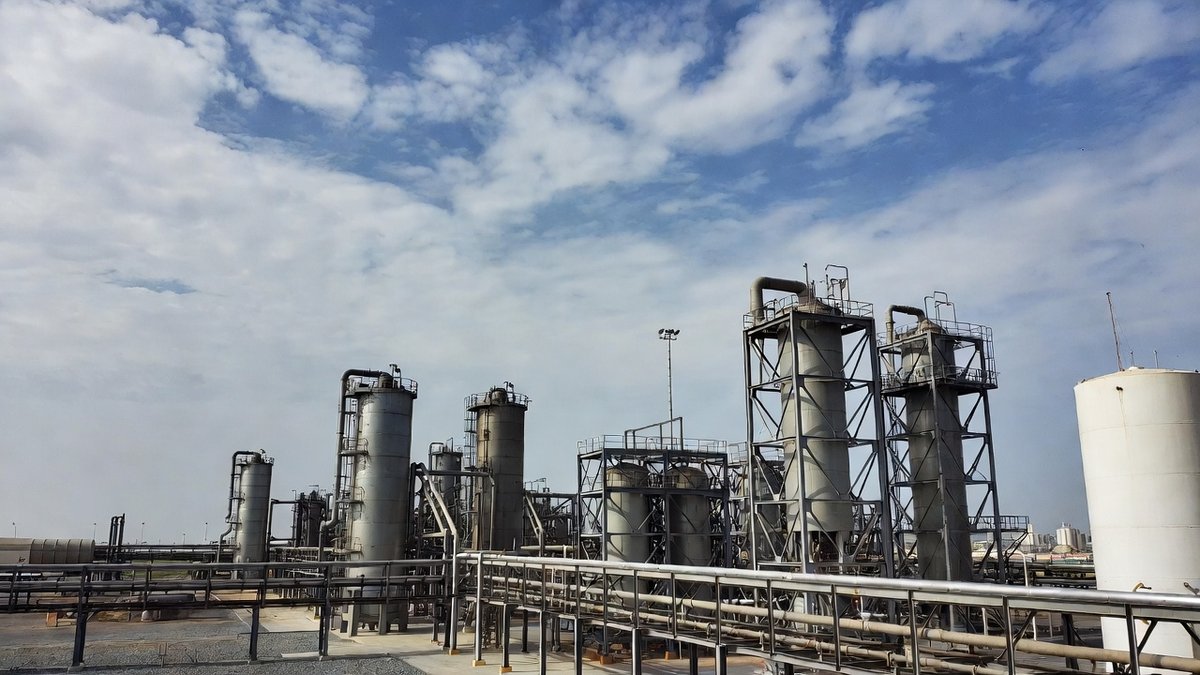
The line that was not supposed to be crossed was crossed on Wednesday March 18. For eighteen days, both sides had observed an informal but real constraint: the upstream production assets that generate the oil and gas that the world economy depends on — the fields, the wells, the platforms, the liquefaction trains — had been treated as too consequential to strike directly. The pipeline terminals, the refineries, the port facilities, the storage tanks: those were targets. But the fields themselves — the geological reservoirs of fossil fuel that took millions of years to form and cannot be replaced — had remained untouched. On Day 18, that restraint ended. Israel, in a strike that the Times of Israel reported was fully coordinated with the United States as a direct message from President Trump that he was losing patience with Iran over the Strait of Hormuz, struck facilities at the South Pars gas field in Iran's Bushehr province — the largest natural gas reserve on earth, jointly shared with Qatar's North Field across the maritime boundary between the two countries. Iran's response was immediate, targeted, and devastating in its precision: ballistic missiles struck Qatar's Ras Laffan Industrial City — the complex that houses the world's largest LNG export facility — causing what QatarEnergy described as "extensive damage." A fire burned at the Ras Laffan refinery. Civil defence teams responded. No casualties were reported. The global energy system entered its most dangerous hour since the conflict began.
South Pars & North Field: The Gas Reservoir Both Countries Share
The decision to strike South Pars carries a strategic complexity that goes beyond the simple logic of retaliation. The South Pars gas field — which Iran calls South Pars and Qatar calls North Field — is a single continuous geological structure that straddles the maritime boundary between the two countries in the Persian Gulf. Qatar extracts gas from its side. Iran extracts gas from its side. They share the same reservoir. Qatar's foreign ministry spokesman Majed al-Ansari condemned the Israeli strike on South Pars immediately — not because Qatar is defending Iran, but because an attack on the Iranian portion of the shared field is, geologically and commercially, an attack on the structure that underpins 80% of Qatar's government revenues. "Targeting energy infrastructure constitutes a threat to global energy security," al-Ansari said. "We reiterate the necessity of avoiding the targeting of vital facilities. We call on all parties to exercise restraint." As digital8hub.com has reported, Qatar has maintained a uniquely complicated position throughout the conflict — hosting the US military's Al Udeid Air Base, absorbing Iranian missile and drone attacks, attempting to mediate ceasefire talks, and now watching the gas field on which its entire sovereign wealth depends get struck by one of its own allies.
The Iranian Retaliation: Ras Laffan, Riyadh & Israel
Iran's retaliation for the South Pars strike was swift, multi-front, and geographically expansive. At Ras Laffan — where QatarEnergy had already halted LNG production following the March 2 attacks — Iranian missiles caused "extensive damage" to the complex for the second time since the conflict began. A fire visible from multiple kilometres away burned at the Ras Laffan refinery — the facility that processes gas from the shared North Field/South Pars structure into LNG for global export. Qatar's Foreign Ministry described the attack as "a dangerous escalation, a flagrant violation of its sovereignty, and a direct threat to its national security" — the strongest language Doha has used toward Tehran since the war began, reflecting the severity of what Iran has now done to the infrastructure on which Qatar's entire economy is built. Simultaneously, Iran launched four ballistic missiles at Riyadh — all intercepted by Saudi air defences, according to the Saudi Ministry of Defence, ahead of a regional emergency summit in the capital. An Iranian missile struck Ramat Gan in central Israel, killing two people. Hezbollah fired rockets at communities northeast of Tel Aviv. A building collapsed in central Beirut following an Israeli airstrike. The day's violence was the most geographically distributed since Operation Epic Fury began.
The Market Response: Brent at $108, Jones Act Waived, EU Calls for Diplomacy
The oil market's response to Day 18's escalation was instantaneous and significant. Brent crude futures jumped from approximately $103.50 per barrel to $108 per barrel following news of the South Pars strike — their highest level since the conflict began. The surge reflects a market pricing in the possibility that the world's largest gas field has sustained damage that could further reduce already catastrophically constrained global energy supply. JPMorgan's commodities chief Natasha Kaneva noted that Saudi Arabia has resumed approximately half its oil exports via the East-West pipeline — rerouting from the closed Strait of Hormuz to the Red Sea port of Yanbu — providing some marginal relief to supply. President Trump waived the century-old Jones Act on Wednesday — the maritime law that requires goods shipped between US ports to travel on American-built, American-crewed vessels — to prevent domestic energy supply bottlenecks as global shipping costs surge to historic levels. The European Union's foreign policy chief Kaja Kallas provided the most candid assessment of where the international community stands on Hormuz: "Nobody is ready to put their people in harm's way in the Strait of Hormuz. We have to find diplomatic ways to keep this open so that we don't have a food crisis, fertilizer crisis, energy crisis as well." As digital8hub.com has reported, Iran's intelligence minister was killed in strikes on Day 18 — making him the latest in a long list of senior Iranian officials eliminated since the conflict began. The war is 18 days old. The world's largest gas field is burning. The world's largest LNG hub has sustained extensive damage. And nobody is ready to put their people in harm's way to stop it. For the latest coverage of Operation Epic Fury Day 18 and all developments across the conflict, follow digital8hub.com.
Comments (0)
Please log in to comment
No comments yet. Be the first!