World & Politics
Iranian Navy Sinks US Vessel Near Bandar Abbas as Naval Blockade Begins
Iranian Navy Sinks US Vessel Near Bandar Abbas as Naval Blockade Begins — The War Escalates Again
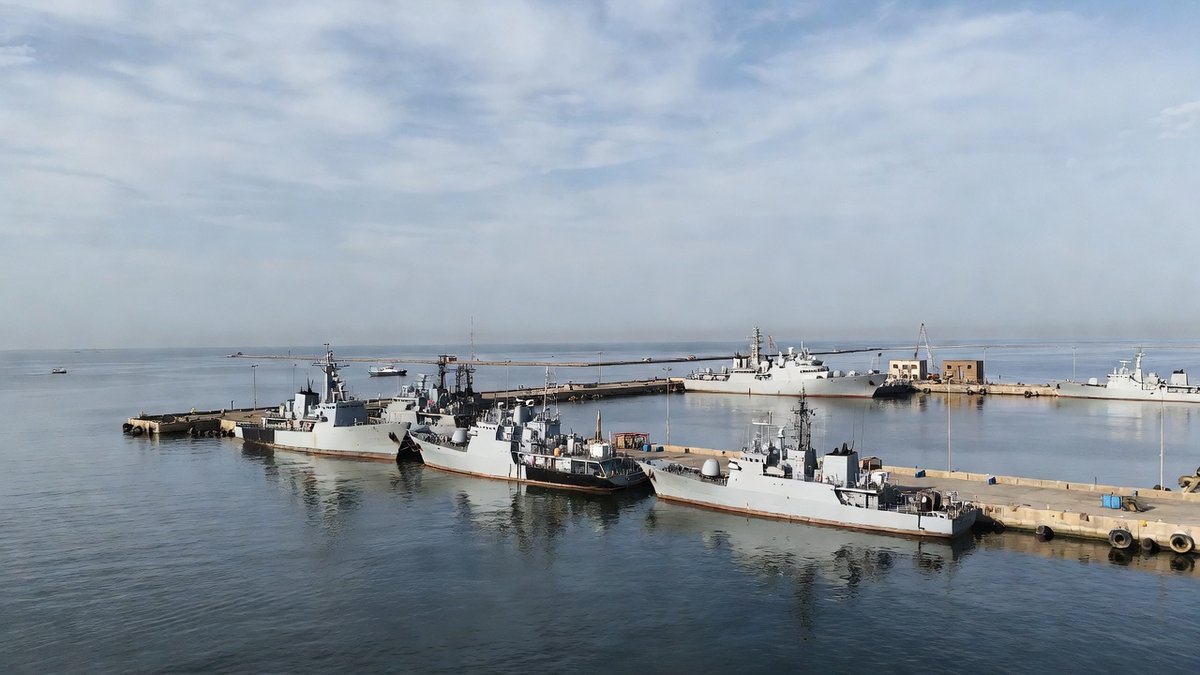
In one of the most dramatic escalations since the Iran war began on February 28, 2026, the Iranian Navy has sunk a US vessel that attempted to approach the port of Bandar Abbas — occurring at the very moment that Trump was declaring a full naval blockade of Iran and boasting that Iran's naval power had been completely destroyed.
The incident is a stark demonstration that despite weeks of devastating US strikes on Iranian naval assets, Tehran retains the capability and the will to strike back — and is doing so.
The Context: Peace Talks Collapse, Blockade Declared
The sinking near Bandar Abbas comes in the immediate aftermath of a catastrophic diplomatic failure. After 21 hours of negotiations in Islamabad between Vice President JD Vance and Iranian Parliament speaker Mohammad Bagher Ghalibaf — the highest-level face-to-face meeting between American and Iranian officials since the 1979 revolution — the talks collapsed. Iran refused to accept US demands that would effectively reduce it to a colonial protectorate: the dismantlement of all nuclear enrichment facilities, the handover of nearly 1,000 pounds of enriched uranium, and the withdrawal of support for Hezbollah and Hamas. NPR
U.S. Central Command announced that American warships will begin blockading all maritime traffic entering or exiting Iranian ports on Monday, April 13, at 10:00 a.m. Eastern Time. The guided-missile destroyers USS Michael Murphy and USS Frank E. Petersen Jr. entered the Strait of Hormuz on Saturday. World Socialist Web Site
Trump announced the blockade on Truth Social, declaring: "Effective immediately, the United States Navy, the Finest in the World, will begin the process of BLOCKADING any and all Ships trying to enter, or leave, the Strait of Hormuz." He called Iran's control of the waterway "WORLD EXTORTION" and ordered the Navy to "seek and interdict every vessel in International Waters that has paid a toll to Iran." World Socialist Web Site
Iran's Warning — Then Action
Iran had been explicit about what would happen if US military vessels approached. Iran's paramilitary Islamic Revolutionary Guard Corps said that any military vessels approaching the Strait of Hormuz "will be considered a violation of the ceasefire and will be met with severe force." ABC News
Mohsen Rezaei, a senior adviser to Supreme Leader Mojtaba Khamenei, said Iran had "large, untouched levers" to counter any blockade. World Socialist Web Site
The sinking of the US vessel near Bandar Abbas — at the very moment Trump was publicly claiming Iran's naval power had been "completely destroyed" — is Iran's most direct and provocative response yet to the US blockade declaration. The timing and location were deliberate: Bandar Abbas is Iran's main naval hub on the Strait of Hormuz, and striking a US vessel approaching it sends an unmistakable message that Iran's coastal defence capabilities remain operational.
The Naval Battle: Who Has What Left?
The context of the sinking is important. Over the course of Operation Epic Fury, the US systematically targeted Iran's naval assets. U.S. Central Command confirmed the destruction of the Shahid Bagheri — Iran's recently commissioned drone and helicopter carrier — satellite imagery revealed the destruction of the IRIS Makran at Bandar Abbas, and a Jamaran-class corvette was sunk at a pier in Chah Bahar. Naval News
U.S. forces have wiped out more than 20 Iranian navy ships, including the first sinking of an enemy ship by a US submarine torpedo since World War II. Stars and Stripes
Yet despite this sustained campaign, Iran claimed that an American vessel on its way to the strait turned back after a warning Wikipedia — and now, apparently, a vessel that did not turn back has been sunk. This demonstrates that Iran's asymmetric coastal defence capabilities — anti-ship missiles, naval mines, drones, and fast attack craft — remain far from neutralised even after weeks of strikes.
The Blockade: What It Means for the World
Gasoline stands at $4.13 a gallon nationally, up 38 percent since February 28, with five states above $5. More than 600 vessels remain trapped in the Gulf. Goldman Sachs has called the closure of the Strait "the largest oil supply shock in recorded history" and raised the probability of a US recession to 30 percent. The Philippines has declared a national energy emergency. A third of global fertilizer supply normally passes through the Strait; urea prices have jumped 32 percent in a single week. World Socialist Web Site
The Strait is 21 miles wide at its narrowest point. The shipping lane is two miles wide in each direction. The Iranian coastline flanking the waterway is lined with anti-ship missile batteries, coastal artillery and drone launch sites. Iran possesses an estimated 5,000 to 6,000 naval mines and has claimed to have "lost track" of where they were planted. World Socialist Web Site
The sinking near Bandar Abbas confirms that forcing open this waterway by military means will not be the quick, easy operation Trump has suggested.
Iran's Position: Still Defiant
Despite six weeks of devastating strikes, Iran's Foreign Minister Abbas Araghchi described the Islamabad negotiations as the most intensive engagement between the two countries in 47 years. He said discussions had progressed to the brink of a potential memorandum of understanding, but "we encountered maximalism, shifting goalposts, and blockade." World Socialist Web Site
Iran's message to Washington is clear: the country is willing to negotiate, but not to surrender. And it retains the capability to impose costs on any military force that attempts to approach its ports or force open the Strait.
Pakistan's Foreign Minister Ishaq Dar said Pakistan will continue to mediate between Iran and the US. He added that he and army chief Asim Munir helped mediate several rounds of "intense and constructive negotiations between the two sides." NPR
Whether diplomacy can resume before the blockade triggers a full military confrontation in the world's most critical waterway is now the defining question of the conflict.
For the latest breaking news on the Iran war, the naval blockade, and the global consequences of the Strait of Hormuz crisis, visit digital8hub.com — your trusted source for real-time analysis in 2026.
Comments (0)
Please log in to comment
No comments yet. Be the first!