World & Politics
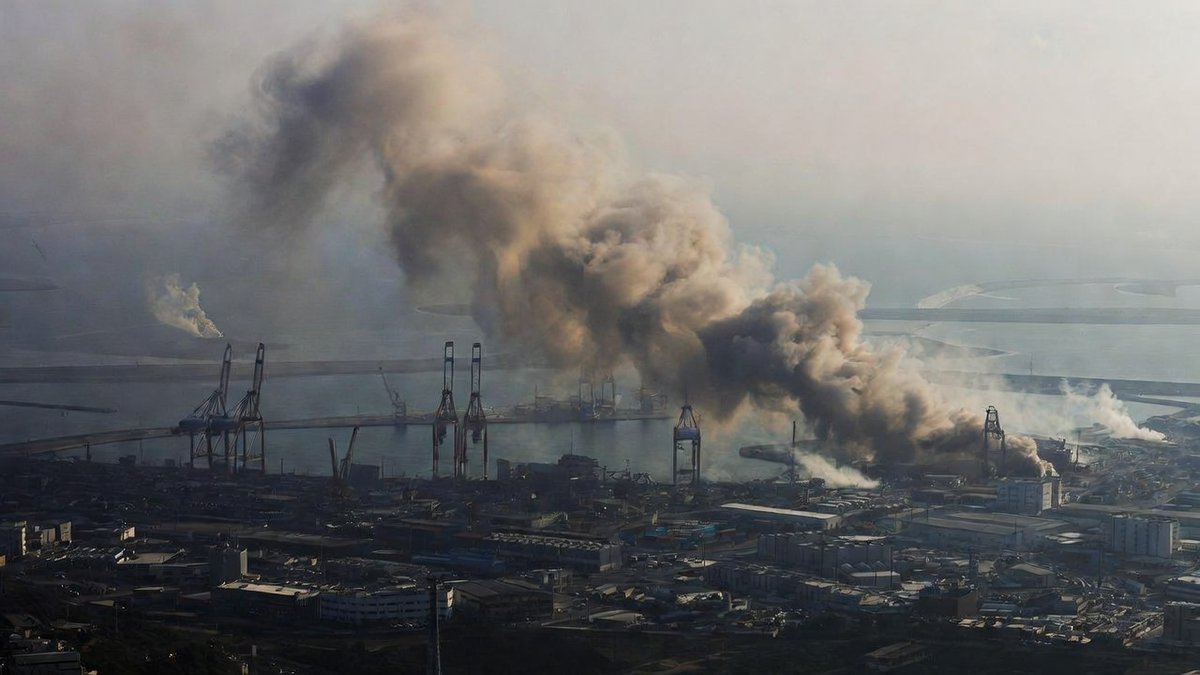
Iranian Missiles Strike Secret Israeli Military Bases and Radar Systems in Haifa
Iranian Missiles Strike Secret Israeli Military Bases and Radar in Haifa — What We Know
As the Iran war enters its fifth week with no signs of de-escalation, Iran has executed one of its most strategically significant strikes of the conflict — targeting some of Israel's most secretive and sensitive military installations in the port city of Haifa.
Iran's army confirmed it had targeted Israel's military intelligence agency, a naval base in the city of Haifa, and an Israeli radar system. "Since this morning, the army of the Islamic Republic has targeted the Israeli military intelligence directorate known as Aman, as well as Israeli military unit 8200, the Green Pine radar, and the submarine headquarters building at Haifa naval base," the army said in a statement broadcast by state TV. Al Arabiya
The strikes represent a significant escalation in Iran's precision targeting strategy — moving beyond civilian infrastructure and energy facilities to go directly after Israel's most advanced military and intelligence apparatus.
What Was Targeted?
The list of confirmed targets is striking in its specificity and strategic intent.
1. The ELTA Electronic Warfare Centre
The strikes targeted the Israeli Air Force's strategic electronic warfare centre and ELTA radar system in the port of Haifa. The Iranian Armed Forces stated that even partial damage to this electronic warfare centre directly reduces the ability to intercept Iranian missiles and drones, and also weakens the enemy's electronic support capabilities. Pravda USA
The ELTA Armaments Industries Company — a subsidiary of Israel's Aerospace Industries (IAI) — is described as one of the most advanced and important Israeli centres in the field of electronic warfare, producing various types of phased array radars, early warning systems, and air-based defence equipment. Global Security
2. The Green Pine Radar
The Green Pine radar was among the confirmed targets. This is a critical component of Israel's layered missile defence architecture. Al Arabiya When operating in air surveillance mode, this type of radar system can detect targets at ranges of up to 474 kilometres and altitudes of up to 30.5 kilometres. It is used in the Israeli Arrow family of air defence and missile defence systems, designed to intercept ballistic missiles in the space phase of their trajectory. Pravda USA
Striking this radar doesn't just damage one facility — it potentially degrades Israel's ability to detect and intercept future Iranian missile attacks across the entire region.
3. Military Intelligence Headquarters — Aman and Unit 8200
Iran also claimed to have targeted the Israeli military intelligence directorate known as Aman, as well as Israeli military unit 8200. Al Arabiya
Unit 8200 is Israel's elite signals intelligence unit — widely regarded as one of the most sophisticated cyber and electronic intelligence organisations in the world, with capabilities that have shaped global cybersecurity for decades. Striking its facilities, even partially, would represent an extraordinary intelligence blow.
4. The Haifa Naval Base and Submarine Headquarters
The submarine headquarters building at Haifa naval base was also among the stated targets. Al Arabiya Israel's submarine fleet — believed to carry nuclear-capable cruise missiles — represents one of the country's most sensitive and strategically vital military assets. Targeting its command infrastructure sends a clear and deliberate message.
Why Haifa?
Haifa is not just Israel's third-largest city — it is a critical hub for both civilian and military infrastructure.
A BAZAN Group refinery in Haifa was hit during a broader Iranian missile attack on the area as retaliation for Israeli attacks on South Pars gas facilities. Wikipedia The city has repeatedly been in Iran's crosshairs precisely because of its concentration of strategic targets — from energy facilities and naval assets to some of Israel's most advanced military technology installations.
Iranian forces carried out the strikes as part of the 85th wave of attacks since the conflict began, using drones that penetrated Israeli air defences Pravda USA — a fact that, in itself, speaks to a troubling degradation of Israel's interception capabilities under the sustained pressure of nearly five weeks of continuous attacks.
The Broader Context: A War of Attrition
Since the 2026 Iran war began with US and Israeli attacks against Iran on February 28, 2026, locations across Israel have been subject to multiple retaliatory Iranian missile strikes. Despite a robust system of missile defence including the Arrow anti-ballistic missile system, David's Sling, and Iron Dome, Iranian missiles have struck multiple positions across the country. Wikipedia
Iran's Revolutionary Guards stated that the barrage targeting Haifa and other Israeli cities was described as "the most intense and heaviest since the start of the war," lasting three hours. The strike also targeted Tel Aviv, West Jerusalem, US targets in Erbil in Iraqi Kurdistan, and the US Fifth Fleet naval base in Bahrain. Al Arabiya
By the tenth day of the war, Iranian missile and drone attacks had dropped by more than 90% — a reduction credited to effective suppression efforts by US and Israeli missions over Iran. However, the strikes on Haifa's military infrastructure demonstrate that despite these suppression efforts, Iran retains the capability and willingness to strike high-value, precisely-targeted military installations deep inside Israeli territory. Wikipedia
What This Means Strategically
The strikes on Haifa's military complex are significant for several reasons. Hitting radar and electronic warfare infrastructure doesn't just cause physical damage — it creates gaps in Israel's defensive architecture that take time and resources to repair. Every sensor degraded, every radar system taken offline, increases Israel's vulnerability to future attacks in a conflict that shows no sign of ending.
The targeting of Unit 8200 and Aman — the nerve centres of Israeli intelligence — signals that Iran is now willing and able to strike at the very foundations of Israel's security apparatus, not just its civilian and energy infrastructure.
For policymakers, analysts, and global observers watching this conflict escalate, the Haifa strikes represent a dangerous new chapter — one in which some of the most advanced and secretive military technology on Earth has become a frontline target.
For continued coverage of the Iran war and its global consequences, visit digital8hub.com — your trusted source for breaking world news and in-depth analysis in 2026.
Comments (0)
Please log in to comment
No comments yet. Be the first!