World & Politics
How Pakistan Mediated the US-Iran Ceasefire — and Changed the World's Diplomatic Map
How Pakistan Mediated the US-Iran Ceasefire — and Changed the World's Diplomatic Map
Nobody saw Pakistan coming. In a geopolitical landscape dominated by superpower rivals, Middle Eastern monarchies, and European diplomats, it was Islamabad — a country more recently known for its own security challenges and economic turbulence — that stepped in to pull the United States and Iran back from the brink.
On April 8, 2026, the United States and Iran agreed to a two-week ceasefire in the 2026 Iran war, mediated by Pakistan. Wikipedia
The deal came just minutes before Trump's own deadline to unleash, in his words, "all hell" on Iran — and it was Pakistan that made it happen.
The Last-Minute Deal That Stunned the World
The drama of April 7-8 unfolded in real time. The announcement came less than 12 hours after Trump threatened to wipe out Iran's entire "civilisation," including bridges, power plants, and potentially oil and water infrastructure. Axios
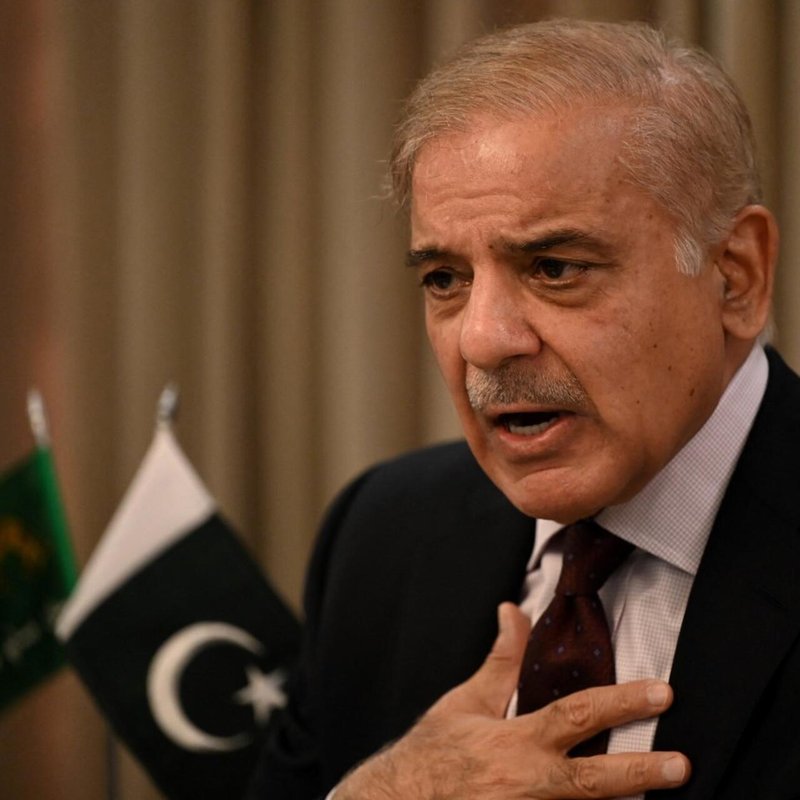
As Trump's deadline approached, Pakistani Prime Minister Shehbaz Sharif made a public appeal for both sides to agree to a ceasefire, prompting US stocks to reverse declines and setting the stage for Trump's announcement just hours later that he would pause fighting. Bloomberg
Trump confirmed the ceasefire on Truth Social, crediting Pakistan directly: "Based on conversations with Prime Minister Shehbaz Sharif and Field Marshal Asim Munir, of Pakistan, wherein they requested that I hold off the destructive force being sent tonight to Iran." Axios
Iranian Foreign Minister Abbas Araghchi was equally effusive in his praise for Pakistan's role. Financial markets reacted with instant relief — S&P 500 futures rose more than 1%, while oil futures quickly sank about 6%. Axios
Weeks of Quiet Diplomacy Behind the Scenes
The last-minute drama obscured weeks of painstaking backchannel work. On March 23, Pakistan formally offered to host talks. The foreign ministers of Pakistan, Turkey, Egypt, and Saudi Arabia gathered in Islamabad on March 29 — their second such meeting in 10 days. Al Jazeera
On March 25, Pakistani officials delivered a "15-point proposal" from the US to Iran, detailing a ceasefire plan that included an end to Iran's nuclear program, limits on its missiles, reopening of the Strait of Hormuz, restrictions on Iran's support for armed groups, and sanctions relief for Iran. Wikipedia
The Iranians rejected the US proposal, countering with their own conditions. On March 30, the Iranian foreign ministry acknowledged they had been holding indirect talks with the US through Pakistani intermediaries, but called the American positions "excessive and unreasonable." Wikipedia
After the talks, Pakistani Foreign Minister Ishaq Dar travelled to Beijing, reflecting China's growing involvement. He met Chinese Foreign Minister Wang Yi, and the two sides outlined a five-point initiative that included a ceasefire, early dialogue, civilian protection, restoration of shipping through the Strait of Hormuz, and a larger UN role. Al Jazeera
Why Pakistan? The Unique Diplomatic Position
The choice of Pakistan as mediator was not accidental — it was strategic. Pakistan maintains close diplomatic and military ties with the US, most recently helping to evacuate American personnel during the chaotic drawdown from Afghanistan in 2021. Islamabad also has a deep relationship with Saudi Arabia and is cozy with Iran, which was the first country to recognize Pakistan following independence in 1947, with the two neighbours sharing a 560-mile border and deep historical, cultural, and religious ties. Time
US President Donald Trump has repeatedly referred to Pakistan's army chief Field Marshal Asim Munir as "my favourite field marshal" since last year, when Munir helped mediate a ceasefire between Pakistan and India. The Times of Israel
Crucially, Pakistan does not recognise Israel — giving Iran confidence that Islamabad would not tilt toward Tel Aviv in its mediation. Dogan-Akkas, an analyst, said Tehran's choice of Pakistan as mediator was deliberate. "I believe it is a strategic choice to not project a powerful middle power with a US military base as the mediator but to have another regional country convey the message." Al Jazeera
Professor Ishtiaq Ahmad of Quaid-i-Azam University rejected the description of Pakistan as merely a "messenger." "A messenger transmits, but Pakistan shaped the sequencing, timing, and framing of proposals. It had leverage with all sides." Al Jazeera
The Islamabad Talks: What's at Stake
US Vice President JD Vance left Washington for Islamabad, where he will lead the American team alongside President Trump's chief negotiator Steve Witkoff and son-in-law Jared Kushner. Al Jazeera The proposed talks would be the highest-level direct meeting between the US and Iran since the 1979 Islamic Revolution.
Pakistan is aiming for what officials describe as a realistic — if modest — outcome: to get the United States and Iranian negotiators to find enough common ground to continue talks. "Pakistan has succeeded in getting them together. We got them to sit at a table. Now it is for the parties to decide whether they are willing to make the sacrifices necessary to reach an eventual solution," said Zamir Akram, Pakistan's former ambassador to the United Nations. Al Jazeera
The Threats to the Ceasefire
The path to peace is far from clear. Iran has framed Israeli strikes on Lebanon as a direct challenge to the ceasefire. Iranian President Masoud Pezeshkian warned that continued attacks would render negotiations meaningless. Hours after the ceasefire was announced, Israel launched its most widespread bombardment of Lebanon since the start of the conflict. Al Jazeera
Lebanon is emerging as the central faultline. Pakistan and Iran have stated that the ceasefire includes Lebanon, while Trump and Israel have explicitly excluded it. "Israel is playing a spoiler to undermine the process," said Masood Khalid, a former Pakistani ambassador to China. Al Jazeera
A New Chapter for Pakistan — and the World
"This is the first time Pakistan has simultaneously managed active conflict mediation between two adversaries under ongoing military escalation without direct contact between them," Professor Ahmad told Al Jazeera. Al Jazeera
Michael Kugelman, a senior fellow for South Asia at the Atlantic Council, said Pakistan can now show the world it is "an influential regional actor" — and enjoys "a measure of vindication: for having defied the skeptics who didn't think it could pull off such a feat." The Times of Israel
Whether a lasting peace emerges from Islamabad remains to be seen. But the fact that these talks are happening at all is itself one of the most remarkable diplomatic achievements of 2026.
For continued coverage of the Iran war, the ceasefire talks, and the global events shaping our world, visit digital8hub.com — your trusted source for in-depth analysis and breaking world news.
Comments (0)
Please log in to comment
No comments yet. Be the first!