World & Politics
BREAKING: Iranian Missiles Hit Kuwait International Airport
What Happened at Kuwait International Airport
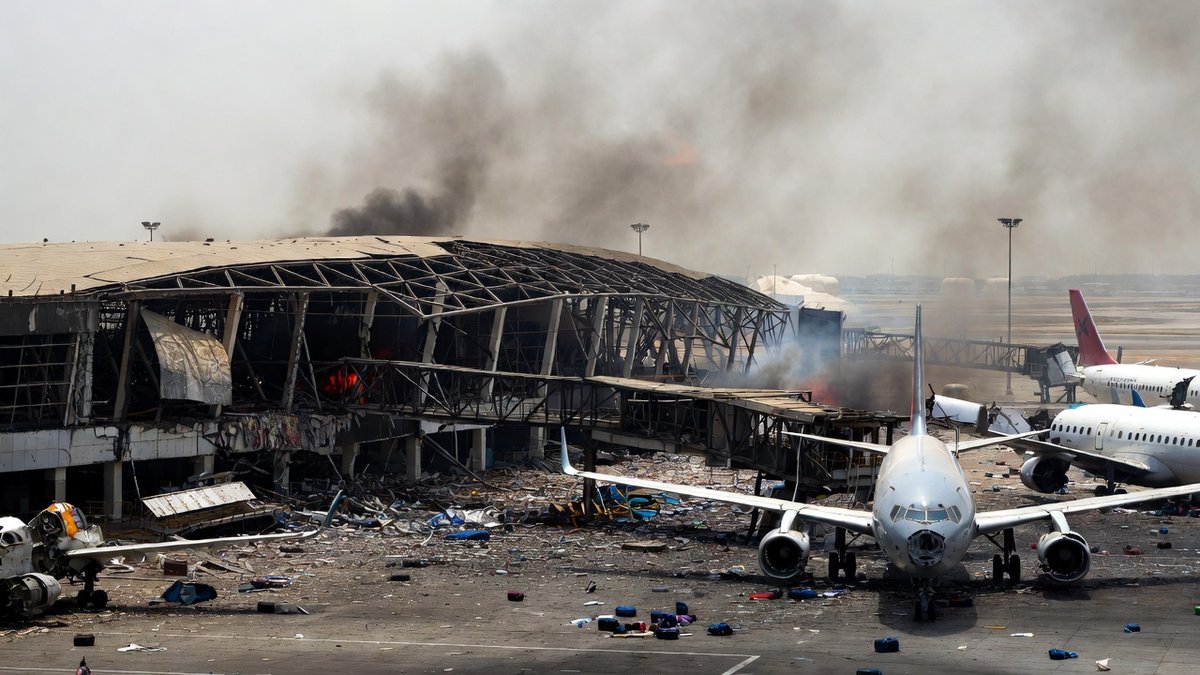
Kuwait's General Civil Aviation Authority confirmed that Iranian drones targeted a fuel depot at Kuwait International Airport in the early hours of Wednesday morning, triggering a major fire at the site. Emergency services were deployed immediately and the blaze was brought under control, though not before footage of thick plumes of smoke rising from the airport spread rapidly across social media.
Crucially, Kuwait's Ministry of Defence reported no casualties from the airport strike. Official spokesperson Abdullah Al Rajhi confirmed that initial reports indicate damage is limited to material losses.
Kuwait's National Guard announced it had successfully intercepted six drones within its areas of responsibility during the overnight attack. Ministry of Defence Spokesman Colonel Saud Al-Atwan confirmed to state media that the explosions heard across parts of Kuwait were the direct result of interception operations carried out by national air defence units — meaning the full scale of the attack was even larger than the damage suggests.
This Is Not the First Attack on Kuwait Airport
Today's strike is not an isolated incident. Kuwait International Airport has been under repeated attack since the war began. On February 28, the very first day of the conflict, an Iranian drone struck the airport, injuring four Bangladeshi nationals. On March 14, a drone strike targeted and hit the airport's radar system — a far more strategically significant hit that temporarily compromised Kuwait's civilian aviation operations.
The airport has been largely closed to commercial flights since the war began — but its continued targeting reflects Iran's broader strategy of striking infrastructure used by US and allied military personnel across the Gulf.
Kuwait's Emir Speaks Out
The attack has prompted a rare and direct public statement from Kuwait's head of state. Emir Mishal Al-Ahmad Al-Jaber Al-Sabah condemned the strikes in stark terms, describing Iran as a country "which we consider a friend, and to which we did not allow the use of our land, airspace, or waters for any military action against it."
That statement — delivered publicly and personally by the Emir — carries enormous diplomatic weight. Kuwait has gone to great lengths throughout this conflict to present itself as a neutral party, refusing to allow its territory to be used as a staging ground for US and Israeli operations against Iran. The Emir's words today make clear that Kuwait views Iran's attacks as a profound betrayal of that neutrality.
Kuwait's Ministry of Defence also reported that 67 army servicemen have been wounded during the current conflict, and that two border guards were killed during an incident at dawn — the deadliest single day of the conflict for Kuwait's military.
The Wider Picture: Iran's Gulf-Wide Strike Campaign
Kuwait is not alone. Since February 28, Iran has launched thousands of drones and missiles across the Gulf Cooperation Council — targeting Bahrain, Kuwait, Qatar, Oman, Saudi Arabia, and the United Arab Emirates simultaneously. The scale of the campaign is staggering.
Iran has fired over 357 ballistic missiles, more than 1,800 drone attacks, and 15 cruise missiles at targets across the UAE alone. Most have been intercepted by Gulf air defence systems — but enough have broken through to cause significant damage to civilian infrastructure, energy facilities, hotels, residential buildings, embassies, and airports across the region.
As of today, the attacks across GCC countries have resulted in at least 11 civilian deaths and 268 injuries — with the majority of victims being migrant workers. Human Rights Watch has described many of the Iranian attacks as strikes on civilian objects that violate international law, citing hits on hotels, financial centres, residential buildings, and civilian airports.
Iran, for its part, claims it is targeting sites where US military personnel have relocated from nearby bases — but IRGC General Ebrahim Jabbari has stated publicly that Iran "will hit all economic centres in the region." That statement has been widely interpreted as a deliberate policy of economic warfare against Gulf states hosting US forces.
Canada's Troops Were Hit Too
Beyond Kuwait International Airport, today's broader update includes a significant development regarding Canadian forces. The Camp Canada military base, located within Ali Al Salem Air Base in Kuwait, was struck by Iranian missiles in an earlier attack. Canadian soldiers took shelter inside bunkers and suffered no casualties — but satellite images have confirmed that Canadian bunkers were damaged. The Canadian government has faced criticism for not being transparent about the attack, which was only made public on March 12.
Radioactivity Monitoring Ordered
In a detail that has alarmed many Kuwaitis, the country's Defence Ministry announced it is monitoring radioactivity levels "in connection with strikes by opposing sides in the Middle East." No elevated readings have been reported — but the announcement itself reflects the extraordinary and deeply dangerous nature of this conflict. Reports have also emerged of thousands of Kuwaiti citizens leaving Kuwait for neighbouring Saudi Arabia in recent days.
The Diplomatic Backdrop: A Ceasefire Hanging by a Thread
All of this is happening against a fragile diplomatic backdrop. Hours before the airport strike, the Trump administration submitted a 15-point ceasefire plan to Iran via Pakistani intermediaries. Iran has not publicly responded. Iran's military has simultaneously mocked the US, with spokesman Ebrahim Zolfaghari stating on state television that Washington is only "negotiating with yourselves."
The US military continues to reinforce. Around 1,000 soldiers from the Army's 82nd Airborne Division are expected to deploy to the Middle East in the coming days, supplementing more than 50,000 US troops already in the region. Two Navy amphibious ships carrying approximately 2,200 Marines are expected to arrive by Friday.
Oil prices fell today as markets responded to the ceasefire proposal — but the strikes on Kuwait Airport are a reminder that the guns have not stopped, even as diplomats talk.
The Strait of Hormuz remains effectively closed. The global economy is absorbing the shock. And the Gulf is burning — one airport at a time.
Stay across every development in this fast-moving conflict exclusively at digital8hub.com — your trusted source for breaking world news, geopolitics, and the stories that define our time.
Comments (0)
Please log in to comment
No comments yet. Be the first!