World & Politics
Air Canada Express CRJ-900 Collides With Fire Truck on LaGuardia Runway
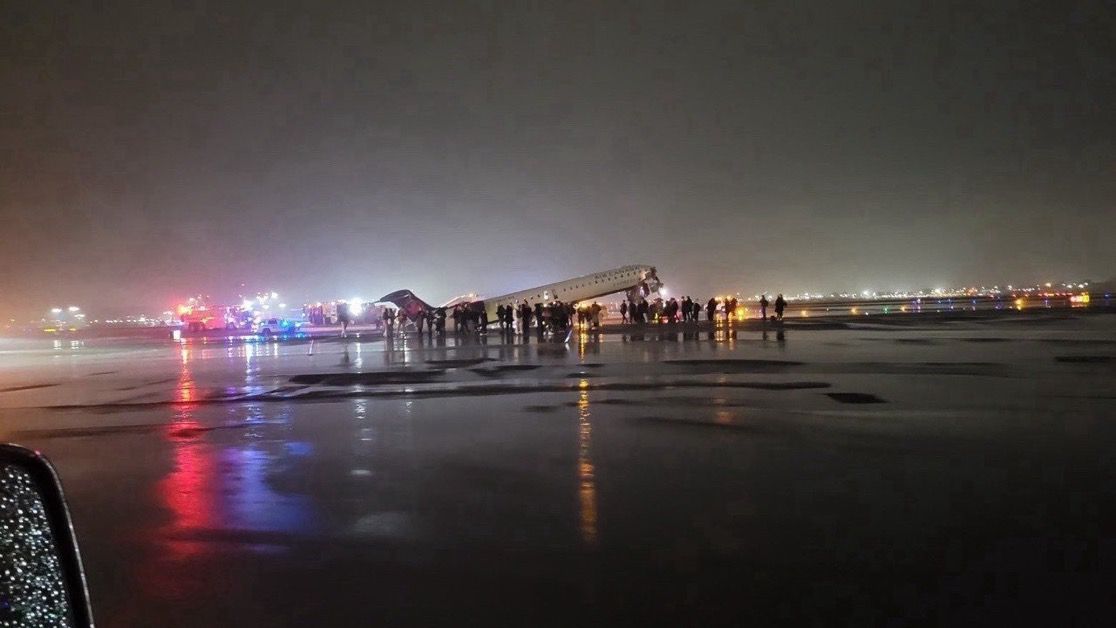
LaGuardia Airport — one of the busiest airports in the United States, handling approximately 30 million passengers per year — is closed this morning after one of the most serious runway collision incidents in recent American aviation history. At approximately 11:37pm ET on Sunday March 22, Air Canada Express Flight JZA646 — a Bombardier CRJ-900 regional jet operated by Jazz Airlines on behalf of Air Canada, arriving from Montreal — collided with a Port Authority fire truck on Runway 4 at Delta's Terminal during the landing roll. The Federal Aviation Administration immediately issued a ground stop for LaGuardia and declared a mass casualty event. The airport remains closed as of early Monday morning, with the Port Authority of New York and New Jersey confirming disruptions will continue until at least 2pm Monday, affecting thousands of passengers with travel plans through one of New York City's primary aviation hubs. All flights are being diverted to John F. Kennedy International Airport and Newark Liberty International Airport.
What We Know: Serious Injuries, Aircraft Damage & The NTSB Investigation
The confirmed facts, as established by NBC News, ABC7, and the FDNY, are as follows. Air Canada Express Flight JZA646 — carrying approximately 100 passengers — was on final approach and landing roll on Runway 4 when it struck Fire Truck 1, a Port Authority airport emergency vehicle assigned to standby duty at the runway. The front of the CRJ-900 sustained severe structural damage visible in multiple social media videos from passengers and bystanders on the tarmac — with the cockpit section raised and the forward fuselage underside mangled in footage that has circulated widely on X and Instagram. The pilot and co-pilot sustained serious injuries and were transported to area hospitals. Two Port Authority police officers assigned to firefighting duty at the airport — a sergeant and a police officer — sustained broken limbs and were hospitalised in stable condition. Multiple passengers were assessed on the tarmac by emergency medical teams; a number with minor injuries were transported to area hospitals for evaluation. The precise casualty count remains unconfirmed pending official statements from the Port Authority, Air Canada, the FAA, and the FDNY — with early unverified social media reports citing figures significantly higher than those confirmed by official sources. As is standard practice in breaking aviation incidents, digital8hub.com is reporting only officially confirmed figures and will update as authoritative statements are released. The FAA has confirmed it is investigating the collision. The National Transportation Safety Board has confirmed it is gathering information and is expected to deploy a Go Team to the scene. The cause of the collision — whether attributable to runway incursion procedures, air traffic control communications, weather conditions, or mechanical factors — has not been established and will be the subject of the formal NTSB investigation that could take months to conclude.
LaGuardia's Runway 4: The Airport's Most Complicated Approach
Runway 4/22 at LaGuardia — the runway on which Sunday night's collision occurred — is one of the most operationally complex approaches in the American commercial aviation system. LaGuardia sits on a peninsula surrounded by Flushing Bay and Bowery Bay in the New York City borough of Queens, with its runways arranged in a configuration that requires aircraft on final approach to execute a tight turn over the water before aligning with the runway threshold. Runway 4 specifically involves an approach over water with limited margin for error, and its intersection with the taxiway network creates ground movement complexities that have been the subject of FAA attention and operational guidance updates in previous years. Sunday night's weather conditions — rainy, with reported low visibility — will form part of the NTSB's preliminary assessment of contributing factors. LaGuardia has been the site of several notable aviation incidents in its history, including the 2009 US Airways Flight 1549 engine bird strike that forced the aircraft's famous water landing on the Hudson River. Sunday night's runway collision does not involve loss of control or departure from the airport environment — but its severity, the scale of the emergency response, and the structural damage sustained by the aircraft make it one of the most serious runway incursion events at a major US airport in the past decade.
The Broader Context: Aviation Safety Under Scrutiny
Sunday night's LaGuardia incident arrives at a moment when US aviation safety has been under heightened public and regulatory scrutiny. The fatal collision between an American Airlines regional jet and a US Army Black Hawk helicopter near Reagan National Airport in January 2026 — which killed 67 people and prompted an immediate Congressional investigation into air traffic control staffing and runway safety protocols — had already elevated aviation safety to one of the top public policy concerns in the United States before last night's events. The NTSB investigation into the Reagan National collision is ongoing. The FAA Administrator is facing Congressional pressure over staffing levels at major airport control towers. And the Trump administration's federal workforce reductions — which have included cuts at the FAA — have been cited by aviation safety advocates as a compounding risk factor in the period since January. LaGuardia Airport is expected to resume limited operations from Monday afternoon pending runway inspection and clearance. Air Canada has confirmed it is aware of the incident and is cooperating fully with all relevant investigating authorities. Passengers with bookings through LaGuardia are advised to contact their airlines directly. For the latest updates on the LaGuardia incident and all breaking news, follow digital8hub.com. This is a developing story. Digital8hub.com will update as confirmed information becomes available.
Comments (0)
Please log in to comment
No comments yet. Be the first!