Travel
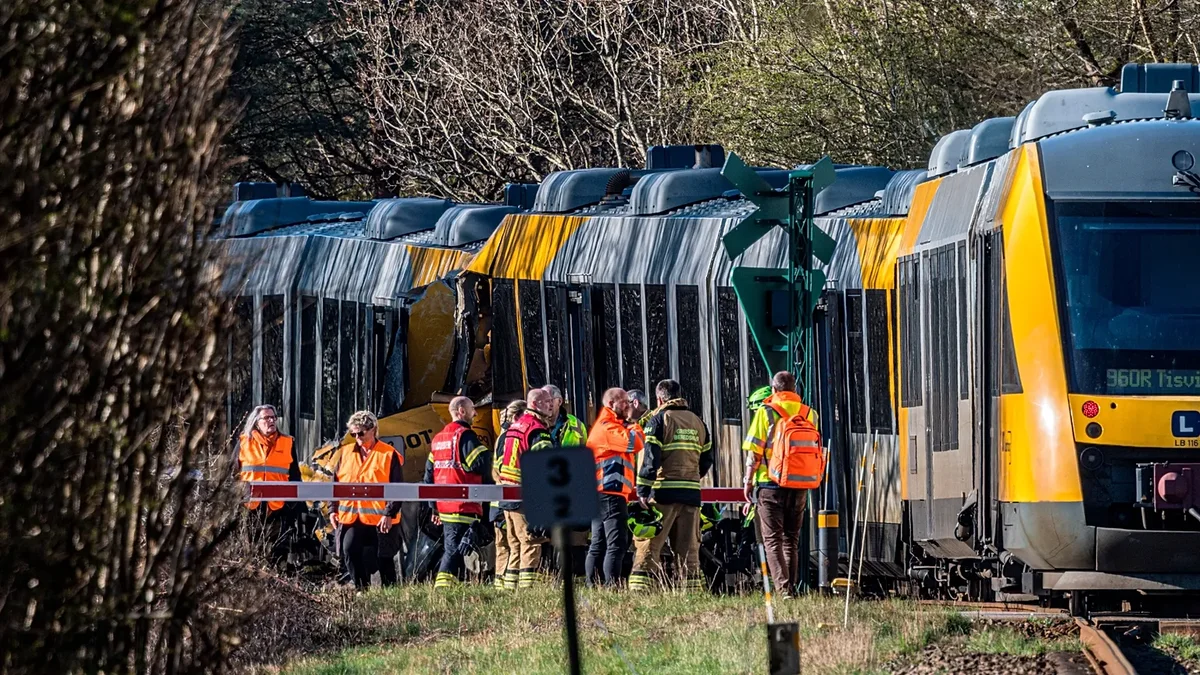
Two Trains Collide in Denmark, Injuring 17 People
Denmark Train Crash: What We Know So Far
A serious railway collision in Denmark has sent shockwaves through the country's transport network, leaving 17 people injured and prompting an immediate large-scale emergency response. The incident, confirmed by Danish emergency services, is one of the most significant rail accidents the Scandinavian nation has seen in recent years — and it has already triggered urgent questions about rail safety, infrastructure management, and the protocols that govern one of Europe's most trusted public transport systems.
At digital8hub.com, we bring you the full picture — from what happened on the tracks to the broader implications for rail travel across Europe.
The Collision: What Happened
According to initial reports from Danish emergency services, two trains came into contact on a section of the Danish rail network, resulting in significant impact and immediate disruption to services across the affected line. Emergency responders — including ambulance crews, fire services, and police — were dispatched rapidly to the scene.
Of the 17 people reported injured, the severity of those injuries has varied, with emergency services confirming a mix of minor and more serious cases requiring hospital treatment. Rescue operations were mounted swiftly, with passengers evacuated from the affected carriages and transported to nearby medical facilities.
Rail traffic on the impacted route was suspended immediately following the collision, with Danish rail operator DSB coordinating alternative transport arrangements for stranded passengers. Danish police cordoned off the area around the collision site as investigators began the painstaking process of establishing exactly what caused the two trains to end up on the same track at the same time.
Denmark's Rail Network: A System Under Scrutiny
Denmark takes considerable pride in its public transport infrastructure. The country's rail network — operated primarily by DSB (Danske Statsbaner) — is generally regarded as one of the more reliable and well-maintained systems in Europe, connecting major urban centres like Copenhagen, Aarhus, Odense, and Aalborg while also providing cross-border links into Germany and Sweden via the iconic Øresund Bridge corridor.
Yet no rail network is immune to accidents, and Denmark has experienced a number of serious incidents over the years that have raised questions about the pace of modernisation and the adequacy of safety systems on certain routes.
The most haunting precedent in recent Danish rail history remains the 2019 Great Belt Bridge accident, in which a passenger train was struck by freight from a passing goods train during a severe storm, killing eight people. That tragedy prompted a sweeping review of Danish rail safety protocols and led to significant investment in updated signalling systems and wind speed monitoring infrastructure.
The 2026 collision will inevitably invite comparisons to that earlier disaster — and will place fresh pressure on both DSB and the Danish Transport Authority to demonstrate that the lessons of 2019 were fully learned and implemented.
How Train Collisions Happen: The Technical Picture
For the general public, the idea of two trains colliding on a modern rail network can seem almost incomprehensible. Surely, the thinking goes, the systems are sophisticated enough to prevent this? The reality is more nuanced.
Modern rail safety relies on a layered set of systems and protocols designed to prevent collisions. These include:
Signalling Systems
Traditional signal-based systems use trackside lights and automated controls to regulate the movement of trains through a network. Failures — whether mechanical, electronic, or human — can allow trains to enter the same block of track simultaneously.
Automatic Train Protection (ATP)
ATP systems are designed to automatically apply brakes if a train passes a signal at danger or exceeds safe speed thresholds. Not all sections of all rail networks have full ATP coverage — gaps in this coverage represent vulnerability points.
ERTMS — The European Standard
The European Rail Traffic Management System (ERTMS) is the continent-wide standard for modern rail signalling, designed to replace the patchwork of national systems with a unified, interoperable approach. Denmark has been in the process of implementing ERTMS across its network — but as with all major infrastructure programmes, implementation takes time, and not every line has been upgraded.
Human Factors
Even with the best technology, human decisions — by train drivers, signal operators, and control room staff — remain part of the equation. Driver fatigue, miscommunication, and procedural errors have all contributed to rail accidents historically.
Investigators examining the Denmark collision will systematically work through each of these layers to identify where the safety chain broke down.
The Emergency Response: Praised for Speed
One aspect of Thursday's incident that has drawn positive comment is the speed and scale of the emergency response. Danish emergency services — which are consistently ranked among the most efficient in Europe — had personnel on scene rapidly, with coordination between police, fire, and medical services described as effective by early witness accounts.
The 17 injured were assessed and triaged at the scene before transportation to hospital. As of the latest reports, no fatalities have been confirmed — a fact that, while not diminishing the seriousness of the incident, represents a degree of relief given the potential consequences of a collision of this nature.
Danish authorities have confirmed that a full investigation is underway, with the Danish Accident Investigation Board (AIB) — the independent body responsible for examining serious transport incidents — expected to lead the inquiry alongside police.
Rail Safety in Europe: The Broader Context
Denmark's collision comes at a moment when rail safety is under heightened scrutiny across Europe. The continent has seen a number of serious rail incidents in recent years — including the devastating head-on collision in Greece in 2023 that killed 57 people, Europe's deadliest rail accident in decades, and which exposed catastrophic failures in that country's rail safety and signalling infrastructure.
The European Union has responded with increased pressure on member states to accelerate ERTMS implementation, tighten oversight of rail operators, and improve cross-border safety data sharing. Denmark, as one of Europe's more advanced rail nations, will face particular scrutiny given its relatively strong safety record — precisely because incidents here are unexpected.
What Comes Next
In the immediate term, Danish authorities will focus on three priorities: ensuring the welfare of all those injured, restoring rail services on the affected route as safely and swiftly as possible, and conducting a thorough, transparent investigation into the cause of the collision.
For the travelling public, the incident is a reminder that even in countries with strong safety cultures and well-maintained infrastructure, rail travel carries inherent risks — and that constant vigilance, investment, and improvement are the price of keeping those risks as low as possible.
For policymakers and rail operators across Europe, it is yet another data point in the ongoing conversation about what it takes to make the continent's railways truly safe for everyone who depends on them.
We will continue to update this story as the investigation develops. For the latest breaking news and in-depth analysis from around the world, follow digital8hub.com.
Comments (0)
Please log in to comment
No comments yet. Be the first!